
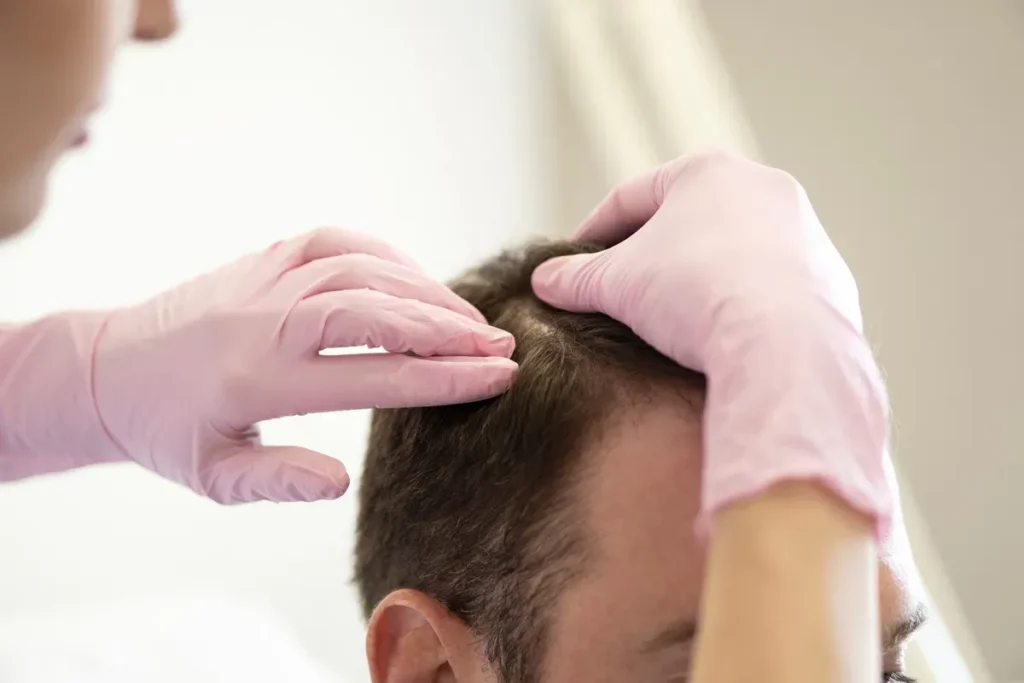
Do you notice hair thinning or loss at the back of your head? You’re not alone. Millions worldwide face hair loss at the nape of the neck. This can point to several health issues.
The American Academy of Dermatology Association says about 80 million Americans deal with hair loss. This is due to alopecia areata, traction alopecia, and androgenetic alopecia.
At GoldCity Center, they focus on you. They use international medical standards and care with compassion. This helps treat nape hair loss well. By knowing the causes and trying proven solutions, you can feel confident again.
Key Takeaways
Understanding the causes of hair loss at the nape of the neck is key to treating it.
Hair loss can come from genetics and lifestyle choices.
GoldCity Center offers a caring approach to diagnosing and treating hair loss.
Proven solutions can help you feel confident and have healthy hair.
Combining international medical standards with caring is essential for good treatment.
Why You’re Losing Hair at Nape of Neck: Common Causes

Losing hair at the nape of the neck can be scary. But knowing why it happens can help find solutions. Many people face hair thinning or loss here, due to health issues and how they style their hair.
Types of Alopecia Affecting the Nape Area
Alopecia areata, an autoimmune disease, is a big reason for hair loss at the nape. A special type, ophiasis, mainly hits this spot. Traction alopecia, caused by tight hairstyles, is also common, mainly in women of African descent.
It’s important to know about these conditions to fight hair loss well. Alopecia areata affects about 2% of the world’s people, showing we need to understand and treat it.
Contributing Factors That Worsen Nape Hair Loss
Other things also cause hair loss at the nape. Heat and chemical damage from styling can weaken hair follicles. This can make hair thinner or fall out.
Knowing these factors can help prevent hair loss at the nape. People can use gentler hair care and treatments to keep their hair strong.
5 Effective Solutions to Stop Hair Loss at the Nape
Stopping hair loss at the nape of the neck requires gentle hair care, targeted treatments, and a balanced diet. By tackling the root causes and using a holistic approach, you can stop hair loss and encourage growth.
Modify Your Hairstyling Habits
Hairstyling can cause hair loss at the nape. Reducing tight hairstyles like braids, ponytails, and buns can help. Choose looser styles or give your hair breaks from styling to reduce tension.
A study found,
Changing your hairstyling habits can prevent more hair loss.
Apply Targeted Topical Treatments
Topical treatments can boost hair growth and strengthen follicles. Minoxidil is a proven treatment for hair regrowth. Rosemary oil also promotes hair growth by improving scalp circulation.
Optimize Your Nutrition for Hair Health
Eating a balanced diet with vitamins and minerals is key for hair health. Nutrients like biotin, zinc, and vitamin D help hair grow and prevent loss. Eating nuts, leafy greens, and fish can give your hair the nutrients it needs.
Biotin: Found in eggs and nuts, promotes hair growth
Zinc: Abundant in oysters and beef, supports hair follicle health
Vitamin D: Obtained from sunlight and fortified foods, essential for hair follicle cycling
Implement Specialized Scalp Care
A healthy scalp is essential for hair growth. Regular scalp massages boost blood flow and promote growth. Using gentle, sulfate-free shampoos and conditioners also keeps the scalp healthy.
By adding specialized scalp care to your routine, you create a great environment for hair regrowth.
Conclusion: Creating a Long-Term Plan for Nape Hair Health
Keeping hair healthy at the nape of the neck needs a long-term effort. Understanding why hair falls out and using good solutions helps. This way, people can grow healthy hair and stop it from thinning.
It’s important to act early if you notice hair loss above your ears. Seeing a trichologist or dermatologist is a good first step. They can find the cause and create a plan just for you, making sure your hair stays healthy and full.
A good plan not only fixes hair loss at the nape but also boosts your confidence. The right treatments, diet, and hair care can make your hair shine. This leads to a radiant look and timeless beauty.
By focusing on nape hair health, you can reveal your inner beauty. This brings confidence and self-assurance into your life.
FAQ
What causes hair loss at the nape of the neck?
Hair loss at the nape of the neck can happen for many reasons. Alopecia areata, an autoimmune disease, is one cause. Tight hairstyles, known as traction alopecia, can also cause it. Heat and chemical damage are other factors.
How can I prevent hair loss at the nape of my neck?
To stop hair loss, change your hairstyle to reduce hair follicle tension. Avoid too much heat and chemicals. Eat a healthy diet full of nutrients that help hair grow.
What are some effective treatments for hair loss at the nape of the neck?
Good treatments include using minoxidil and rosemary oil on your scalp. Eating right and taking care of your scalp are also key. These steps help hair grow back.
Can traction alopecia be reversed?
Yes, you can reverse traction alopecia. Just change your hairstyle to lower tension on hair follicles. Use gentle hair care to help.
How can I promote hair growth at the nape of my neck?
To grow hair, keep your scalp healthy with special care. Use gentle hair products. Topical treatments that boost hair growth can also help.
Is hair loss at the nape of the neck a common condition?
Yes, hair loss at the nape is common. It’s often due to hairstyle, genetics, and hair care.
Can I consult a professional for hair loss at the nape of my neck?
Yes, talking to a professional can help. They can make a plan to stop hair loss and help hair grow.
What role does nutrition play in hair loss at the nape of the neck?
Nutrition is very important for hair. A diet without key nutrients can lead to hair loss. But, eating well can help hair grow.
How long does it take to see results from hair loss treatments?
Seeing results from hair loss treatments varies. It depends on the treatment and the person. But, with regular effort, you can see improvements.
References
National Center for Biotechnology Information. Evidence-Based Medical Insight. Retrieved from https://pmc.ncbi.nlm.nih.gov/articles/PMC10251289/[5

