
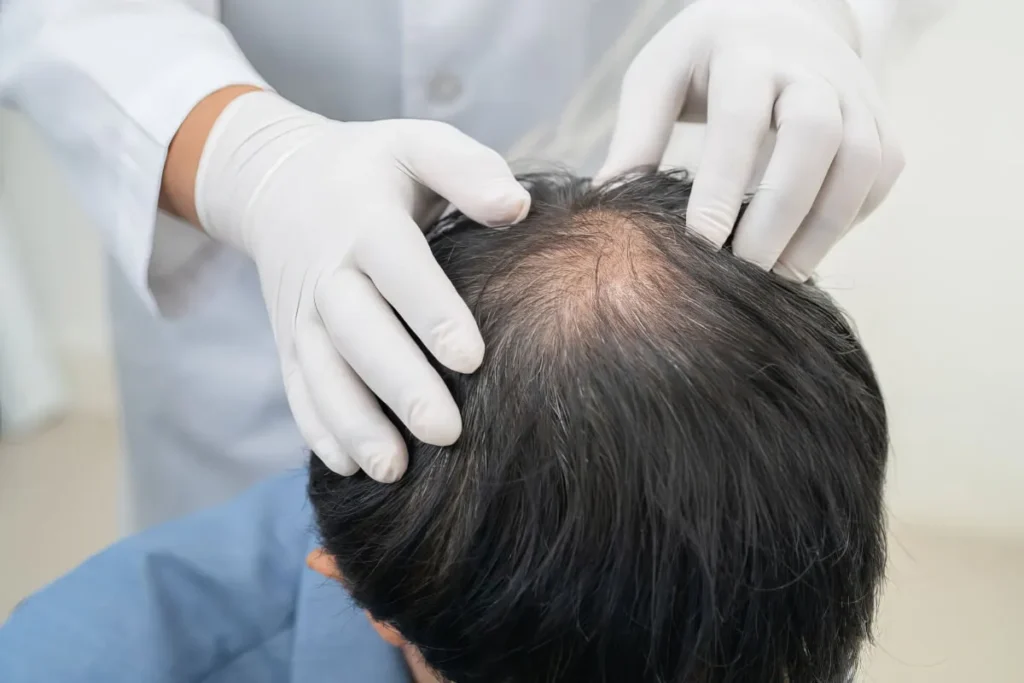
Male pattern baldness, also known as androgenetic alopecia, affects millions of men globally. Medical Expert, MD, a board-certified dermatologist, says it’s mainly caused by genetics and hormones.
Finding the cause of baldness is essential for effective treatments. New advancements in men’s baldness treatment offer hope. Now, men have FDA-approved medications and top-notch topical treatments to stop balding and promote healthy hair growth.
Key Takeaways
Androgenetic alopecia is driven by genetics and hormones.
Effective treatments include FDA-approved medications.
Topical treatments can significantly improve hair density.
Understanding the cause of baldness is key to treatment.
Several proven treatments are available for male hair treatment.
Understanding Male Pattern Baldness
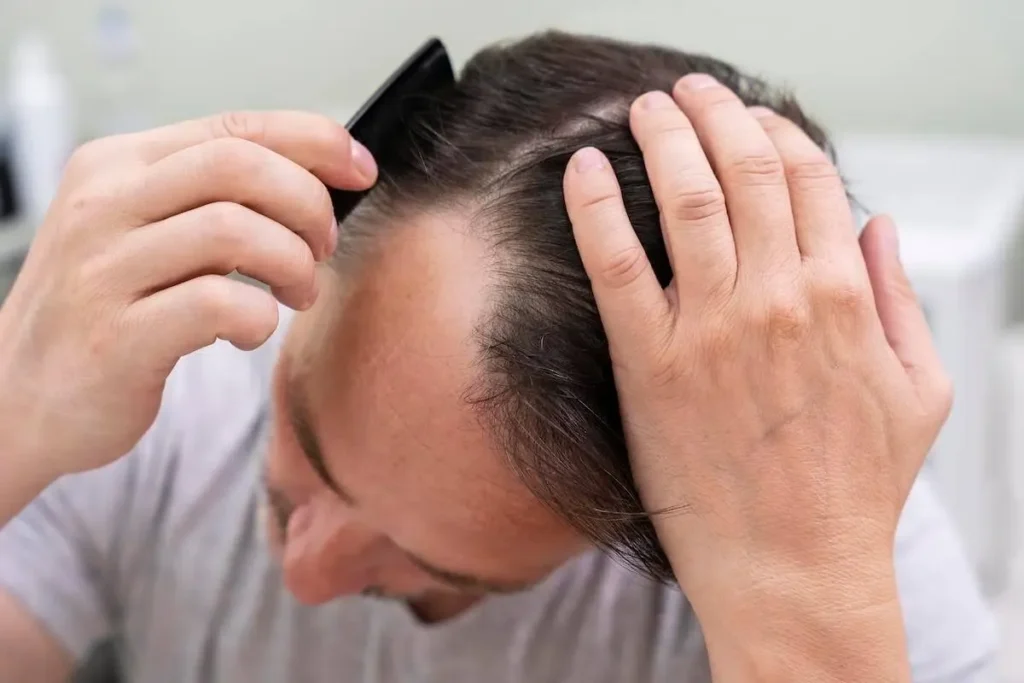
Male pattern baldness, or androgenetic alopecia, affects millions of men globally. It shows up in a specific pattern of hair loss. This is mainly because of dihydrotestosterone (DHT) affecting hair follicles.
The Science Behind Androgenetic Alopecia
Androgenetic alopecia happens when testosterone turns into DHT. This strong form of testosterone makes hair follicles shrink. As a result, hair grows thinner and eventually stops growing.
Studies have found that DHT shortens the hair growth cycle. This leads to more hair falling out.
The genes on the X chromosome play a role in androgenetic alopecia. This is why it can be passed down from either parent.
Prevalence and Progression Statistics
About 50 million men in the U.S. suffer from male pattern baldness. By their late 20s, many men start to notice hair loss. The condition gets worse over time.
It’s clear that male pattern baldness becomes more common with age. This makes it a big issue for men’s health and self-confidence.
Knowing how common and how it progresses helps in finding better treatments. Topical minoxidil and oral finasteride have been proven to slow hair loss and help hair grow back.
Understanding the science and facts about male pattern baldness helps people make better choices. It’s the first step towards dealing with this common issue.
5 Effective Treatments for Male Hair Regrowth
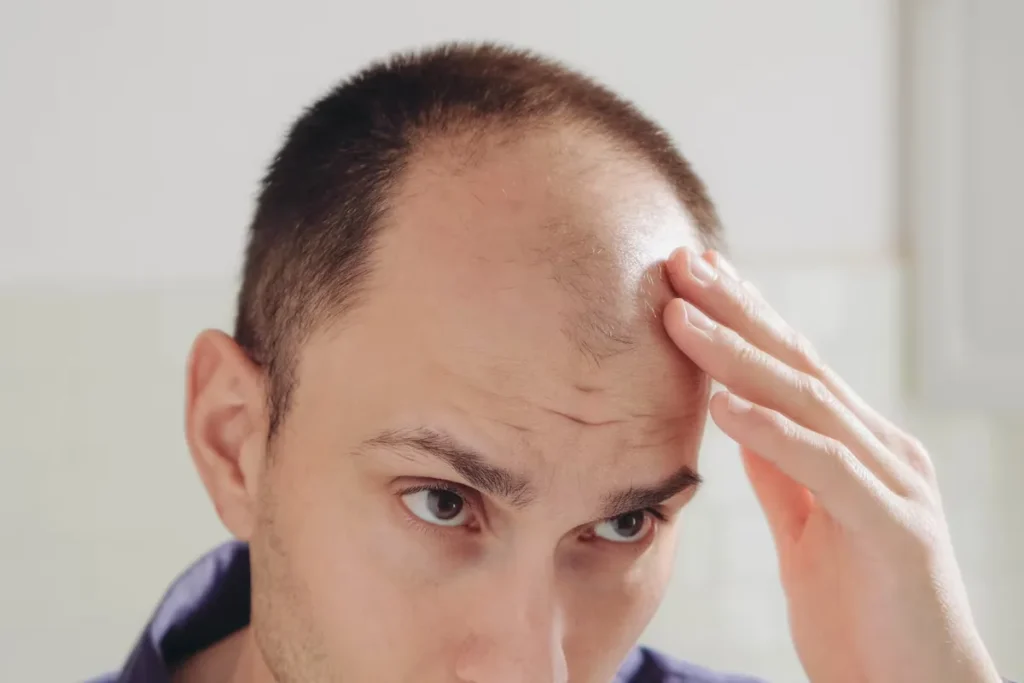
Men facing hair loss now have many proven treatments for male hair regrowth. These treatments have been tested and shown to work well against male baldness.
Topical Minoxidil: The Vasodilator Solution
Topical minoxidil is a well-known treatment for hair loss male treatment. It makes blood vessels wider, boosting blood flow to the scalp. This helps hair grow. For best results, apply minoxidil twice a day.
Using minoxidil with microneedling makes it work even better. Medical Expert 400 percent.
Oral Finasteride: The DHT Inhibitor
Oral finasteride is a top choice for male baldness treatments. It stops testosterone from turning into DHT, a hormone that causes hair loss.
Studies show finasteride slows down hair loss and helps hair grow back. It works with topical treatments like minoxidil.
Microneedling: Enhancing Treatment Absorption
Microneedling is a gentle method that makes tiny injuries in the scalp. This boosts collagen and helps treatments soak in better.
When paired with minoxidil, microneedling boosts male hair regrowth even more.
Low-Level Laser Therapy (LLLT)
Low-Level Laser Therapy (LLLT) is a non-invasive method. It uses low-level lasers or LEDs to encourage hair growth. LLLT increases blood flow and helps hair follicles grow.
LLLT works well with other treatments like minoxidil and finasteride. It’s great for balding men treatment.
Knowing about these treatments helps men choose the right path for their hair. They can find a way to stop male baldness effectively.
Maximizing Treatment Effectiveness
To get the most out of male hair regrowth treatments, you need a solid plan. This means picking the right treatment and knowing how to make it work better. You can do this by using different treatments together and making lifestyle changes.
Combination Therapy Approaches
Just one treatment might not be enough. Medical Expert, a dermatologist in New York, says mixing treatments can lead to better results. This means using FDA-approved treatments like minoxidil and finasteride together with other methods like microneedling or low-level laser therapy (LLLT).
Benefits of Combination Therapy:
Enhanced treatment efficacy
Addressing multiple aspects of hair loss
Potential for faster results
Lifestyle and Nutritional Support
Medical treatments aren’t the only thing that matters. Your lifestyle and diet also play a big role in your hair’s health. Eating foods that help hair grow, like biotin, vitamin D, and iron, can help your treatments work better.
Nutritional Tips for Hair Health:
Eat a diet full of fruits, vegetables, and lean proteins
Drink plenty of water to keep your scalp healthy
Think about taking supplements like biotin and vitamin B
By using the right treatments and living a healthy lifestyle, men can see real hair growth. This can also slow down male pattern baldness.
Conclusion
Understanding male pattern baldness is key to treating it well. By looking into the five proven treatments mentioned, people can start to grow their hair back. Effective male pattern baldness treatment means using FDA-approved options like topical minoxidil and oral finasteride, along with making lifestyle changes.
Dealing with male baldness takes time and the right plan. It’s important to talk to doctors to find the best male baldness treatment for you. Combining medical treatments with good nutrition and lifestyle changes can help a lot with male hair regrowth.
It’s possible to stop male baldness with the right treatment. Knowing the causes and trying effective treatments can help you how to stop male baldness and feel better. Treating male baldness effectively means tackling the main reasons for hair loss.
FAQ
What is male pattern baldness?
Male pattern baldness, also known as androgenetic alopecia, is a common condition. It causes hair loss due to testosterone turning into dihydrotestosterone (DHT). This leads to hair follicles shrinking.
How effective are minoxidil and finasteride in treating male pattern baldness?
Minoxidil and finasteride are proven treatments for male pattern baldness. Minoxidil widens blood vessels to help hair grow. Finasteride stops DHT production, slowing hair loss.
What is combination therapy for male hair regrowth?
Combination therapy uses several treatments together. This includes minoxidil, finasteride, microneedling, and low-level laser therapy (LLLT). It aims to improve treatment results and promote hair growth.
Can lifestyle changes help with male pattern baldness?
Yes, a healthy diet and lifestyle can help hair health. Nutritional support and lifestyle changes can boost treatment results when used with medical treatments.
How does low-level laser therapy (LLLT) work for hair regrowth?
LLLT uses low-level laser or light devices. It increases blood flow to the scalp. This promotes hair follicle activity and improves scalp health.
Is male pattern baldness treatable?
Yes, male pattern baldness is treatable. Treatments like minoxidil, finasteride, microneedling, and LLLT can slow hair loss and promote growth.
What is the role of DHT in male pattern baldness?
DHT is a potent testosterone derivative. It causes hair follicles to shrink, leading to hair loss. Finasteride can help by reducing DHT production.
How can I maximize the effectiveness of male hair regrowth treatments?
To get the best results, try combination therapy. Also, keep a healthy lifestyle and follow expert advice on treatment plans.
References
National Center for Biotechnology Information. Evidence-Based Medical Insight. Retrieved from https://pubmed.ncbi.nlm.nih.gov/11807410/





