
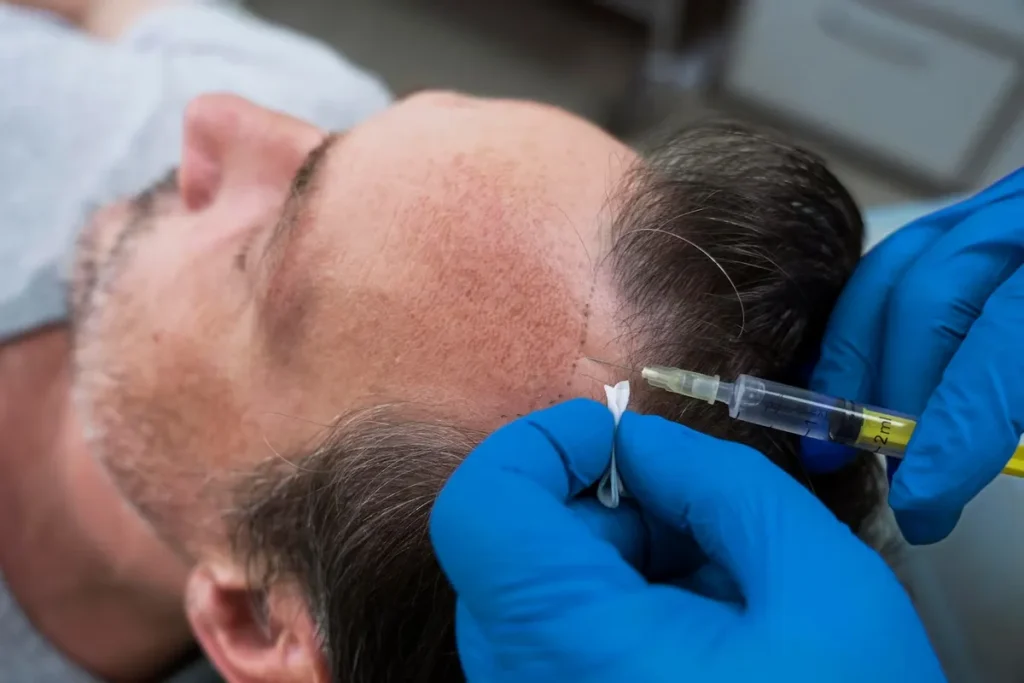
Restoring confidence through hair restoration is now easier than ever. Thanks to new hair transplant technology, success rates are over 90 percent. This makes hair transplants a reliable choice for men with pattern baldness.
Methods like Smart Follicular Unit Extraction (FUE) are minimally invasive. They are designed to meet each person’s needs, ensuring natural-looking results. At GoldCity Center, they use cutting-edge surgical techniques and focus on the patient. This approach leads to life-changing results that improve not just your hairline but your overall well-being.
Knowing why you lose hair and the options for restoration is key. This guide will explain the science behind hair loss and the newest men’s hair restoration techniques. It aims to help you make a well-informed choice.
Key Takeaways
High success rate of hair transplants, exceeding 90 percent.
Advanced techniques like Smart FUE for natural-looking results.
Personalized care at GoldCity Center for tailored solutions.
Understanding hair loss causes is vital for a successful transplant.
Latest techniques in men’s hair restoration for the best results.
Understanding Male Pattern Baldness
Male pattern baldness, or androgenetic alopecia, affects many men. It causes hair to thin and fall out, mainly on the top and front of the scalp.
The Science Behind Hair Loss
The main reason for male pattern baldness is the conversion of testosterone to dihydrotestosterone (DHT). DHT makes hair follicles shrink. This leads to thinner, shorter hairs and eventually hair loss. Genes from both parents play a big role in who gets it.
Knowing about DHT and genetics is key for men looking into hair restoration. It helps them make smart choices about their treatment.
Prevalence and Statistics
Male pattern baldness hits up to 80 percent of men at some point. About 87 percent of hair transplant patients are men. This shows how common it is.
By age 50, 85 percent of men see a lot of thinning. These numbers highlight the need for good male hair restoration methods. Procedures like FUE and DHI can help men regain their hair.
Understanding male pattern baldness and its commonality is the first step. It helps men tackle their hair loss and feel more confident.
Effective Male Hair Restoration Techniques

The field of male hair restoration has grown a lot. FUE and DHI are now top choices for hair transplants. These new methods have changed how we do hair restoration, giving men better and less painful options.
Follicular Unit Extraction (FUE)
Follicular Unit Extraction, or FUE, is a gentle hair restoration method. It takes follicular units from the donor area. This method is loved for its small scars and quick recovery, making it great for men looking to restore their hair.
Key Benefits of FUE:
Minimally invasive procedure
Reduced scarring
Shorter recovery time compared to traditional methods
Direct Hair Implantation (DHI)
Direct Hair Implantation, or DHI, is a more advanced version of FUE. It lets doctors directly plant the extracted follicular units in the recipient area. This method makes hair transplants more precise and can give better results.
Advantages of DHI:
High precision in graft placement
Enhanced survival rate of grafts due to minimized handling
Natural-looking hair growth patterns
Studies show that graft survival rates are usually 90 to 95 percent with FUE and DHI. This success rate shows how far hair restoration technology has come.
In conclusion, FUE and DHI are great options for men looking to restore their hair. The choice between them depends on personal needs and preferences. It’s important to talk to a qualified professional to find the best solution.
The Hair Transplant Process Explained
Learning about hair transplant procedures is key for those thinking about it. The field has grown a lot, with more procedures done each year. This growth is up by 10 percent from 2016.
Consultation and Candidate Selection
The first step is a consultation. A specialist checks if you’re a good candidate for a hair transplant. They look at your hair loss, the quality of your donor hair, and your health. Candidate selection is critical for a successful transplant.
Evaluation of hair loss and donor hair
Discussion of expectations and desired outcomes
Assessment of overall health and suitability for the procedure
Procedure Day Expectations
On the day of the transplant, you’ll go through a detailed process. The follicular unit extraction (FUE) method is often used. This means each follicular unit is taken from the donor area and then put into the recipient sites.
The procedure can take a few hours, depending on how many grafts you’re getting. Precision and care are key to get natural-looking results.
Recovery and Results Timeline
The recovery phase is important. You’ll get specific aftercare instructions to help your grafts heal well. You might also be given finasteride to stop more hair loss. Seeing results takes time, but most people notice big changes in a year.
Immediate post-procedure care: Following the surgeon’s instructions for aftercare
Short-term recovery: Managing swelling and discomfort
Long-term results: Noticing significant hair growth within 6-12 months
Understanding the hair transplant process helps you make better choices. With proper care, hair transplants can be a great solution for men with hair loss.
Conclusion: Success Rates and Considerations
Men who get hair transplants often feel more confident and look better. They seem more youthful, attractive, and successful. Techniques like Follicular Unit Extraction (FUE) and Direct Hair Implantation (DHI) give natural-looking, lasting results.
Keeping the hair healthy is key. This means using minoxidil and finasteride, and sometimes PRP therapy. Knowing why hair falls out and picking the right treatment helps men restore their hairline.
Following a good aftercare plan is essential for the best results. With proper care, men can have a fuller head of hair. This boosts their self-confidence and overall well-being. Choosing a skilled practitioner and following care instructions increases the chances of a successful outcome.
FAQ
What is male pattern baldness, and how does it affect hair loss?
Male pattern baldness is the main reason for hair loss in men. It affects a lot of men. It’s caused by genetics and a hormone called dihydrotestosterone (DHT), leading to thinner and falling hair.
How successful are hair transplants for men?
Hair transplants work well, with a success rate over 90 percent. They are a reliable choice for men with male pattern baldness. The success comes from methods like Follicular Unit Extraction (FUE) and Direct Hair Implantation (DHI).
What are the benefits of Follicular Unit Extraction (FUE) for hair restoration?
FUE is known for being less invasive. It causes less scarring and heals faster. It takes individual follicles from the donor area, giving natural-looking results.
How does Direct Hair Implantation (DHI) differ from other hair transplant techniques?
DHI implants grafts directly into the recipient area. This means grafts spend less time outside the body. It can increase graft survival rates to 90 to 95 percent.
What can I expect during the hair transplant process?
First, there’s a consultation to see if you’re a good candidate. On the day, you’ll have grafts extracted and implanted. After, you’ll get special care instructions to help your grafts survive.
How long does it take to see results from a hair transplant?
Results vary, but most see big improvements in the first year after the procedure.
What ongoing maintenance is required after a hair transplant?
You’ll need to keep up with care, like taking finasteride. This helps prevent more hair loss and keeps your transplant looking good.
Are hair transplants a viable solution for significant hair loss?
Yes, hair transplants are a great option for men with significant hair loss. They give natural-looking results that last, boosting confidence and appearance.
What role do genetics play in male pattern baldness and hair restoration?
Genetics are key in male pattern baldness, affecting how likely you are to lose hair. Knowing your genetics is important if you’re thinking about hair restoration.
References
National Institutes of Health. Evidence-Based Medical Insight. Retrieved from https://www.niams.nih.gov/health-topics/hair-loss

