
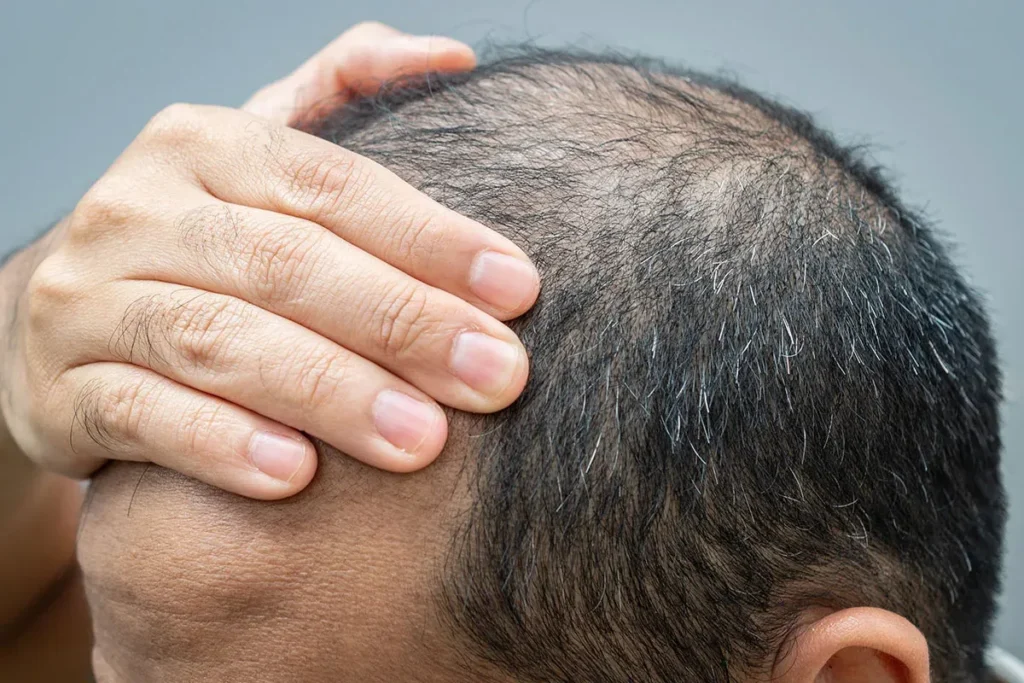
Male pattern baldness, or androgenetic alopecia, affects millions of men worldwide. Studies show that up to 80 percent of men will experience hair loss at some point in their lives.
This issue is more than just about looks. It’s linked to hormonal changes, like when testosterone turns into dihydrotestosterone (DHT). This hormone affects hair follicles. Knowing how androgenetic alopecia works is key to treating it well.
GoldCity Center uses top medical skills and new hair restoration methods. They focus on caring for each patient. By looking into proven solutions, men can feel better and look more vibrant.
Key Takeaways
Androgenetic alopecia is a common condition affecting a significant percentage of men.
Hormonal changes, like testosterone turning into DHT, play a big role in hair loss.
Understanding the science behind hair loss is essential to finding effective solutions.
GoldCity Center offers cutting-edge hair restoration treatments.
Evidence-based solutions can help men regain confidence and achieve a more radiant appearance.
Understanding Male Pattern Baldness
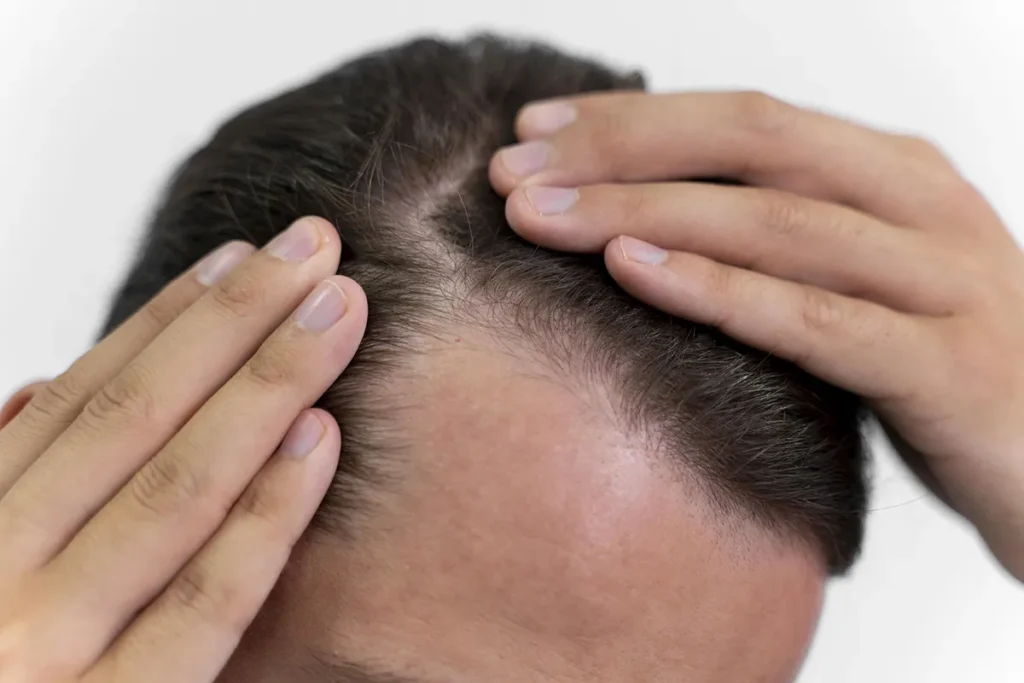
Male pattern baldness, or androgenetic alopecia, is a complex condition. It’s influenced by genetics and hormones. It shows a distinct hair loss pattern that can vary in severity.
The Science Behind Androgenetic Alopecia
At the heart of male pattern baldness is the hormone dihydrotestosterone (DHT). DHT is a derivative of testosterone. It causes hair follicles to shrink, leading to thinner, shorter hairs and eventually, a stop in hair growth.
Genetics play a huge role in androgenetic alopecia. People with a family history of baldness are more likely to get it. The condition is also influenced by how testosterone is converted to DHT. This conversion happens more in some people due to their genes.
Early Signs and Diagnosis
Early signs of male pattern baldness include hair thinning on top of the scalp and a receding hairline. The Hamilton-Norwood classification is used to categorize baldness. It ranges from a minimal recession of the hairline (Type I) to complete baldness (Type VII).
Understanding the science behind male pattern baldness and recognizing its early signs are key. By spotting the patterned hair loss early, people can look into different treatments to lessen its impact.
Evidence-Based Solutions for Male Pattern Baldness
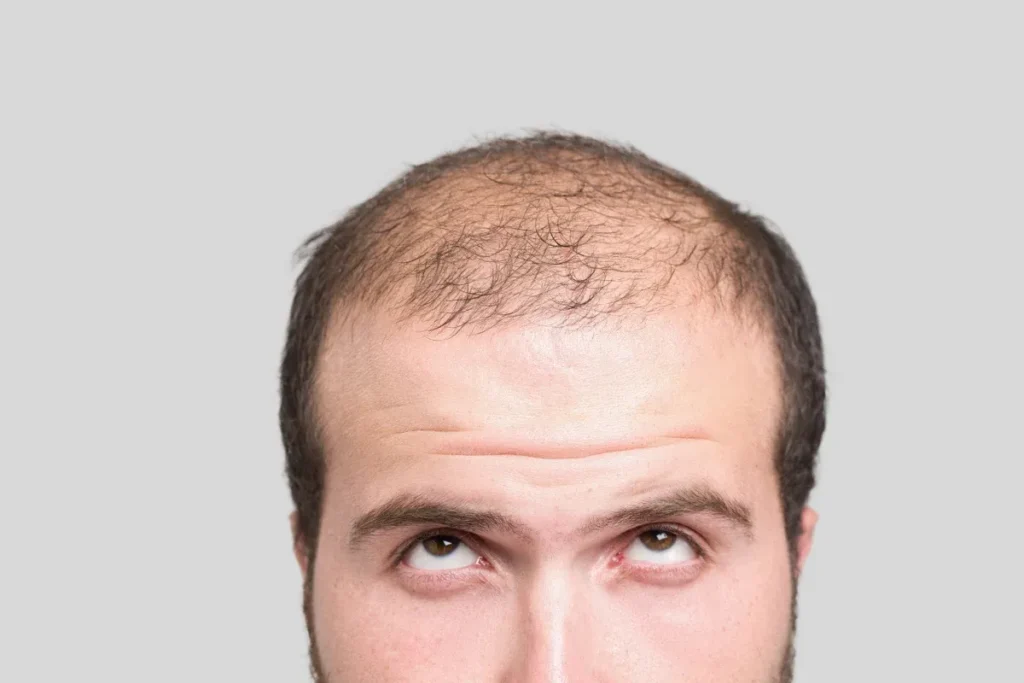
Take back your hair with the latest treatments for male pattern baldness. Many options have shown promise, thanks to scientific studies and trials.
FDA-Approved Medications
The FDA has approved minoxidil and finasteride for treating hair loss. Minoxidil is applied to the scalp to boost hair growth and slow loss. Finasteride is taken by mouth to block a hormone that causes hair loss.
Dutasteride also blocks this hormone and may help with hair loss, though it’s not approved for everyone.
Advanced Medical Interventions
Hair transplantation is a popular choice for those wanting a more invasive treatment. It moves healthy hair follicles from the back to the bald spots. This method can give a natural-looking hairline.
Other options include low-level laser therapy (LLLT) and platelet-rich plasma (PRP) therapy. They work to grow hair in different ways.
Preventative Strategies and Supplementary Approaches
Preventing hair loss is just as important as treating it. Eating well, managing stress, and gentle hair care can help.
Some people also try saw palmetto and biotin supplements. But, their effectiveness varies and should be used carefully.
Combining these solutions can help create a strong plan against male pattern baldness.
Conclusion
Your journey to fight male pattern baldness begins with understanding it. This condition, known as androgenetic alopecia, affects millions of men. It leads to hair loss and can lower self-confidence.
There are effective treatments and ways to prevent it. FDA-approved medicines and medical treatments can help. Also, natural hair care products with powerful ingredients can promote hair growth and hide thinning.
By taking a complete approach to hair care, you can change your life. Use the latest hair care solutions and stay on top of beauty trends. This way, you can find beauty that fits everyone.
Your journey to a better you starts now, focusing on hair health and beauty. Choose the right treatments and adopt a holistic approach. This will not just fight male pattern baldness but also enhance your beauty routine.
FAQ
What is male pattern baldness, and what is its scientific name?
Male pattern baldness, also known as androgenetic alopecia, is a common condition. It causes hair to thin and fall out, mainly on the top and crown of the scalp.
What causes androgenetic alopecia, and how does it progress?
Androgenetic alopecia is caused by genetics and dihydrotestosterone (DHT), a strong form of testosterone. DHT makes hair follicles shrink, leading to thinner, shorter hairs and eventual loss.
What are the early signs of male pattern baldness, and how is it diagnosed?
Early signs include a receding hairline, thinning on the crown, and less hair overall. Doctors use the Hamilton-Norwood classification to diagnose, based on the extent and pattern of hair loss.
What are the available treatments for male pattern baldness?
Treatments include FDA-approved medications like minoxidil and finasteride. Other options are low-level laser therapy (LLLT) and platelet-rich plasma (PRP) therapy. Keeping a healthy diet and reducing stress also help.
Can male pattern baldness be prevented or slowed down?
Male pattern baldness can’t be stopped, but its progress can be slowed. Treatments and strategies like gentle hair care, less heat styling, and a balanced diet can help.
Are there any natural remedies for male pattern baldness?
Natural remedies like saw palmetto, biotin, and keratin may promote hair growth. But their effectiveness varies. Always talk to a healthcare professional before trying supplements.
How effective are FDA-approved medications for male pattern baldness?
FDA-approved medications like minoxidil and finasteride have been shown to slow hair loss and stimulate growth. Minoxidil is applied to the scalp, and finasteride is taken orally.
What are the benefits of advanced medical interventions for male pattern baldness?
Treatments like LLLT and PRP therapy can boost hair growth and density. They improve scalp health and are often used with FDA-approved medications for better results.
References
JAMA Network. Evidence-Based Medical Insight. Retrieved from https://jamanetwork.com/journals/jamadermatology/fullarticle/2817326





