
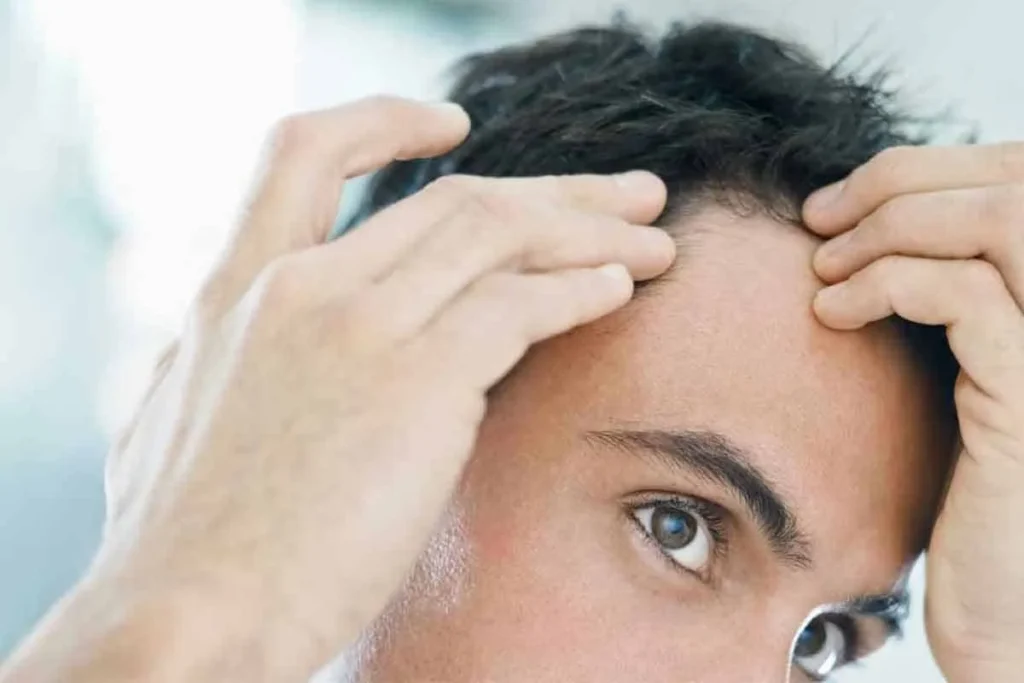
Seeing a receding hairline or more hair in the shower can be scary. But it’s something many men face. Early detection is key to fight hair loss well. Male pattern baldness, or androgenetic alopecia, hits a lot of men, with about 25-30% losing hair by age 30.
Spot the early signs of balding male patterns today. Use this essential guide to find amazing ways to stop loss and keep your hair full.
Hair loss can start at any age, but it’s often seen in men’s 30s and 40s. Genetics, hormonal shifts, or health issues can lead to balding. Spotting early signs lets men act fast to stop their hair loss.
Key Takeaways
Early detection is key for effective hair loss treatment.
Male pattern baldness affects millions of men worldwide.
Hair loss can be caused by genetics, hormonal changes, or health conditions.
Recognizing early signs can help men take proactive steps.
Professional intervention can significantly impact outcomes.
Understanding Male Pattern Baldness

Male pattern baldness is linked to genetics and hormones, like dihydrotestosterone (DHT). It’s a common issue for many men around the world.
What Causes Hair Loss in Men
Hair loss in men often starts with hair follicles becoming sensitive to DHT, a byproduct of testosterone. This sensitivity causes hair to thin over time. The hair growth cycle gets shorter, and the hairs become finer and shorter.
Genetics also play a big part. Men with a family history of baldness are more likely to lose their hair. Androgenetic alopecia is the term for this condition, showing how male hormones are involved.
Genetic predisposition plays a significant role.
Hormonal influences, like DHT, contribute to hair loss.
The condition shows a specific pattern of hair loss.
Age Factors and Prevalence
Male pattern baldness becomes more common with age. By age 30, about 25-30% of men start to lose hair. This number jumps to 50% by age 50. Knowing this can help men tackle their hair loss better.
As men get older, their hair growth cycle slows down. The effects of DHT become more noticeable, leading to typical balding patterns. Spotting these signs early can help men find the right treatments or advice.
By age 30, 25-30% of men experience hair loss.
This percentage increases to 50% by age 50.
Older men are more likely to experience significant hair loss.
Signs of Balding Male: What to Look For
It’s important for men to spot balding early. This way, they can find treatments and act fast to stop hair loss.
Receding Hairline and M-Shaped Pattern
A receding hairline forms an M-shaped pattern. It starts at the temples and moves back. A hair expert says, “The receding hairline is a clear indicator of male pattern baldness, and early intervention can make a significant difference.”
Thinning at the Crown
Thinning at the crown is another sign of balding. This area loses hair easily because of DHT sensitivity. As hair loss grows, the thinning area gets bigger, leading to a bald spot.
Increased Hair Shedding
Shedding more than 50-100 hairs a day is a sign of balding. This can happen due to hormones, stress, or genes. Men should talk to a doctor if they notice this.
Changes in Hair Quality and Texture
Changes in hair quality and texture mean balding might be starting. Hair becomes finer and weaker as follicles shrink. This makes hair look less dense and unhealthy.
Knowing these signs helps men tackle hair loss early. They can try treatments, change their lifestyle, or other options. Catching balding early is key to managing it well.
Conclusion: Monitoring and Next Steps
It’s important to watch for signs of balding early on. Hair loss can happen slowly over time. Taking photos every few months can help track changes.
There’s no surefire way to stop balding, but treatments can slow it down. Options like minoxidil, laser therapy, and hair transplants are available. These can help manage hair loss and even grow new hair.
Managing hair loss requires a mix of treatments, lifestyle changes, and more. By trying these options, men can promote healthy hair growth. This helps address balding concerns and boosts confidence.
FAQ
How do I know if I’m balding?
Look for signs like a receding hairline and thinning at the crown. Also, watch for more hair shedding and changes in hair quality.
What are the early signs of male baldness?
Early signs include a receding hairline and thinning at the crown. You might also notice more hair shedding than usual.
What causes hair loss in men?
Male pattern baldness is a common cause. It’s influenced by genetics and hormones, like dihydrotestosterone (DHT).
At what age does balding typically start?
Balding can start in the late teens or early twenties. By age 30, about 25-30% of men experience hair loss.
How can I address my hair loss concerns?
Recognize the early signs of balding. Then, explore treatments like medical options or lifestyle changes to help your hair.
What are the available treatments for balding?
Treatments include medical options and lifestyle changes. These can help slow down hair loss and promote growth.
Can I prevent or slow down balding?
While you can’t always prevent balding, knowing the causes helps. Early recognition lets you take steps to slow it down.
How common is male pattern baldness?
It affects about 50% of men by age 50. By older ages, it reaches 70%.
What are the first signs of male pattern baldness?
Look for a receding hairline and thinning at the crown. Also, notice changes in hair quality, like it becoming finer or weaker.
How can I promote healthy hair growth?
Keep a healthy lifestyle and use gentle hair care products. Also, consider medical treatments or other growth-stimulating options.
References
National Center for Biotechnology Information. Evidence-Based Medical Insight. Retrieved from https://pubmed.ncbi.nlm.nih.gov/24566563/

