
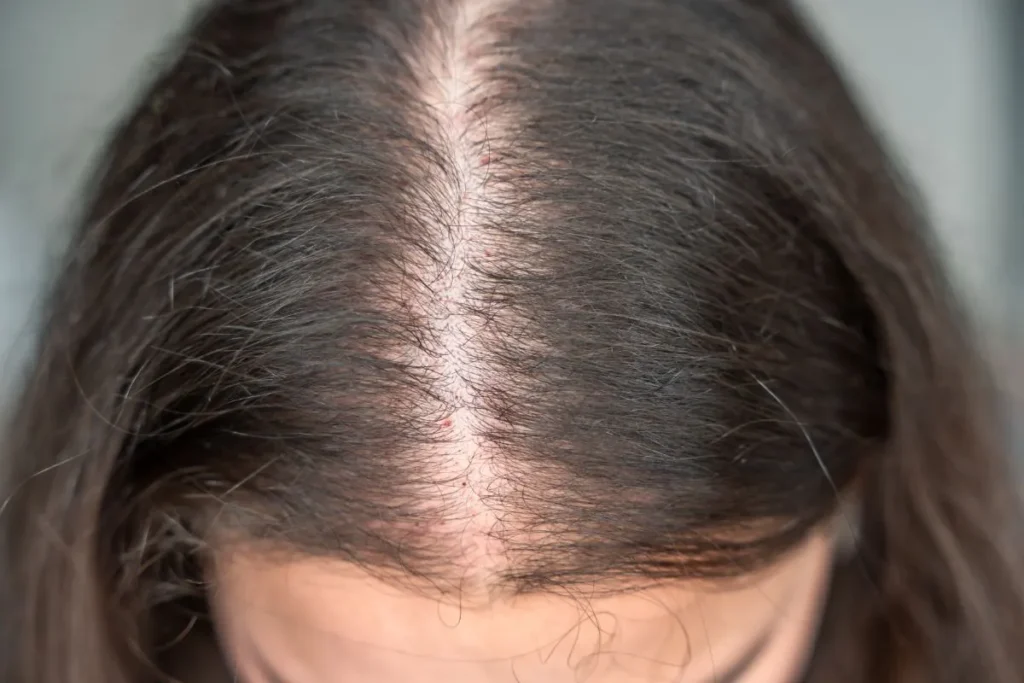
Ever noticed your hair falls out more when you’re stressed? The link between stress and hair loss is real, backed by science.
GoldCity Center knows how important it is to understand this link. Stress-induced hair loss affects millions. Studies show stress can start or make hair loss worse through many ways.
Looking into how stress affects alopecia areata helps us find ways to stop hair loss and grow healthy hair.
Stop stress related alopecia with the best power tips. Learn amazing ways to manage your health and regrow your hair naturally and fast.
Key Takeaways
Stress can trigger and make hair loss worse.
Alopecia areata is linked to stress.
Knowing how stress affects hair loss is key to treating it.
Many ways are involved in stress-related hair loss.
Good care is needed to fight stress-induced alopecia.
What is Alopecia and Its Different Forms

Alopecia is more than just hair loss. It’s a complex condition with many forms, each with its own characteristics and triggers. It affects millions of people worldwide, causing distress and impacting their quality of life.
Alopecia areata is a common form of alopecia. It’s an autoimmune condition where the immune system attacks hair follicles. This leads to hair loss, often causing bald spots on the scalp or body.
Alopecia Areata: An Autoimmune Condition
Alopecia areata happens when the immune system attacks hair follicles in the anagen phase. This forces them into the catagen phase too soon. This disrupts hair growth, causing patchy hair loss.
“Alopecia areata is a complex condition,” say dermatological experts. It involves genetics, environment, and the immune system.
About 2 percent of the world’s population has alopecia areata. It can affect anyone, at any age or gender. It often starts in childhood or young adulthood.
Stress-Induced Hair Loss Patterns
Stress can trigger or worsen alopecia areata in some people. The link between stress and hair loss is complex. It involves biological mechanisms that can disrupt hair growth cycles.
Stress management is key for those with stress-induced hair loss. Techniques like meditation and yoga can help reduce stress’s impact on hair growth.
Understanding alopecia’s different forms and triggers is vital for effective treatment. Recognizing stress’s role in alopecia helps individuals manage their condition. This promotes healthier hair growth.
The Science Behind Stress Related Alopecia
Recent studies have uncovered a deep link between stress and alopecia. This connection is not just a coincidence. A growing amount of evidence shows that stress can trigger or make alopecia areata worse.
Scientific Evidence of the Stress-Hair Loss Connection
Many studies have looked into how stress affects hair loss. One key finding is that stress turns on the HPA axis. This leads to the release of CRH, which affects hair growth cycles. Research shows that people under a lot of stress are more likely to get alopecia areata, a condition that causes patchy hair loss.
A study in the Journal of Clinical and Aesthetic Dermatology found that psychological stress is a big factor in getting and worsening alopecia areata. This is because stress makes the body release hormones that can harm hair follicles.
Heredity, Psychological Stress, and Lifestyle Factors
Genetics play a big role in alopecia areata. People with a family history are more likely to lose hair due to stress. Psychological stress is a big trigger for alopecia areata in people who are prone to it. Lifestyle choices, like diet and stress management, also affect how stress impacts hair loss.
It’s important to understand how these factors work together to manage stress-related alopecia. By tackling heredity, psychological stress, and lifestyle, people can fight hair loss.
In conclusion, the science behind stress-related alopecia is complex. Recognizing stress’s role in alopecia areata helps people find treatments and make lifestyle changes for healthier hair.
Biological Mechanisms: How Stress Damages Hair Follicles
Stress can harm hair growth by affecting how our body works. When we feel stressed, our body changes in many ways. These changes can hurt the health of our hair follicles.
The Hypothalamic-Pituitary-Adrenal (HPA) Axis Response
The HPA axis is key in how we handle stress. It connects the hypothalamus, pituitary gland, and adrenal glands. When we’re stressed, the hypothalamus sends out a hormone called CRH.
This hormone makes the pituitary gland release ACTH. ACTH then tells the adrenal glands to make cortisol. Cortisol affects many things in our body, including how our hair grows.
Cortisol’s impact on hair growth is big. It can shorten the anagen phase and prolong the telogen phase. This means more hair falls out and less grows.
Corticotropin-Releasing Hormone Effects
CRH is very important in how we react to stress. It can directly harm hair follicles. When we’re stressed, CRH receptors in our skin get more active.
This can mess up our hair growth cycles. CRH also affects other hormones and chemicals that are good for our hair follicles.
Stress affects hair follicles in many ways. It’s not just the HPA axis. Knowing how stress works is key to finding treatments for stress-related hair loss.
The HPA axis response is triggered by stress, leading to hormonal changes.
Cortisol release affects hair growth by altering the hair growth cycle.
CRH directly impacts hair follicles by disrupting normal growth cycles.
Conclusion: Managing Stress for Healthier Hair
Understanding the link between alopecia stress and hair loss is key. It helps us tackle this common issue. By recognizing stress’s impact on hair, we can start a journey to reduce its effects.
Practices like mindfulness, meditation, and yoga help a lot. They not only reduce stress but also boost overall health. This leads to a natural glow and timeless beauty.
Adding stress-reducing activities to our daily lives empowers us. It helps us control our hair health. This approach to beauty promotes self-love and confidence, making our hair stronger and more vibrant.
Living a balanced life that includes stress management and self-care is transformative. It helps us unlock our inner glow and own our beauty. This way, we can elevate our beauty routine and enjoy a beauty that grows with us.
FAQ
Can stress really cause hair loss?
Yes, stress can lead to hair loss. It can make conditions like alopecia areata and telogen effluvium worse.
What is alopecia areata?
Alopecia areata is an autoimmune disease. It causes patchy hair loss and can be triggered or worsened by stress.
How does stress affect hair growth?
Stress can mess up the hair growth cycle. This leads to too much hair shedding and loss.
Is stress-induced alopecia reversible?
Yes, managing stress and living a healthy lifestyle can reverse hair loss caused by stress in some cases.
Can stress cause permanent hair loss?
Stress can lead to hair loss, but it’s rare for it to be permanent. Long-term stress can cause prolonged hair loss, though.
How does the HPA axis response contribute to hair loss?
The HPA axis response to stress releases hormones like cortisol. These hormones can harm hair follicles, causing hair loss.
Can lifestyle changes help manage stress-related hair loss?
Yes, a healthy lifestyle can help. This includes eating well, exercising regularly, and managing stress.
Is there a link between heredity and stress-related alopecia?
Yes, people with a family history of alopecia areata or autoimmune diseases are more likely to experience stress-related hair loss.
Can stress management techniques help prevent hair loss?
Yes, stress-reducing activities like meditation or yoga can help. They can reduce stress’s impact on hair growth and lower hair loss risk
References
JAMA Network. Evidence-Based Medical Insight. Retrieved from https://www.jamanetwork.com/journals/jamadermatology/fullarticle/2668654

