

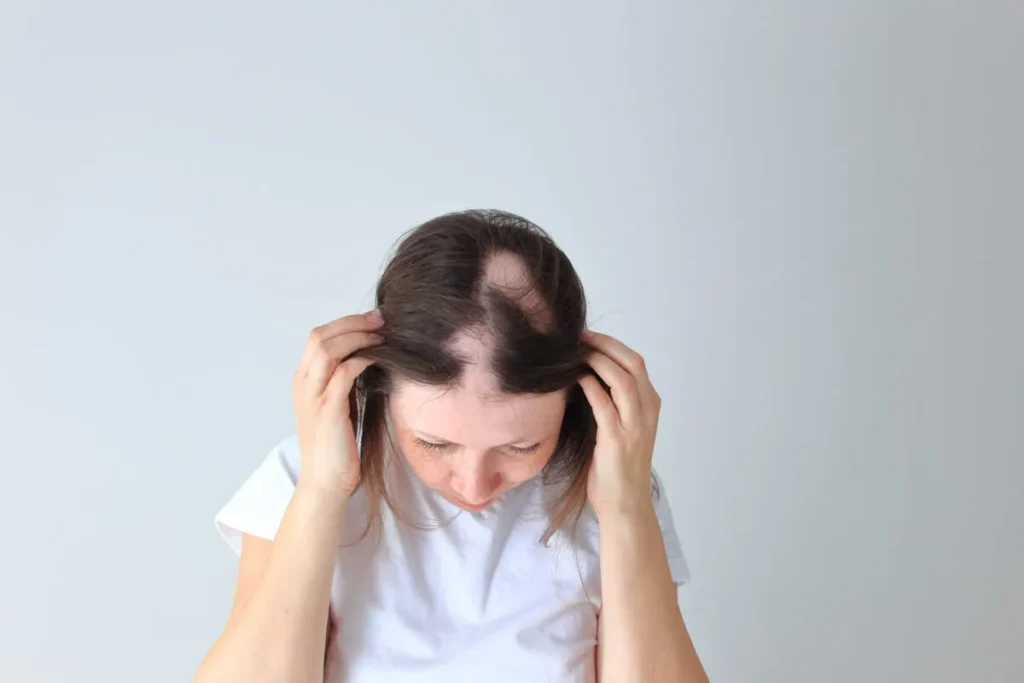
Hair thinning in the front and crown is a big problem for millions of women. Over 50% of women notice hair loss at some time, affecting their self-esteem and life quality.
Female pattern hair loss, or androgenetic alopecia, is a genetic condition. It makes hair follicles shrink because of dihydrotestosterone (DHT). This leads to women’s hair thinning in the front, causing a wider hair part and visible scalp.
It’s important for women with thinning hair to know the causes and solutions. Thanks to medical progress and a focus on patients, women now have effective treatments for hair loss.
Key Takeaways
More than 50% of women experience noticeable hair loss in their lifetime.
Female pattern hair loss is a common cause of thinning hair in women.
Hair loss can significantly impact a woman’s self-esteem and quality of life.
Advances in medical science offer effective solutions for women’s hair thinning.
A patient-centered approach to healthcare is key in addressing hair loss concerns.
Understanding Female Hair Thinning

Many women worry about thinning hair, often at the front. This problem comes from genetics, hormones, and the environment. It can start in a woman’s 30s and get worse over time.
Common Patterns and Signs
Women often notice their hair thinning in certain ways. This includes a wider part and less hair on the crown and front. Spotting these signs early is key to acting fast.
There are different types of hair thinning in women. These include female pattern baldness, traction alopecia, and frontal fibrosing alopecia. Each has its own reasons and signs.
Primary Causes of Frontal Hair Thinning
The main reasons for thinning hair at the front are genetics, hormonal changes, and not getting enough nutrients. Hormonal imbalances, like too much DHT, can make hair follicles smaller. This leads to thinner hair.
Psychological Impact
Hair thinning can really affect a woman’s mind. It can lower her self-esteem and confidence. Dealing with the emotional side is just as important as treating the hair itself.
Knowing why and how hair thinning happens is the first step to fixing it. By facing the issue and its effects, women can start to regain their hair’s health and their confidence.
Treatment for Thinning Hair in Front

Women with thinning hair in the front have many treatment options. These include medical treatments and lifestyle changes. Over 50% of women notice hair loss, with female pattern hair loss being the main cause. Luckily, there are many ways to get a fuller head of hair.
Medical Interventions
Medical treatments are often the first step against thinning hair. Minoxidil is a well-known, proven medication that helps hair grow and slows loss. It’s available without a prescription and applied directly to the scalp.
Low-level laser therapy (LLLT) is another option. It uses a low-level laser or light device to stimulate hair growth. LLLT increases blood flow to the scalp, helping hair follicles stay healthy.
Minoxidil: Stimulates hair growth and slows down hair loss
Low-Level Laser Therapy (LLLT): Increases blood flow to the scalp
Platelet-rich plasma (PRP) therapy: Involves injecting platelet-rich plasma into the scalp to stimulate hair growth
At-Home Solutions
At-home solutions can also help with thinning hair. Scalp massage is a simple yet effective method. It increases blood flow to the scalp, promoting hair growth. Regular scalp massages also reduce stress, which can cause hair loss.
Using hair thickening products is another option. These products, containing keratin, biotin, and glycerin, can make hair appear thicker and fuller.
Scalp massage: Increases blood flow and reduces stress
Hair thickening products: Contains keratin, biotin, and glycerin
Coconut oil and rosemary essential oil: Nourishes the scalp and promotes hair growth
Lifestyle and Hair Care Adjustments
Making lifestyle and hair care changes can also help. A balanced diet is key. It should include vitamins and minerals that promote hair growth, like iron, zinc, and biotin.
Reducing heat styling and using gentle hair care products can also help. Handling hair gently, avoiding excessive brushing or pulling, is also beneficial.
By adding these treatments and adjustments to your daily routine, you can manage thinning hair in the front. This will help you achieve a fuller, healthier head of hair.
Conclusion
Women’s hair thinning in front is a common issue that affects many. Understanding its causes and exploring treatments can be empowering. Thin hair female patterns can be addressed through medical interventions, at-home solutions, and lifestyle adjustments.
For those experiencing hairline thinning, there are reassuring options. From addressing female thinning hair front head to understanding if is thinning hair normal, the journey is multifaceted.
By understanding and tackling thinning hair, women can unlock a more confident version of themselves. With the right approach, achieving a radiant glow and timeless beauty is possible, even with hair thinning.
FAQ
Is thinning hair in front normal for women?
Yes, thinning hair in front is common for many women. It’s often due to genetics, hormonal changes, and aging.
What are the primary causes of thinning hair on the crown in females?
Hormonal imbalances, genetics, stress, and tight hairstyles are main causes. Tight braids or ponytails can also lead to hair loss.
How can I help thinning hair as a female?
Eat a healthy diet rich in vitamins and minerals. Reduce stress and use gentle hair care products. These steps nourish your hair.
What are some effective options for women with thinning hair?
Options include medical treatments like minoxidil and low-level laser therapy. Hair transplantation is also an option. At-home solutions like scalp massages and thickening shampoos help too.
How can I fix thinning hair on top of my head?
Use volumizing products and reduce heat styling. Protect your hair from damage. A dermatologist or trichologist can offer personalized advice.
Is hair thinning at the front a sign of a serious health issue?
Hair thinning can signal health issues like thyroid disorders or autoimmune diseases. Nutritional deficiencies can also cause it. If worried, see a healthcare professional.
What helps thinning hair in women?
Treatments include medications like minoxidil and dietary changes. Reducing stress through relaxation helps too.
Can thinning hair be treated without medication?
Yes, lifestyle changes can treat thinning hair. Improve your diet, reduce stress, and use gentle hair care products.
How can I promote hair growth for thinning hair?
Keep your scalp healthy and reduce breakage. Use products with biotin, keratin, and saw palmetto to stimulate growth.
Are there any natural remedies for thinning hair?
Yes, use coconut oil, rosemary essential oil, and castor oil for a healthy scalp. A balanced diet and low stress also support hair health.
References
National Center for Biotechnology Information. Evidence-Based Medical Insight. Retrieved from https://pmc.ncbi.nlm.nih.gov/articles/PMC6322157/[1


