When it comes to male pattern baldness medical devices, patients often wonder which technology truly delivers visible results. This article explores the range of devices available, explains how they work, and offers guidance on selecting the right option for individual needs. With over 30% of men experiencing noticeable thinning by age 35, understanding these tools is essential for anyone seeking a sustainable solution.
We will cover the science behind hair loss, review the most popular device categories, compare their efficacy, and highlight practical considerations such as safety, cost, and maintenance. Whether you are exploring low‑level laser therapy, microneedling pens, or advanced topical delivery systems, the information here will help you make an informed decision.
By the end of this guide, you will have a clear picture of which medical devices align with your goals, and how Gold City Medical Center integrates these technologies into a comprehensive, integrative treatment plan.
Understanding Male Pattern Baldness and Available Technologies
Male pattern baldness, medically known as androgenetic alopecia, is driven by genetic factors and the hormone dihydrotestosterone (DHT). Over time, hair follicles shrink, leading to thinner strands and eventual loss. Modern medical devices aim to counteract this process through stimulation, medication delivery, or physical alteration of the scalp environment.
Below is a comparison of the primary device categories currently used in clinical practice:
| Device Type | Mechanism | Typical Use | Evidence Level |
|---|---|---|---|
| Low‑Level Laser Therapy (LLLT) | Photobiomodulation stimulates cellular activity | Home or clinic‑based sessions 3‑5 times/week | Moderate (multiple RCTs) |
| Microneedling Pens | Micro‑injuries trigger growth factors | Combined with topical agents, weekly | Emerging (small‑scale studies) |
| Scalp Micropigmentation Tools | Pigment implantation creates the illusion of density | Cosmetic, single‑session or series | Observational reports |
| Topical Delivery Devices | Controlled release of minoxidil or finasteride | Daily application | High (well‑established) |
Choosing the right technology depends on the stage of hair loss, personal preferences, and budget. While some men benefit from a single device, many achieve optimal outcomes by combining therapies—an approach Gold City Medical Center frequently adopts.
Low‑Level Laser Therapy Devices: How They Work
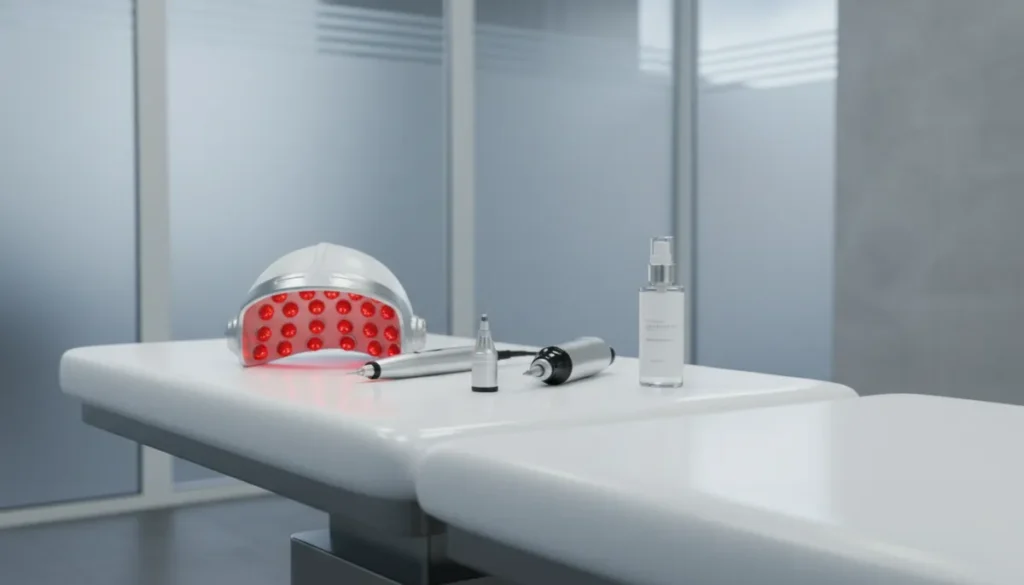
Low‑level laser therapy (LLLT) is one of the most widely studied hair growth products for men. The devices emit red or near‑infrared light at wavelengths between 630‑670 nm, which penetrates the scalp and enhances mitochondrial activity in hair follicles. This photobiomodulation increases blood flow, reduces inflammation, and promotes the transition of follicles from the telogen (resting) phase to the anagen (growth) phase.
Key advantages of LLLT include:
- Non‑invasive and painless treatment.
- Minimal side effects—mostly temporary scalp warmth.
- Convenient home use with FDA‑cleared caps, combs, or helmets.
Clinical evidence suggests that consistent use for at least 24 weeks can lead to a 10‑15% increase in hair density. However, results vary based on baseline hair loss severity and adherence to the treatment schedule.
When evaluating a laser device, consider the following factors:
- Power output: Devices delivering 5‑10 mW per diode are typical for therapeutic use.
- Number of diodes: More diodes generally provide broader coverage.
- Wavelength specificity: 655 nm is common for hair regrowth.
- Session duration: Recommended 15‑30 minutes per session.
Gold City Medical Center offers in‑clinic laser sessions and can recommend FDA‑cleared home devices that complement a broader treatment plan, including minoxidil and finasteride therapy.
Microneedling Pens and Scalp Micropigmentation Tools
Microneedling pens create micro‑channels in the scalp, prompting a wound‑healing response that releases growth factors such as platelet‑derived growth factor (PDGF) and vascular endothelial growth factor (VEGF). When combined with topical solutions like minoxidil, the enhanced absorption can boost efficacy.
Typical microneedling protocols for male pattern baldness involve:
- Needle lengths of 0.5‑1.5 mm for scalp use.
- Sessions spaced 4‑6 weeks apart.
- Adjunctive application of a hair growth serum immediately after needling.
Scalp micropigmentation (SMP) is a cosmetic technique that uses pigment implantation to mimic the appearance of hair follicles. While SMP does not stimulate actual hair growth, it provides an immediate visual density that can be combined with medical devices for a comprehensive aesthetic result.
Below is a quick reference table comparing microneedling and SMP:
| Aspect | Microneedling Pens | Scalp Micropigmentation |
|---|---|---|
| Primary Goal | Stimulate natural hair regrowth | Create illusion of density |
| Procedure Frequency | Every 4‑6 weeks | 1‑3 sessions total |
| Downtime | Minimal, mild redness | Up to 2 days of mild irritation |
| Combination Potential | Yes, with minoxidil, finasteride | Often paired with LLLT or medication |
Gold City Medical Center’s specialists are trained in both microneedling and SMP, ensuring that patients receive a tailored plan that addresses both biological and visual aspects of hair loss.
Topical Delivery Systems: Minoxidil and Finasteride Devices
Topical delivery devices have evolved beyond simple bottles. Modern systems use pumps, foams, or micro‑emulsion technology to improve absorption of active ingredients such as minoxidil for men and topical finasteride. These devices often incorporate controlled‑release matrices that maintain therapeutic concentrations over several hours.
Key benefits include:
- Reduced scalp irritation compared with traditional solutions.
- Precise dosing that minimizes waste.
- Compatibility with other device‑based therapies.
Research indicates that daily application of 5% minoxidil combined with a low‑level laser regimen can produce synergistic effects, increasing hair shaft thickness by up to 20% after six months. Topical finasteride, delivered via a gel or patch, offers similar efficacy to oral dosing while limiting systemic exposure.
When selecting a delivery device, evaluate:
- Formulation type (foam vs. solution).
- Presence of soothing agents like aloe or vitamin E.
- Ease of use—pump dispensers are often preferred for consistency.
- Compatibility with other treatments (e.g., laser caps).
Gold City Medical Center provides a personalized assessment to determine whether a patient would benefit from a specialized topical device, and can prescribe compounded formulations that align with the chosen medical device strategy.
Choosing the Right Device: Factors to Consider
Selecting the most appropriate hair loss treatment device involves a balance of clinical evidence, personal lifestyle, and financial considerations. Below is a checklist to guide decision‑making:
- Stage of baldness: Early thinning may respond well to LLLT and topical devices; advanced loss may require microneedling or SMP for visual improvement.
- Commitment level: Devices requiring daily use (topical pumps) demand strict adherence, while weekly laser sessions are less demanding.
- Budget: Home laser caps range from €200‑€800; in‑clinic treatments can cost €1,000‑€3,000 per year.
- Safety profile: Review potential side effects; for example, topical finasteride may cause mild irritation, while laser therapy is generally well tolerated.
- Combination potential: Many patients achieve best results by pairing two or more modalities.
Below is a decision matrix that aligns common concerns with recommended device categories:
| Concern | Recommended Device(s) | Typical Outcome Timeline |
|---|---|---|
| Early thinning, desire for non‑invasive option | Low‑Level Laser Therapy, topical minoxidil device | 3‑6 months for noticeable density |
| Moderate loss, willing to combine treatments | Microneedling pen + topical finasteride | 4‑8 months for thicker shafts |
| Advanced baldness, focus on appearance | Scalp Micropigmentation, hair transplant (surgical) | Immediate visual improvement, long‑term stability |
| Budget‑conscious, prefers home use | FDA‑cleared laser cap, pump‑dispensed minoxidil | 6‑12 months for gradual regrowth |
Consultation with a qualified specialist ensures that the selected device aligns with your unique hair loss pattern and health profile. Gold City Medical Center’s multidisciplinary team conducts a thorough assessment, including scalp analysis and medical history, before recommending a personalized device regimen.
Why Choose Gold City Medical Center
Gold City Medical Center combines cutting‑edge medical devices with an integrative approach to hair restoration. Our team of experienced dermatologists and trichologists evaluates each patient individually, ensuring that the chosen technology matches the specific stage of male pattern baldness and personal goals. We offer on‑site laser therapy, state‑of‑the‑art microneedling, and customized topical delivery systems, all supported by evidence‑based protocols. By integrating these devices with comprehensive health and beauty services, we provide a seamless, results‑driven experience for every client.
Ready to restore confidence in your hair? Contact Gold City Medical Center today to schedule a personalized consultation and discover the most effective medical devices for your needs.
Take the first step toward thicker, healthier hair—our experts are here to guide you every step of the way.
FAQ
What are the most common medical devices for male pattern baldness?
The main devices include low‑level laser therapy (LLLT) caps, microneedling pens, scalp micropigmentation tools, and advanced topical delivery systems for minoxidil or finasteride.
How does low‑level laser therapy promote hair growth?
LLLT delivers red or near‑infrared light that boosts cellular metabolism in hair follicles, increasing blood flow and shifting follicles from the resting to the growth phase.
What should I expect from microneedling treatments for hair loss?
Microneedling creates micro‑channels that trigger growth factor release, and when paired with topical serums, it can improve hair density over several months.
Are topical delivery systems for minoxidil more effective than traditional solutions?
Advanced delivery systems can improve absorption and reduce irritation, often leading to better results than standard liquid solutions.
Can I combine different hair loss devices for better results?
Yes, many clinicians recommend a multimodal approach that pairs devices like LLLT, microneedling, and topical delivery for synergistic outcomes.
How much does it typically cost to use these hair loss devices?
Costs vary widely: home laser caps range €200‑€800, in‑clinic sessions can be €1,000‑€3,000 per year, microneedling pens start around €150, and topical delivery devices depend on formulation.





