Hair growth PRP treatment has emerged as a leading solution for individuals seeking to restore thinning hair without surgery. This article explains how platelet‑rich plasma therapy works, what patients can expect during each session, and why it may be the right choice for your hair‑loss journey. With an increasing number of people turning to minimally invasive options, understanding the science behind PRP can help you make an informed decision.
According to recent dermatology surveys, more than 30 % of adults experience noticeable hair thinning by the age of 40, and many are looking for effective, non‑surgical alternatives. PRP offers a natural approach by using your own blood components to stimulate follicles, potentially leading to thicker, healthier hair over time.
In the sections that follow, we will explore the fundamentals of platelet‑rich plasma, walk through a typical treatment session, compare PRP with other hair‑restoration methods, and address safety, cost, and expected outcomes. Whether you are new to the concept or seeking deeper insight, this guide provides a clear roadmap to help you decide if PRP is the right path for you.
Understanding Platelet‑Rich Plasma Therapy for Hair
Platelet‑rich plasma (PRP) is a concentration of platelets derived from a small sample of your own blood. These platelets contain growth factors that can accelerate tissue repair and regeneration. When injected into the scalp, PRP aims to revitalize dormant hair follicles, improve blood flow, and extend the growth phase of each strand.
Key components of PRP therapy include:
- Platelet‑derived growth factor (PDGF)
- Transforming growth factor‑beta (TGF‑β)
- Epidermal growth factor (EGF)
- Vascular endothelial growth factor (VEGF)
These proteins work synergistically to signal cells in the hair follicle to enter the anagen (growth) phase more robustly. The process is supported by research indicating that PRP can increase hair density by up to 30 % after a series of treatments.
PRP is often referred to as a form of baldness therapy because it targets the underlying biology of hair loss rather than merely covering it. Unlike topical medications, PRP delivers growth factors directly to the scalp, making it a targeted approach that many dermatologists recommend for both male and female pattern hair loss.
Below is a quick comparison of PRP versus other common hair‑loss interventions:
| Method | Invasiveness | Typical Sessions | Average Hair Density Increase |
|---|---|---|---|
| PRP Injection | Minimally invasive | 3‑4 sessions over 6 months | 15‑30 % |
| Finasteride (oral) | Non‑invasive | Daily oral dose | 10‑20 % |
| Hair Transplant | Surgical | 1‑2 surgeries | 50‑100 % |
The Procedure: What Happens During a PRP Hair Session
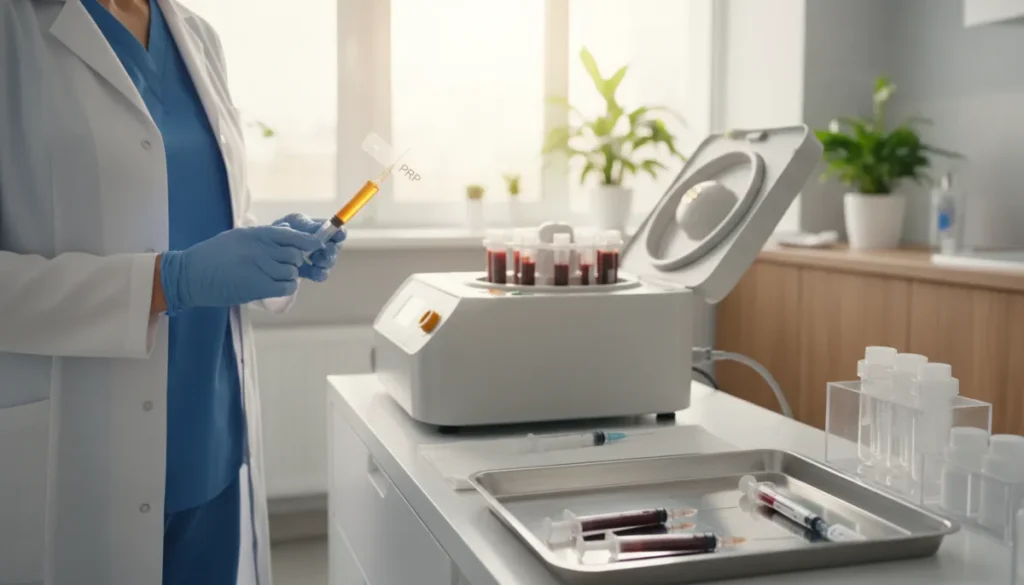
A typical PRP hair treatment begins with a brief consultation where the specialist evaluates your scalp condition, medical history, and hair‑loss pattern. This assessment helps determine the appropriate number of sessions and the concentration of platelets needed for optimal results.
During the actual procedure, the following steps are performed:
- Blood draw: Approximately 10‑20 ml of blood is drawn from the patient’s arm.
- Centrifugation: The blood sample is placed in a centrifuge for 10‑15 minutes, separating red blood cells from the plasma and concentrating the platelets.
- PRP extraction: The platelet‑rich layer is carefully extracted into a sterile syringe.
- Scalp preparation: The scalp is cleansed, and a topical anesthetic may be applied to minimize discomfort.
- Injection: Using a fine‑gauge needle, the practitioner injects the PRP into strategic points across the thinning areas, typically following a grid pattern.
- Post‑treatment care: Patients are advised to avoid harsh chemicals, excessive sun exposure, and strenuous exercise for 24‑48 hours.
The entire session usually lasts between 45 and 60 minutes, and most patients report only mild soreness similar to a standard injection. Because PRP uses your own blood, the risk of allergic reaction is virtually nonexistent, making it a safe option for many individuals.
Below is a timeline that outlines the recommended treatment schedule:
| Session | Timing | Focus Area |
|---|---|---|
| Session 1 | Week 0 | Baseline PRP injection |
| Session 2 | Week 4‑6 | Re‑stimulation of follicles |
| Session 3 | Week 12‑14 | Consolidation phase |
| Optional Session 4 | Month 6 | Maintenance boost |
Results, Benefits, and Expected Timeline
Patients typically begin to notice subtle improvements within 8‑12 weeks after the initial PRP session. These early signs may include reduced shedding, increased hair shaft thickness, and a healthier scalp appearance. Full results are usually evident after the complete series of treatments, often around the six‑month mark.
Key benefits of PRP therapy include:
- Natural approach: Utilizes autologous growth factors, avoiding synthetic chemicals.
- Minimal downtime: Most individuals resume normal activities immediately after the session.
- Versatility: Effective for both early‑stage thinning and more advanced pattern loss.
- Complementary: Can be combined with other treatments such as minoxidil or low‑level laser therapy for enhanced outcomes.
While many patients experience a noticeable increase in hair density, results can vary based on age, genetics, and the severity of hair loss. Studies suggest that individuals under 45 tend to achieve higher density gains compared with older patients, likely due to more responsive follicular cells.
Below is a summary of typical outcomes reported in clinical follow‑up studies:
| Outcome | Average Improvement | Time Frame |
|---|---|---|
| Hair count increase | 15‑30 % | 3‑6 months |
| Hair thickness | 10‑20 % | 4‑8 months |
| Patient satisfaction | 80 % report positive results | 6‑12 months |
Comparing PRP to Other Hair Restoration Options
When evaluating hair‑loss solutions, it is essential to understand how PRP stacks up against alternatives such as medication, laser therapy, and surgical transplantation. Below is a concise comparison highlighting the strengths and limitations of each approach.
Medication (Finasteride, Minoxidil)
- Non‑invasive oral or topical regimen.
- Requires daily compliance; effects may diminish after discontinuation.
- Potential systemic side effects (e.g., sexual dysfunction with finasteride).
Low‑Level Laser Therapy (LLLT)
- Uses red light to stimulate follicles.
- Convenient home devices available.
- Results are modest and may need prolonged use.
Hair Transplant Surgery
- Provides permanent follicular relocation.
- Involves surgical extraction and grafting; higher cost and recovery time.
- Best suited for advanced hair loss.
PRP stands out for its ability to promote natural regrowth without the need for ongoing medication or surgical intervention. It is also a favorable option for patients who have not responded well to finasteride or minoxidil, as the growth factors act through a different biological pathway.
Below is a decision matrix to help you choose the most appropriate treatment based on your goals and circumstances:
| Goal | Best Fit | Key Consideration |
|---|---|---|
| Non‑surgical, natural boost | PRP Injection | Requires multiple sessions |
| Daily low‑maintenance | Minoxidil | Long‑term commitment |
| Permanent solution | Hair Transplant | Surgical risks and higher cost |
| Adjunct therapy | LLLT + PRP | Combined protocols may enhance results |
Cost, Safety, and Frequently Considered Questions
Understanding the financial and safety aspects of PRP therapy helps set realistic expectations. In the Netherlands, the cost of a single PRP session typically ranges from €350 to €550, depending on the clinic’s equipment and expertise. Because a full treatment plan often includes three to four sessions, the total investment can be between €1,050 and €2,200.
Safety is a primary advantage of PRP. Since the plasma is derived from your own blood, the risk of allergic reaction or disease transmission is negligible. Minor side effects may include temporary redness, swelling, or bruising at the injection sites, all of which generally resolve within a few days.
Below are answers to several common concerns:
- How many PRP treatments are needed for hair growth? Most patients achieve noticeable results after three sessions spaced four to six weeks apart, with an optional maintenance session at six months.
- Is PRP effective for all types of hair loss? PRP works best for androgenetic alopecia in its early to moderate stages. It is less effective for extensive scarring alopecia.
- Can PRP be combined with other therapies? Yes, many clinicians combine PRP with minoxidil or low‑level laser therapy to amplify outcomes.
- What is the recovery time? There is virtually no downtime; patients can return to work immediately.
- Do I need a dermatologist? While PRP can be performed by trained physicians, a dermatologist specializing in hair loss ensures proper assessment and personalized protocol.
Before beginning treatment, a thorough consultation will address your medical history, any contraindications (such as blood disorders or active infections), and set realistic expectations based on your individual hair‑loss pattern.
Why Choose Gold City Medical Center for PRP Hair Treatment
Gold City Medical Center combines cutting‑edge technology with a holistic approach to hair restoration. Our team of experienced dermatologists and medical specialists follows strict protocols to ensure each PRP session delivers the highest concentration of growth factors. We prioritize patient comfort, offering a calm environment and personalized after‑care guidance.
By integrating PRP with our broader range of beauty and medical services, we can tailor a comprehensive plan that addresses scalp health, nutrition, and overall well‑being. Trust Gold City Medical Center to provide a safe, effective, and results‑driven path toward fuller, healthier hair.
Ready to revitalize your hair with a science‑backed, minimally invasive solution? Contact Gold City Medical Center today to schedule your personalized PRP consultation and take the first step toward natural hair regrowth.
FAQ
What is PRP treatment for hair loss?
PRP treatment uses your own platelet‑rich plasma injected into the scalp to stimulate hair follicles and promote regrowth.
How does platelet‑rich plasma stimulate hair growth?
PRP delivers growth factors that improve blood flow, cell proliferation, and follicle activity, leading to thicker hair.
What can I expect during a PRP hair session?
A typical session lasts 45‑60 minutes and includes blood draw, centrifugation, scalp preparation, and multiple micro‑injections.
How many PRP sessions are needed for noticeable results?
Most protocols recommend 3‑4 sessions spaced over 6 months, with visible improvement after 8‑12 weeks.
How does PRP compare to finasteride or minoxidil?
PRP offers a natural, non‑medicinal alternative that works via growth factors, whereas finasteride and minoxidil require daily use and may have side effects.





