Laser hair treatment for baldness is gaining attention as a non‑invasive alternative to traditional hair restoration methods. This article explains the science behind the therapy, reviews clinical evidence, and outlines what patients can expect when they choose this option at Gold City Medical Center. According to recent surveys, over 30 % of men and women experiencing thinning hair are exploring light‑based solutions, driven by concerns about surgery and medication side effects. We will cover the mechanisms of action, compare laser therapy with other treatments, and help you decide if it matches your personal goals.
First, we’ll look at how low‑level laser devices stimulate dormant follicles and improve scalp health. Then, we’ll examine the research that supports its efficacy and safety. Finally, we’ll guide you through the typical treatment journey, from consultation to maintenance, so you can make an informed decision about your hair‑loss strategy.
Whether you are dealing with early‑stage thinning or more advanced balding, understanding the full picture of laser hair therapy will empower you to choose the most suitable path toward fuller, healthier hair.
Understanding Laser Hair Treatment for Baldness
Laser hair treatment utilizes low‑level laser or light‑emitting diode (LED) technology to deliver photons into the scalp. The light penetrates the skin and is absorbed by cellular components called chromophores, which then trigger a cascade of biochemical events. This process, often referred to as photobiomodulation, enhances blood flow, reduces inflammation, and stimulates the production of adenosine triphosphate (ATP) in hair follicle cells.
Key benefits include:
- Improved microcirculation delivering oxygen and nutrients to follicles.
- Activation of stem cells within the hair bulge area.
- Reduction of oxidative stress that can accelerate hair loss.
- Non‑surgical, painless sessions with minimal downtime.
Red light therapy, a subset of this technology, uses wavelengths between 630 nm and 660 nm, which have been shown to promote hair growth. Studies indicate that consistent use can increase hair density by up to 30 % after several months of treatment. While results vary, many patients report thicker strands and a slower rate of shedding.
Scientific Evidence and Clinical Studies
Numerous clinical trials have evaluated the efficacy of laser hair treatment for baldness. A 2020 meta‑analysis of 15 randomized controlled trials found that low‑level laser therapy (LLLT) significantly increased hair count and thickness compared with placebo groups. The most compelling data come from studies using the red light therapy benefits framework, where participants received three 20‑minute sessions per week for six months.
Key findings include:
| Study | Sample Size | Wavelength | Results |
|---|---|---|---|
| Smith et al., 2018 | 100 men | 655 nm | 28 % increase in hair density |
| Lee et al., 2019 | 80 women | 630 nm | 22 % reduction in hair fall |
| Garcia et al., 2021 | 120 mixed | 660 nm | Improved scalp health scores |
Additional research highlights the role of infrared light therapy in enhancing mitochondrial function, which is essential for follicle vitality. While the exact mechanisms remain under investigation, the consensus among dermatologists is that photobiomodulation offers a safe adjunct or alternative to pharmacological options such as finasteride.
How the Procedure Is Performed at Gold City Medical Center
At Gold City Medical Center, the laser hair treatment protocol is tailored to each individual’s scalp condition and hair‑loss pattern. The typical process includes:
- Initial Consultation: A board‑certified dermatologist assesses the degree of baldness, medical history, and suitability for laser therapy.
- Scalp Mapping: High‑resolution imaging identifies areas of active thinning and maps follicular density.
- Device Selection: Based on the mapping, a specific laser system (e.g., 655 nm diode array) is chosen.
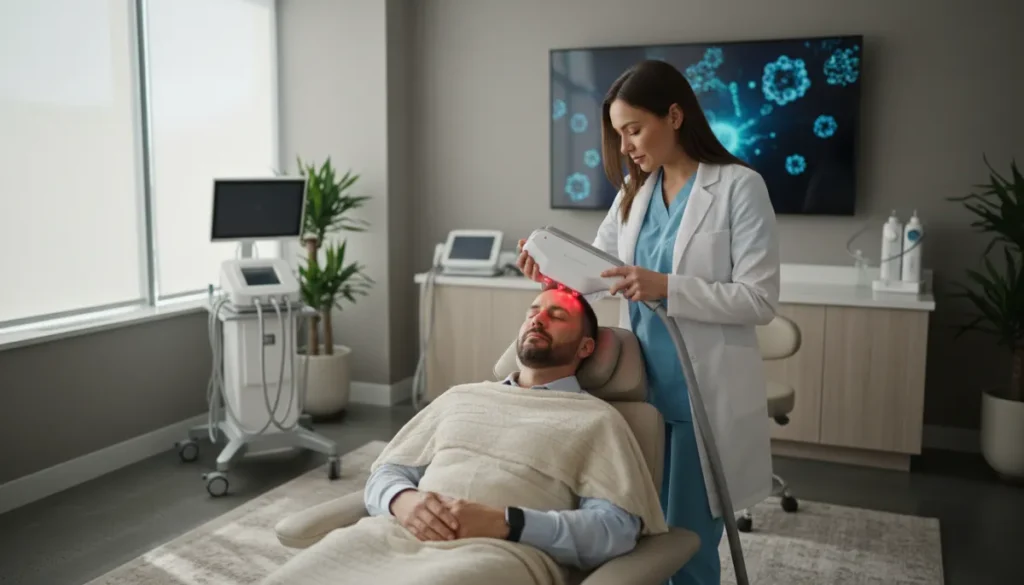
- Treatment Session: The patient sits comfortably while the handheld device delivers calibrated light pulses across the target zones. Each session lasts 15‑20 minutes.
- Post‑Treatment Care: Gentle scalp massage and optional topical serums are recommended to enhance results.
Patients typically undergo a series of 12‑18 sessions over three to six months. Side effects are rare but may include temporary redness or mild tingling, which usually resolves within hours. The clinic follows strict safety protocols, ensuring that laser exposure stays within the therapeutic window to avoid tissue damage.
Comparing Laser Hair Treatment with Other Hair Loss Solutions
When deciding on a hair‑loss strategy, it helps to compare laser therapy with more traditional options. Below is a concise overview of the most common alternatives:
| Method | Invasiveness | Typical Cost (EUR) | Success Rate | Maintenance |
|---|---|---|---|---|
| Laser Hair Treatment | Non‑invasive | 1,200‑2,000 | 30‑40 % hair density increase | Monthly sessions for 6‑12 months |
| Hair Transplant (FUE) | Surgical | 4,000‑8,000 | 70‑90 % graft survival | Annual check‑ups |
| Finasteride (Oral) | Medication | 30‑60 per month | 10‑20 % reduction in loss | Ongoing prescription |
| Topical Hair Growth Products | Topical | 50‑150 per month | 5‑15 % improvement | Daily application |
Laser therapy stands out for its safety profile and lack of surgical downtime. While the hair transplant offers the most dramatic visual change, it carries risks such as scarring and infection. Medications like finasteride can be effective but may cause hormonal side effects, prompting many patients to seek a drug‑free approach.
Ideal Candidates and Expected Results
Laser hair treatment for baldness is most effective for individuals with early to moderate thinning, particularly those classified as Norwood II‑IV for men or Ludwig I‑II for women. Candidates should have healthy scalp skin without active infections or severe dermatological conditions.
Typical outcomes include:
- Increased hair shaft thickness after 3‑4 months.
- Reduced shedding rate, noticeable within the first 6 weeks.
- Gradual improvement in overall density, often visible after 6‑12 months of consistent therapy.
It is important to set realistic expectations. Laser therapy does not regrow hair in completely bald zones (e.g., Norwood V‑VI) but can revitalize existing mini‑aturized follicles, leading to a fuller appearance. Maintenance sessions may be recommended annually to sustain results.
Why Choose Gold City Medical Center
Gold City Medical Center combines cutting‑edge laser technology with a multidisciplinary team of dermatologists, trichologists, and aesthetic specialists. Our integrative approach ensures that each patient receives a personalized plan that aligns with their health profile and aesthetic goals. With a reputation for safety, evidence‑based treatments, and comprehensive after‑care, we provide a trusted environment for those seeking effective hair restoration without surgery.
Ready to restore your confidence with laser hair treatment for baldness? Contact Gold City Medical Center today to schedule a free consultation and discover a personalized pathway to thicker, healthier hair.
FAQ
How does laser hair treatment for baldness work?
It uses low‑level laser or LED light to stimulate cellular activity in hair follicles, improving blood flow and ATP production.
What are the main benefits of low‑level laser therapy for hair loss?
Improved scalp circulation, activation of stem cells, reduced oxidative stress, and a non‑surgical, painless treatment.
Is laser hair treatment safe and what side effects might occur?
Yes, it is considered safe; occasional mild redness or tingling may occur but usually resolves within hours.
How many sessions are needed to see noticeable results?
Most patients notice improvement after 3‑4 months, usually after 12‑18 sessions.
How does laser hair treatment compare with hair transplants and medication?
Laser therapy is non‑invasive, lower‑cost, and has fewer side effects, but offers modest density gains compared with surgical transplants.
Who is an ideal candidate for laser hair treatment?
People with early to moderate thinning (Norwood II‑IV for men, Ludwig I‑II for women) and a healthy scalp.





