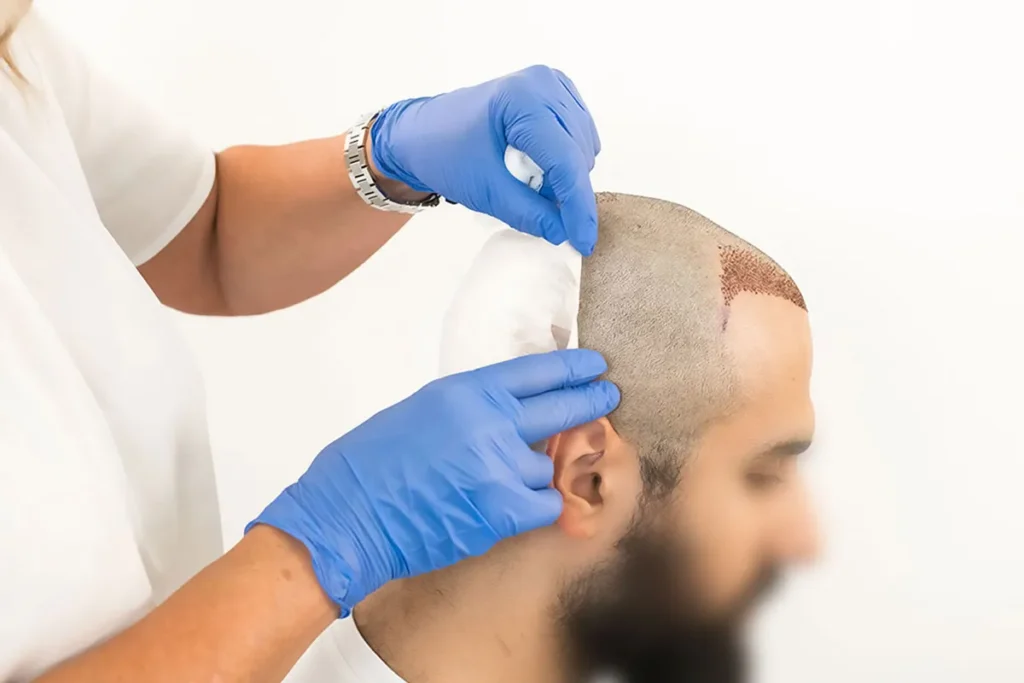
Ever noticed more hair falling out when you’re stressed? It’s not just a feeling. Science shows stress can really harm your hair follicles. Alopecia caused by stress is more common than you think. Learn the best relief tips and lifestyle changes to reverse stress-induced loss.
At GoldCity Center, we see how hair loss affects people everywhere. Losing 100 hairs a day is normal. But, stress can cause hair loss that’s hard to deal with.
Key Takeaways
Stress can trigger hair loss due to physiological changes.
Hair shedding is a natural process, but excessive loss may indicate an underlying issue.
Understanding the link between stress and hair loss is key for managing it.
Stress-induced hair loss can lead to conditions like alopecia areata.
Getting professional help is important for hair loss concerns.
The Connection Between Stress and Hair Loss

Studies have found a strong link between stress and hair loss. Stress affects hair health through many ways. Knowing this helps us find and treat the causes of hair loss.
What is Stress-Induced Hair Loss?
Stress-induced hair loss happens when too much stress causes hair to fall out. It includes alopecia areata and telogen effluvium. Alopecia areata makes hair fall out in patches because of an immune attack. Telogen effluvium makes more hair fall out by changing the hair growth cycle.
Research shows that chronic stress can cause hair loss. It does this by changing hormones and the immune system. Stress can make hair follicles stop growing, leading to more hair falling out.
Common Symptoms and Patterns
The signs of stress-induced hair loss vary. Common signs are:
More hair falling out, often after washing or combing
Hair loss in patches, often seen in alopecia areata
Thinning hair, mainly on the scalp
In some cases, hair loss can be with itching or redness
It’s important to know these signs to diagnose and treat hair loss. By dealing with stress and using good hair care, we can help hair grow back.
Alopecia Caused by Stress: The Scientific Mechanisms
Recent studies have uncovered how stress affects hair follicles. It’s key to grasp the biological links between stress and hair loss. This knowledge helps in finding better treatments.
Cortisol’s Impact on Hair Follicle Stem Cells
Stress raises cortisol levels, harming hair follicle stem cells. Cortisol cuts down Gas6 secretion, a key for hair growth. Less Gas6 means less hair growth, causing hair loss.
The link between cortisol and hair follicle stem cells shows stress’s role in hair health. Knowing this, scientists can work on treatments to help hair grow despite stress.
Harvard Research on Stress Hormones and Dermal Papilla Cells
Harvard studies found stress hormones stop dermal papilla cells from working right. Dermal papilla cells control hair growth. When they don’t work, hair loss happens.
Stress hormones mess with dermal papilla cells’ function.
This messes up hair growth and makes more hair fall out.
Learning about stress’s effect on dermal papilla cells helps in finding new hair loss treatments.
Inflammatory Responses and the Sympathetic Nervous System
The sympathetic nervous system, triggered by stress, can start inflammation in hair follicles. Long-term inflammation can cause hair loss by breaking the hair growth cycle.
The connection between the sympathetic nervous system, inflammation, and hair follicles shows stress’s complex impact on hair loss. More research into these areas could lead to new treatments.
Conclusion: Managing and Treating Stress-Related Hair Loss
It’s important to understand how stress affects hair loss. Stress can cause hair to fall out and even lead to balding or a receding hairline.
Reducing stress is key. Techniques like meditation, yoga, or breathing exercises can help. By adding these to your daily routine, you might prevent stress-related hair loss.
Yes, stress and anxiety can cause hair loss. Chronic stress can mess up the hair growth cycle, leading to more shedding. Getting help and managing stress can help fix this.
Managing stress and hair loss together is essential for a healthy head of hair. This means using stress-reducing methods, getting professional help when needed, and knowing how stress affects hair.
FAQ
Does stress really cause hair loss?
Yes, stress can lead to hair loss. Studies show that stress hormones harm hair follicle stem cells.
What are the common symptoms of stress-induced hair loss?
Stress can cause hair loss in several ways. This includes alopecia areata and telogen effluvium. Symptoms include a lot of hair falling out, thinning, and balding.
How does cortisol affect hair loss?
Cortisol, a stress hormone, harms hair follicle stem cells. This can lead to hair loss. High cortisol levels mess with the hair growth cycle, causing hair to fall out.
Can stress management techniques help with hair loss?
Yes, stress-reducing activities like meditation and yoga can help. They can lessen stress’s impact on hair. Managing stress can lower the risk of hair loss.
Will stress cause my hair to fall out permanently?
Not always. Stress can cause hair loss, but it’s often reversible. With the right treatment and stress management, hair may grow back.
Can anxiety cause hair loss?
Yes, anxiety can lead to hair loss. It increases stress hormones, which harm hair follicle stem cells and cause hair loss.
Is stress-induced hair loss treatable?
Yes, it is treatable. By tackling stress causes and using stress management, you can lower hair loss risk. Sometimes, professional help is needed.
Can stress cause a receding hairline?
Stress can contribute to hair loss, but it doesn’t directly cause a receding hairline. Yet, it can make existing hair loss worse, including receding hairlines.
References
https://www.nioxin.com/en-US/blog/about-hair-loss/combating-hair-loss-due-to-stress-and-anxiety

