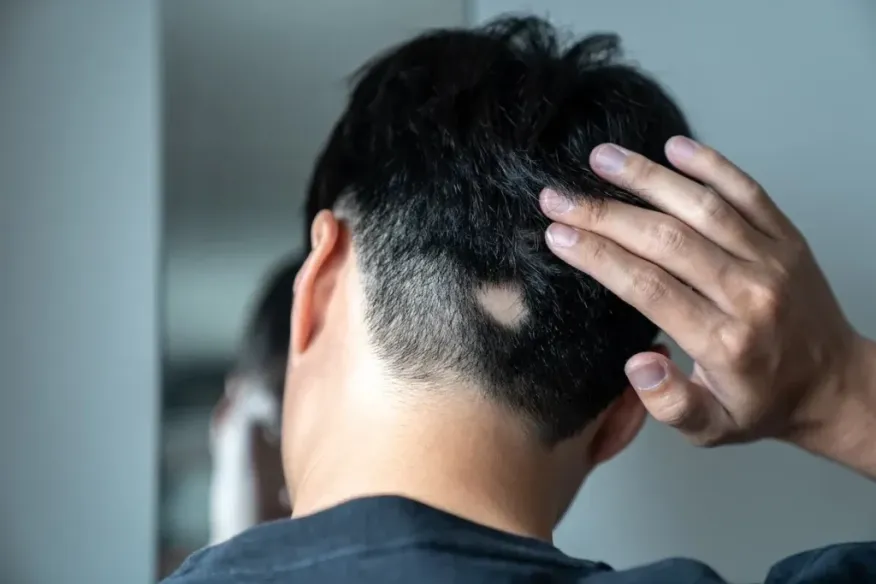
Alopecia skin disease is more than just hair loss. Learn the truth about this autoimmune condition and find the most effective treatments.
Alopecia areata is a chronic autoimmune condition that leads to non-scarring hair loss. It affects about 2% of the world’s population. It can happen at any age, from teenagers to adults in their later years, causing round patches of hair loss.
This condition often surprises people because it’s linked to younger individuals. But, it’s possible to develop alopecia areata later in life. The National Institute of Arthritis and Musculoskeletal and Skin Diseases says it can start at any age. Its symptoms can also be unpredictable.
It’s important to understand alopecia areata and its symptoms for early diagnosis and treatment. If you notice unexplained patches of hair loss, you should see a doctor.
Key Takeaways
Alopecia areata is a chronic autoimmune condition causing non-scarring hair loss.
It can affect anyone at any age, including adults in their later years.
The condition can cause round patches of hair loss, potentially leading to total hair loss.
Early diagnosis and treatment are key to managing the condition.
Seeking medical attention is vital if you’re experiencing unexplained hair loss.
Understanding Alopecia Areata as a Skin Disease

Alopecia areata is an autoimmune disorder that affects hair growth, leading to noticeable hair loss. This condition is characterized by its sudden onset and unpredictable course, making it a challenging condition for those affected.
Definition and Autoimmune Nature
Alopecia areata is a chronic skin condition where the immune system mistakenly attacks the hair follicles, leading to hair loss. The autoimmune nature of this disease means that the body’s defense system fails to recognize its own hair follicles, treating them as foreign invaders.
The exact cause of alopecia areata remains unknown, but it is believed to involve a combination of genetic predisposition and environmental triggers. Stress and other health conditions may also play a role in triggering or exacerbating the condition.
Common Symptoms and Patch Patterns
The primary symptom of alopecia areata is patchy hair loss, typically on the scalp but potentially on any hair-bearing area of the body. The hair loss can range from a single patch to multiple patches, and in severe cases, it can lead to total hair loss on the scalp (alopecia totalis) or the entire body (alopecia universalis).
The patch patterns can vary significantly among individuals. Some may experience a single round patch, while others may have multiple patches that can merge.
Global Prevalence and Demographics
Alopecia areata affects individuals worldwide, regardless of age, gender, or ethnicity. Studies suggest that it affects approximately 2% of the global population at some point in their lives.
Understanding these demographics and the prevalence of alopecia areata can help in raising awareness and promoting research into this complex condition.
Age of Onset and Development Throughout Life
Alopecia areata can happen at any age. Knowing when it usually starts helps us understand how it develops. This condition is unpredictable, so it’s important to look at its onset and growth at different ages.
Typical Age Ranges for Initial Development
Alopecia areata often starts in teens, 20s, or 30s. The peak age for its first appearance is usually in these younger years. Early onset can greatly affect a person’s self-esteem and life quality, making early treatment key.
Experts say, “Alopecia areata’s impact goes beyond looks, affecting emotions and social life.”
Can You Develop Alopecia Areata Later in Life?
Yes, you can get alopecia areata later in life. While it’s more common in the young, it can start after 50. This shows why we need to stay alert and aware at all ages.
Risk Factors for Late-Onset Cases
Several things increase the risk of getting alopecia areata later in life. These include family history, autoimmune diseases, and big stress or trauma. Knowing these risk factors helps in catching and managing the condition early.
Gender Differences in Alopecia Areata Presentation
Alopecia areata affects both men and women, but it shows up differently. Studies show that while the overall number of cases might not differ much, the pattern and severity can vary.
Women are more likely to experience a diffuse pattern of hair loss.
Men often exhibit a more localized patchy pattern.
Hormonal influences may play a role in these gender differences.
Knowing these gender differences is key for personalized treatment and support.
Conclusion: Treatment Options and Living with Alopecia Areata
Knowing the hair fall disease name is key to dealing with it. Alopecia areata causes patches of missing hair and bald circle on head. But, there are many ways to manage loss of hair in patches on head.
Choosing a treatment for alopecia areata depends on how bad it is and your age. You might get injections, take pills, try phototherapy, or use creams. A doctor will pick the best treatment for you. Learning about where do alopecia come from helps you deal with patch of hair loss on head.
Living with alopecia areata means understanding and accepting it. Looking into treatments and support can start a journey to confidence and self-acceptance. This journey can make you feel more radiant and empowered.
FAQ
What is alopecia areata?
Alopecia areata is a skin disease where hair falls out. It causes bald patches on the scalp or body.
Can you develop alopecia areata at any age?
Yes, you can get alopecia areata at any age. It often starts in childhood or young adulthood. It can also start later in life, and having family members with it increases your risk.
What are the common symptoms of alopecia areata?
The main symptom is hair loss in patches. These patches can be on the scalp, face, or body. They are usually round and smooth, without redness or scaling.
Is alopecia areata contagious?
No, alopecia areata is not contagious. It happens when your immune system attacks your hair follicles.
How common is alopecia areata?
About 2% of the world’s population has alopecia areata. It can affect anyone, regardless of age, ethnicity, or background.
Are there any effective treatments for alopecia areata?
Yes, there are treatments for alopecia areata. These include topical corticosteroids, immunotherapy, and minoxidil. The best treatment is usually a mix of these, tailored to each person’s needs.
Can alopecia areata be cured?
There’s no sure cure for alopecia areata. But, many people see their hair grow back on its own. Treatments can help manage the condition and encourage hair growth.
How does alopecia areata affect men and women differently?
Both men and women can get alopecia areata. But, women might have more severe cases. They might have more patches and a higher chance of it coming back.
Is there a link between stress and alopecia areata?
Stress might play a role in alopecia areata. It could be a trigger or make the condition worse in some cases.
Can alopecia areata be associated with other health conditions?
Yes, alopecia areata often goes with other autoimmune diseases. These include thyroid disease, vitiligo, and rheumatoid arthritis. People with alopecia areata might be more likely to get these conditions.
References
National Center for Biotechnology Information. Evidence-Based Medical Insight. Retrieved from https://pubmed.ncbi.nlm.nih.gov/11807442/

