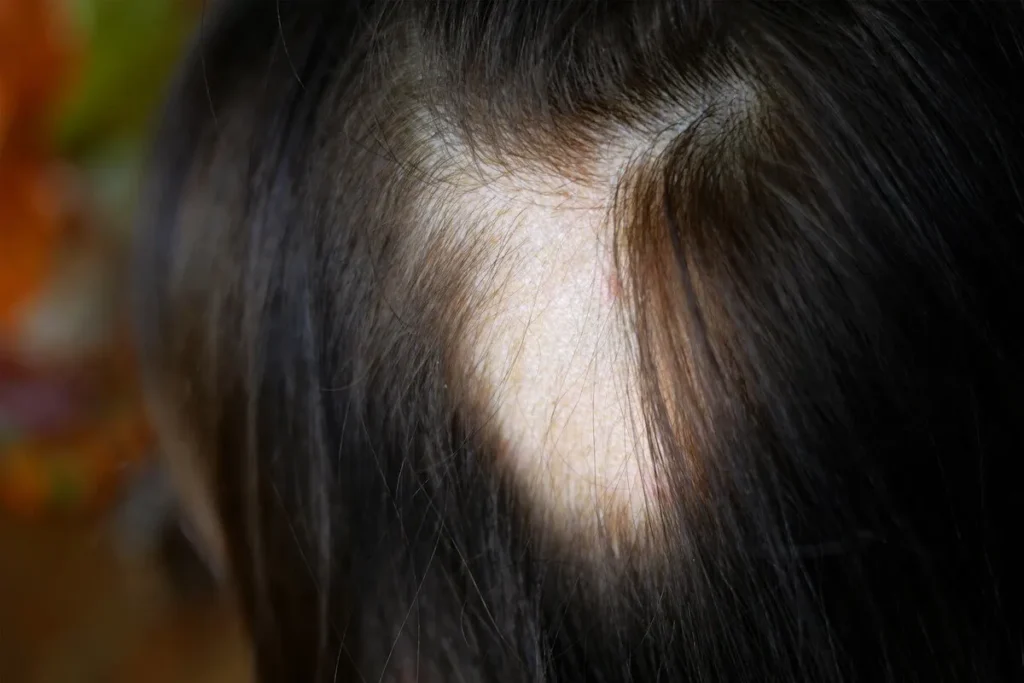
Alopecia, a condition that causes hair loss, affects millions globally. The big question is: can alopecia be present at birth or is it acquired later in life? It’s important to know the difference between congenital and acquired alopecia to tackle this issue effectively.
Are you born with alopecia or does it develop later? Uncover the real truth about genetics and the age of onset for various hair diseases.
Most people aren’t born with alopecia. It usually starts later because of different reasons. Recent studies show that alopecia areata, a common form, is mainly an autoimmune disease. It affects hair follicles and is seen as an acquired condition. But, there are rare cases where someone is born with alopecia.
At GoldCity Center, they focus on the patient. They offer accurate diagnoses and caring treatment. This helps people deal with alopecia confidently, with the right guidance.
Key Takeaways
Alopecia is not typically present at birth, but it develops later in life.
The condition can be caused by a combination of genetic and environmental factors.
Alopecia areata is mainly an autoimmune condition affecting hair follicles.
Rare cases of congenital alopecia have been documented.
Accurate diagnosis and compassionate care are key in addressing alopecia.
Understanding Alopecia and Its Prevalence

Alopecia affects about 2% of the world’s population at some point. It causes hair loss and can happen to anyone, at any age. This makes it a big issue that we need to understand and tackle.
What is Alopecia and How Common Is It?
Alopecia is a group of conditions that cause hair loss. The most common one, alopecia areata, is when your body’s immune system attacks hair follicles. This leads to patchy hair loss.
According to the American Hair Loss Association, about 2% of people have alopecia areata. Sixty percent of them get their first hair loss patch before they’re 20.
Alopecia Facts: Knowing how common and what types of alopecia there are is key to dealing with it well.
Different Types of Alopecia Disorders
Alopecia includes several disorders, each with its own traits. Alopecia areata is known for its patchy hair loss. Androgenetic alopecia causes hair to thin gradually, often due to hormones. Scarring alopecia is more severe, with inflammation destroying hair follicles and replacing them with scar tissue, leading to permanent hair loss.
It’s important to know about these different types to find the right treatment and support for those with alopecia. By understanding each type’s prevalence and characteristics, we can better meet the needs of those experiencing hair loss.
Are You Born with Alopecia? Congenital vs. Acquired Forms
Knowing the difference between congenital and acquired alopecia is key to treating it well. Alopecia is a term for different hair loss conditions. It can be upsetting for those who have it. Being born with alopecia or getting it later in life means different causes and treatments.
Acquired Alopecia: The Most Common Form
Acquired alopecia, like alopecia areata, is the most common type. It can start at any age due to genetics, autoimmunity, and environment. Can you develop alopecia at any age? Yes, it can start at any time, from childhood to adulthood. It often starts suddenly, due to stress, hormonal changes, or health issues.
Alopecia areata causes patchy hair loss. It happens when the immune system attacks hair follicles. This can lead to more severe hair loss, like alopecia totalis or universalis, where all hair falls out.
Congenital Triangular Alopecia and Other Rare Forms
Congenital triangular alopecia is rare and starts at birth or early childhood, before age 6. It looks like a triangle or oval of hair loss on the scalp. The exact cause is unknown but might be linked to hair follicle development.
Other rare forms include congenital hypotrichosis. People born with it have fewer hair follicles or abnormal hair growth. These are often linked to genetic mutations.
Congenital Hypotrichosis: Born with Hair Follicle Deficiency
Congenital hypotrichosis is a rare genetic disorder. It causes a big drop in hair density or no hair at birth. Knowing the genetic cause is key for counseling and finding treatments.
Knowing the type of alopecia and its traits is important for treatment. Some alopecia is present at birth, while others start later. Understanding these differences helps find the right medical advice and treatment.
Causes and Age of Onset
Alopecia areata comes from genetics, autoimmunity, and the environment. Knowing these factors helps those dealing with it.
Typical Age Patterns in Alopecia Areata
Alopecia areata can start at any age. But, it often begins in childhood or early adulthood. Studies show the peak age is between 20 and 40 years.
Genetic and Autoimmune Factors
Alopecia areata is an autoimmune disease. The immune system attacks hair follicles by mistake. Genetics also play a big role. If your family has it, you’re more likely to get it too.
Why Most Cases Develop After Birth
Most people get alopecia areata after birth. It’s because of genetics and the environment. Knowing what triggers it can help manage it.
Understanding alopecia areata’s age patterns and risks helps in finding treatments. This knowledge lets people manage their condition better and live a better life.
Conclusion
Understanding alopecia and its types is key to tackling this complex issue. Knowing the difference between congenital and acquired alopecia helps. It lets people grasp the causes and when it starts. The health of alopecia hair follicles greatly affects the condition’s type and severity.
Most people aren’t born with alopecia, but knowing the risks and signs is vital. This knowledge helps in finding the right treatment and support.
Some might lose hair on their arms or other parts due to alopecia areata. For more details on alopecia and how to treat it, check out Temple Health. Raising awareness and education helps create a supportive space for those with alopecia -ai.
Arming people with knowledge about their condition can greatly improve their lives. By understanding the causes, symptoms, and treatments, they can manage their alopecia. This leads to a more confident and radiant self.
FAQ
Are you born with alopecia?
Most people aren’t born with alopecia. But, some might get it early because of certain conditions. These include congenital triangular alopecia and congenital hypotrichosis.
What is the difference between congenital and acquired alopecia?
Congenital alopecia is present at birth. It’s about hair loss or issues with hair follicles from the start. Acquired alopecia, on the other hand, starts later. It’s caused by things like autoimmune diseases and genetics.
How common is alopecia areata?
The American Hair Loss Association says about 2% of the world’s population has alopecia areata. So, it’s not that rare.
Can alopecia areata occur at any age?
Yes, alopecia areata can happen at any age. Knowing when it usually starts and what increases your risk can help you catch it early. Then, you can get the right treatment.
What are the causes of alopecia areata?
Scientists don’t fully understand what causes alopecia areata. But, they think genetics and the immune system play big roles.
Can you develop alopecia areata if there’s no family history?
Yes, you can get alopecia areata even without a family history. Many things can lead to it.
What are the different types of alopecia disorders?
There are many types of alopecia. These include alopecia areata, androgenetic alopecia, scarring alopecia, congenital triangular alopecia, and congenital hypotrichosis. Each has its own signs and causes.
References
National Center for Biotechnology Information. Evidence-Based Medical Insight. Retrieved from https://pubmed.ncbi.nlm.nih.gov/20115945/

