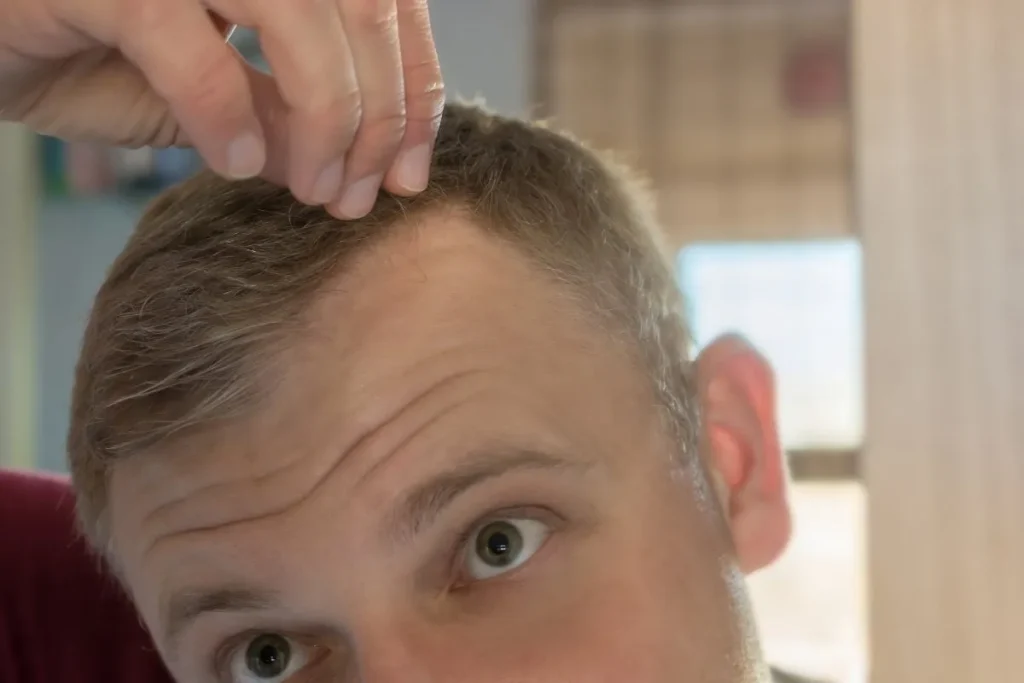
Bad hairline causing stress? Discover quick ways to fix it now using styling tips, medical treatments, and effective hair restoration.
A receding hairline, or androgenetic alopecia, affects many men by age 35. If you’re dealing with a receding hairline or a terrible hairline appearance, there’s hope. About 60% of men aged 30-40 show early signs of balding.
There are effective treatments to slow, stop, and even reverse early hair loss. According to Healthline, finasteride and minoxidil are two treatments that work well. They help prevent further hair loss and stimulate new growth. Understanding how to fix a receding hairline starts with knowing the causes and prevalence of hair loss.
Key Takeaways
Finasteride achieves 70% success in preventing further recession.
Minoxidil stimulates regrowth and prevents further hair loss.
Early intervention can transform your hairline.
Lifestyle changes and dietary adjustments can support hair health.
Consulting a dermatologist is key for a tailored treatment plan.
Understanding Your Bad Hairline: Causes and Statistics

A bad hairline can be a big worry. But knowing the science behind hair loss can help you take action. It’s key to understand the causes and patterns of hair loss to tackle a receding hairline.
Androgenetic alopecia, or male pattern baldness, is the top cause of hair loss. This condition is behind about 95% of hair loss in men. It’s a big issue for those losing their hair.
Androgenetic Alopecia: The Science Behind Hair Loss
Androgenetic alopecia is linked to genetics and hormones, like testosterone turning into DHT. Knowing this is key to finding good treatments. Studies show DHT makes hair follicles shrink, leading to thinner, shorter hairs and hair loss.
Common Recession Patterns and Progression
Male pattern baldness starts with recession at the temples, then forms an M or horseshoe shape. This pattern is a clear sign of androgenetic alopecia. Knowing how it spreads helps you plan how to fight hair loss.
By understanding hair loss causes and patterns, you can choose the right treatments. Whether it’s medical help, lifestyle changes, or other methods, knowing the science is the first step. It helps you reverse a receding hairline and boost your confidence.
5 Proven Treatments to Fix a Receding Hairline
A radiant hairline is within reach, thanks to the latest advancements in hair restoration. For individuals struggling with a receding hairline, there’s hope. Various treatments have been developed to address this concern, ranging from medical therapies to surgical interventions.
Finasteride: The 70% Success Rate Solution
Finasteride is a well-documented treatment for hair loss, slowing down hairline recession. It works by blocking dihydrotestosterone (DHT), showing a 70% success rate in preventing further hair loss. This medication is taken orally and can promote hair regrowth in some users.
Minoxidil: Topical Treatment for Hair Regrowth
Minoxidil is a widely used treatment for hair loss, applied topically to stimulate hair regrowth. It is favored by 56.8% of treatment seekers for its ease of application and effectiveness. While its exact mechanism is not fully understood, minoxidil prolongs the anagen phase of hair growth, leading to thicker, fuller hair.
PP405: The Breakthrough Regenerative Therapy
PP405 represents a breakthrough in regenerative therapy for hair loss. This emerging treatment focuses on stimulating hair growth through innovative biological pathways. Though in the early stages, PP405 has shown promise in clinical trials, providing a new avenue for those seeking to repair a receding hairline.
Hair Transplantation: Permanent Hairline Restoration
Hair transplantation is a viable option for a more permanent solution. This surgical procedure involves transplanting healthy hair follicles from the back and sides of the head to the balding areas. It offers a long-term solution for restoring a natural-looking hairline, with results that can significantly boost confidence.
Each of these treatments offers unique benefits, catering to different needs and preferences. Whether you’re looking to prevent further hair loss or stimulate regrowth, there’s a solution available to help you achieve your hair restoration goals.
Complementary Approaches for Managing a Bad Hairline
Dealing with a bad hairline isn’t just about medical treatments. It also involves nutrition and managing stress. These strategies can boost the results of hair loss treatments and improve hair health.
Essential Nutrients and Supplements for Hair Health
Eating a balanced diet is key for healthy hair. Foods rich in iron, zinc, and biotin are important for hair growth. Adding these nutrients to your diet can support hair health.
Iron in spinach and red meat can fight hair loss. Zinc in oysters and almonds helps hair grow. Biotin in eggs and nuts makes hair stronger.
Supplements can also help. Biotin supplements, for example, can improve hair growth and make hair less brittle. But, always talk to a doctor before starting supplements.
Stress Management Techniques for Preventing Further Loss
Stress can cause hair loss. Managing stress is important for hair health. Activities like mindfulness, meditation, and exercise can lower stress.
Doing these activities can improve your well-being and help your hair.
Yoga or meditation daily can lower cortisol levels, which are linked to stress hair loss. Exercise also boosts overall health and scalp health.
Combining these stress management techniques with a balanced diet and medical treatments is a complete approach. It helps manage a receding hairline and promotes hair health.
Conclusion: Creating Your Personalized Hair Recovery Strategy
Fixing a receding hairline needs a detailed plan. It starts with knowing why hair falls out and trying different treatments. Talking to a healthcare expert helps find the best way to treat your receding hairline. This could be with medicines like Finasteride or Minoxidil, or new treatments.
Creating a plan just for you can reach your hair health goals. It might mix medical treatments, changes in your lifestyle, and extra steps like taking certain nutrients. With many choices, you can cure a receding hairline and feel better about yourself.
Knowing why hair falls out and picking the right treatments can fix a receding hairline. This way, you can look younger. Going for a plan that fits you can beat terrible hairlines and show off your beauty.
FAQ
What causes a receding hairline?
A receding hairline often comes from male pattern baldness. This is due to genetics and hormones.
How can I fix a receding hairline?
Several treatments can fix a receding hairline. Options include finasteride, minoxidil, PP405, and hair transplantation. These can be used alone or together for best results.
What is the most effective treatment for a receding hairline?
Finasteride is very effective, with a 70% success rate. It’s a top choice for treating male pattern baldness.
Can nutrition and supplements help with hair loss?
Yes, eating right and taking supplements can help your hair. They support hair health and can make other treatments work better.
How does stress affect hair loss?
Stress can lead to hair loss. Reducing stress helps prevent more loss and keeps your hair healthy.
Is hair transplantation a permanent solution for a receding hairline?
Yes, hair transplantation is a lasting fix. It moves healthy hair follicles to the thinning area.
Can a bad hairline be reversed?
While some hairlines are harder to fix, many treatments can help. Medical and natural methods can improve a bad hairline.
What are the benefits of using minoxidil for hair regrowth?
Minoxidil is a topical treatment that promotes hair growth. It’s a favorite for those with receding hairlines.
How can I prevent further hair loss?
Combining medical treatments with natural methods helps prevent hair loss. Stress management and good nutrition are key.
Are there any new or emerging treatments for receding hairlines?
Yes, new treatments like PP405 are being explored. They offer hope for regrowing hair and restoring hairlines.
References
National Center for Biotechnology Information. Evidence-Based Medical Insight. Retrieved from https://pubmed.ncbi.nlm.nih.gov/9762813/

