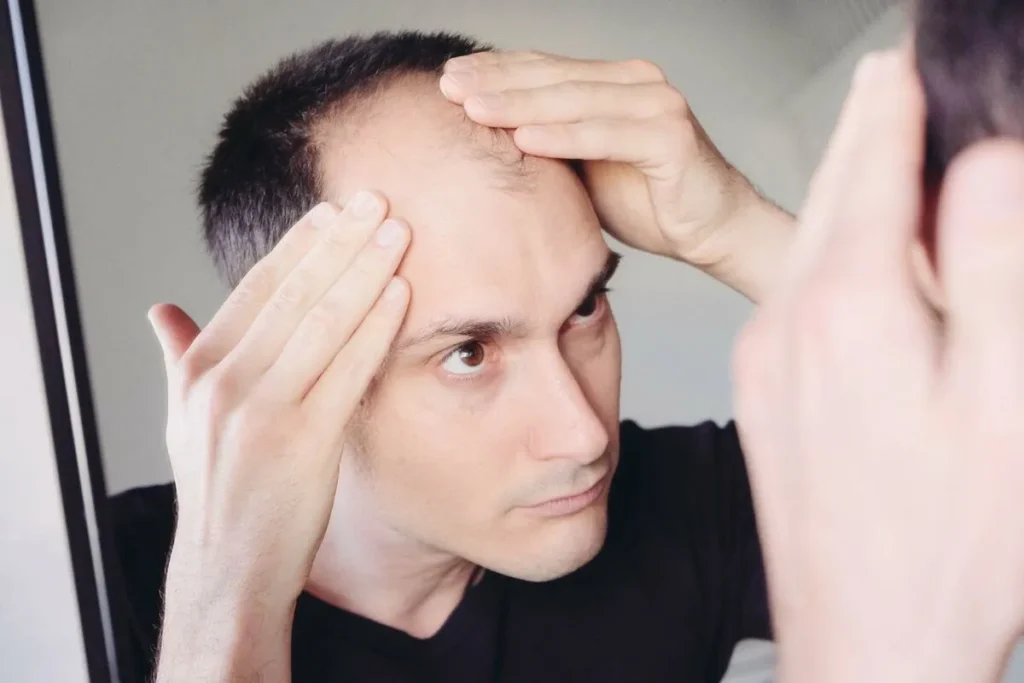
Balding on top of head affects many men. Read our ultimate cures and treatment options to fill in the gaps and get your confidence back.
Are you noticing thinning hair or a bald spot on the top of your head? You’re not alone. About 85% of men see a lot of hair loss by age 50. Male pattern baldness often shows up in the crown area.
Knowing what a bald spot on the crown looks like is key. There are many treatments out there. For more info, check out Wimpole Clinic’s guide. By trying different treatments, you can start to get your hair and confidence back.
Key Takeaways
Understand the causes of balding on the top of the head.
Explore available treatment options for hair loss.
Learn about the role of dihydrotestosterone (DHT) in androgenetic alopecia.
Discover the benefits of treatments like minoxidil and finasteride.
Consider alternative solutions like hair transplants and styling techniques.
Understanding Balding on Top of Head

Balding on top of the head is a common worry for many. It’s caused by a mix of genetics and hormones. This issue, known as vertex hair loss or crown baldness, affects a lot of people, mostly men.
What Causes Crown Baldness
Crown baldness mainly comes from androgenetic alopecia. This condition is influenced by genes and hormones. Dihydrotestosterone (DHT), a byproduct of testosterone, is key. It makes hair follicles shrink, leading to thinner, shorter hair.
“The conversion of testosterone to DHT is a key factor in the development of androgenetic alopecia,” say dermatology experts. This process is vital in understanding why hair falls out on the top of the head.
Who Is Affected by Vertex Hair Loss
Men are more likely to experience vertex hair loss, with about 70% facing it at some point. Women can also get it, but it’s much less common.
Vertex hair loss affects more than just looks. It can hurt self-esteem and confidence. Learning about your condition is the first step to dealing with it.
The Progression of Top-of-Head Balding
The way top-of-head balding progresses varies a lot. Genetics, hormones, and lifestyle choices all play a part. They decide how fast and how much hair will fall out.
At first, thinning might be barely noticeable.
As it gets worse, the bald spot gets clearer.
In the later stages, a lot of hair can fall out, even leading to complete baldness.
Knowing how and why crown baldness happens is key. It helps people make smart choices about their hair health. By understanding the causes, they can find treatments that fit their needs.
Identifying Early Signs of Hair Loss
It’s important to spot hair loss early to treat it quickly. Hair loss on the crown of the head is a key sign of a bigger problem.
What Does a Bald Spot Look Like
A bald spot on the crown looks like a clear area of hair loss. It starts small but can grow bigger if not treated. The scalp becomes more visible, and hair around it gets thinner and shorter.
Differentiating Between Normal Shedding and Balding
Shedding some hair daily is normal. But, balding means losing more hair over time. Watch your hair loss patterns closely. If you see a lot of shedding or a clear bald spot, it might be balding.
When to Seek Professional Evaluation
If you’re worried about hair loss, knowing when to get help is key. See a dermatologist or hair specialist if you notice:
Significant hair loss or thinning
A bald spot on the crown of the head that’s expanding
Excessive shedding that’s not improving
Getting checked early can help find the cause of hair loss. Then, you can choose the best treatment. Treatments might include medicine, lifestyle changes, or surgery.
Effective Treatments for Balding on Top of Head
Effective treatments for balding on top of the head include medical, surgical, and lifestyle changes. Knowing these options helps people choose the best hair loss treatment.
Medical Treatments and Medications
Medical treatments are often the first step against balding. Minoxidil and finasteride are two common medications. Minoxidil is applied to the scalp to grow hair, while finasteride is taken to slow hair loss.
The Medical organization says these medications work well for hair loss.
Platelet-rich plasma (PRP) therapy is also popular. It involves injecting PRP into the scalp to grow hair. PRP therapy has shown to improve hair growth and density.
Surgical Options
For severe balding, surgery might be needed. Hair transplant surgery is a common choice. It moves hair follicles from one scalp area to the balding spot. This method can give lasting results and a natural look.
Non-Medical Solutions
Non-medical solutions are also important for managing balding. Low-level laser therapy (LLLT) is a non-invasive treatment. It uses low-level laser or light to stimulate hair growth. LLLT can boost the effectiveness of other treatments.
Lifestyle Changes and Prevention
Lifestyle changes are key to hair health. Eating a balanced diet with vitamins and minerals is vital. Biotin and vitamin D help hair grow.
Reducing stress through meditation or yoga also helps prevent hair loss. Using gentle hair care products and avoiding harsh chemicals supports hair health. Combining these lifestyle changes with medical treatments can help regrow hair and prevent balding.
Conclusion
Dealing with balding on top of the head needs a mix of understanding causes, spotting early signs, and finding good solutions. By being proactive and well-informed, people can get their hair back and feel confident again.
Good hair loss treatment includes medical help, lifestyle changes, and other non-medical options. There are many ways to fight balding, from medicines to surgery. By focusing on growing hair back, people can start a journey to feeling better about themselves and looking great.
Knowing how balding progresses and using the right treatments can lead to a beautiful transformation. With the right information and tools, people can take control of their beauty and shine.
FAQ
What are the primary causes of balding on top of the head?
Balding on top is mainly caused by androgenetic alopecia. This condition is influenced by genetics and hormones. DHT, a byproduct of testosterone, shrinks hair follicles, making hair thinner and shorter.
What does a bald spot on the crown of the head look like?
A bald spot on the crown is an early sign of balding. It shows visible scalp and thinning hair.
How can I differentiate between normal shedding and balding?
It’s important to tell normal shedding from balding. Excessive hair loss might mean there’s a problem. Watching your hair health and loss rate can help figure out if it’s just shedding or balding.
What are the available medical treatments for balding on top of the head?
Minoxidil and finasteride are used to grow hair and slow loss. They can help treat balding on top.
Are there any surgical options available for treating balding?
For serious cases, hair transplant surgery is an option. It moves healthy follicles to bald spots.
Can lifestyle changes help prevent or slow down balding?
Yes, lifestyle changes like diet and stress management are key. A healthy lifestyle helps keep your hair healthy.
Is balding on top of the head a common issue?
Yes, balding on top is common, mainly affecting men. Many men experience hair loss.
When should I seek professional evaluation for hair loss?
If you lose a lot of hair or see a bald spot, see a pro. They can help evaluate and guide you.
Can balding on top of the head be treated?
Yes, understanding balding causes and trying treatments can help. It’s a step towards getting your hair and confidence back.
References
National Center for Biotechnology Information. Evidence-Based Medical Insight. Retrieved from https://pubmed.ncbi.nlm.nih.gov/33943051

