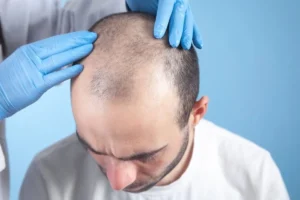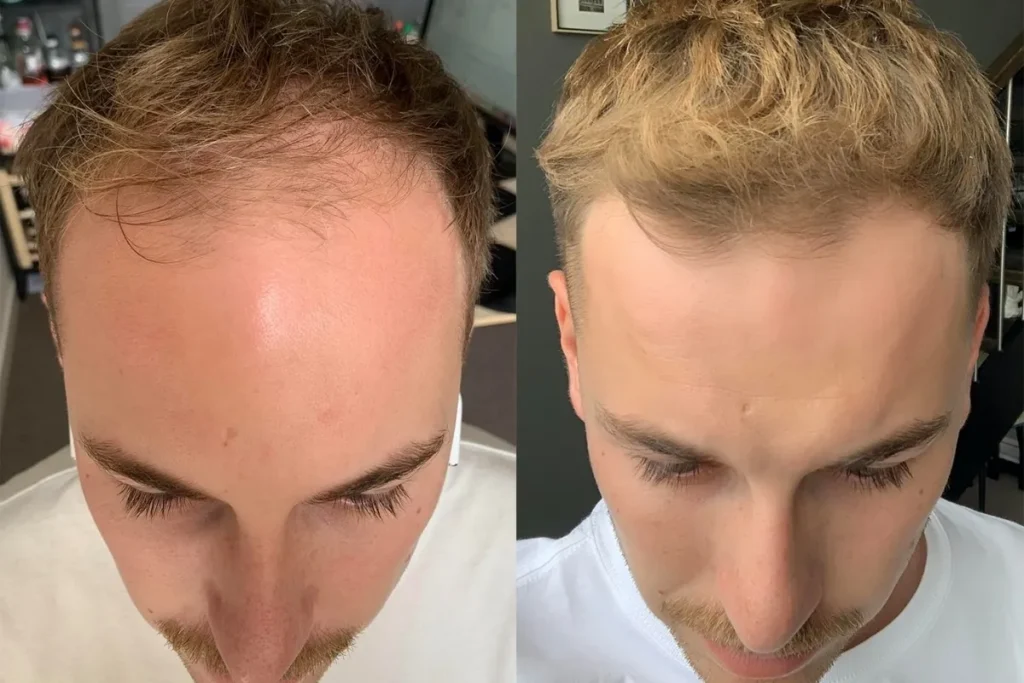
Seeing changes in your hairline can be worrying. But knowing if it’s just maturing or receding is key to the right steps. Balding or receding hairline? Take our easy test to find out the truth and learn the best ways to treat early stages of hair loss effectively.
Between 17 and 27, a maturing hairline is normal. It moves back about an inch evenly. But, a receding hairline might mean male pattern baldness, which needs attention.
Telling the difference is vital for tackling hair loss right. GoldCity Center offers reliable, patient-focused checks and proven solutions for hair loss.
Key Takeaways
Understand the difference between a maturing hairline and a receding hairline.
A maturing hairline is a natural process that occurs in early adulthood.
A receding hairline can be a sign of male pattern baldness.
Early detection is key for dealing with hair loss.
GoldCity Center provides expert evaluation and treatment for hair loss.
Understanding Hairline Changes

Our hairline changes due to genetics, hormones, and age. It’s key to know the difference between normal and worrying changes. As we age, our hairline goes through many changes. Some are just part of getting older, while others might mean there’s a problem.
Normal Hair Loss vs. Concerning Signs
A maturing hairline often looks like an “M” or “V” shape at the temples. This is common as we get older. But, a receding hairline means more hair loss, which could be a bigger issue.
It’s important to tell normal hair loss from signs of a bigger problem. Normal hair loss is losing 50-100 hairs a day, which is usually not seen. But, losing a lot of hair, a hairline that keeps receding, or bald spots are warning signs.
The Science Behind Hairline Changes
Hairline changes come from genetics, hormones, and age. DHT, a part of testosterone, plays a big role in male baldness. It makes hair follicles shrink and hair fall out. Knowing this helps people understand their hair loss better.
As
Spotting the signs and knowing the causes is key to fighting hair loss.
Knowing about normal hair loss and warning signs helps people act early. Whether it’s a maturing or receding hairline, understanding the science helps make better choices for hair health.
Characteristics of a Maturing Hairline

It’s important to know the signs of a maturing hairline. This change happens naturally, usually between 17 and 27 years old.
The 17-27 Transition Period
During these years, your hairline might change a bit. It might look like it’s receding. But this is just a normal part of growing older. To learn more about the difference between a mature and receding hairline, check out this article.
Visual Indicators: V-Shape and Widow’s Peak Formation
A maturing hairline often looks like a V-shape or has a widow’s peak formation. These features are more noticeable than in a young hairline but not as bad as in a receding one. The V-shape is when the hairline slightly recedes, making a ‘V’ shape at the forehead’s center.
The Stabilization Process: When and How It Stops
The hairline usually stops changing once it reaches its mature state. This can take a few years, and it varies from person to person. By late twenties, the hairline usually settles, and big changes are rare. Knowing when and how your hairline stabilizes can help you understand your hair loss better and find the right solution.
Balding or Receding Hairline: Key Warning Signs
Telling a maturing hairline from a receding one can be tricky. But, there are clear signs to watch for. Knowing these signs is key to acting fast.
The M-Shape Pattern of Male Pattern Baldness
An M-shaped hairline is a common sign of male pattern baldness. It happens when hair loss at the temples creates an ‘M’ shape.
Key characteristics of the M-shape pattern include:
Hair loss mainly at the temples
Receding hairline forming an ‘M’ or ‘V’ shape
Thinning or complete loss of hair at the crown
Progression Speed: Months vs. Years
The speed of hair loss is another important sign. Losing hair quickly over months, not years, might mean your hairline is receding.
Genetics, hormonal changes, and health can affect how fast hair loss happens.
Excessive Shedding: Beyond the Normal 50-100 Hairs Daily
Shedding more than 50-100 hairs a day can signal a receding hairline. This could be due to stress, poor nutrition, or health issues.
To check if your hair loss is too much, look at:
Tracking your daily hair loss
Noticing changes in hair thickness or texture
Talking to a healthcare expert for personalized advice
Conclusion: Taking Action Based on Your Hairline Assessment
Knowing the difference between a mature and receding hairline is key. It helps you take the right steps for a healthy hairline. A good hairline looks different from a bad one in shape, position, and how it changes over time.
If you worry about a hairline that’s too far back or shedding a lot, check it out. Spotting signs of a receding hairline, like an M-shape or too much hair loss, means you can act fast.
Figuring out if your hairline is maturing or receding lets you find the right treatments and lifestyle changes. Start growing healthy hair and shine with confidence.
Take charge of your beauty and begin your path to a healthier, more vibrant hairline today.
FAQ
What is the difference between a maturing hairline and a receding hairline?
A maturing hairline happens in early adulthood, between 17 and 27. It’s a natural process where the hairline slightly recedes. A receding hairline, on the other hand, is a sign of male pattern baldness. It can lead to more hair loss if not treated.
Is my hairline maturing or receding?
To figure out if your hairline is maturing or receding, look for signs like a V-shape or widow’s peak. Also, check how fast your hair is falling out. If you’re not sure, see a dermatologist or hair loss specialist.
What age does hairline recede?
Hairline recession can happen at any age, but it’s common in early adulthood, 17 to 27. Male pattern baldness can start as early as puberty or as late as middle age.
How can I tell if I’m balding or just have a receding hairline?
To know if you’re balding or just have a receding hairline, look for signs of male pattern baldness. These include an M-shape pattern, excessive shedding, or significant hair loss. If you see these signs, get a professional evaluation from a dermatologist or hair loss specialist.
What is a mature hairline?
A mature hairline is a natural hairline that has fully developed and stabilized. It usually happens by the mid-to-late 20s. It’s characterized by a subtle recession of the hairline without significant hair loss or balding.
How can I distinguish between a normal hairline and a receding hairline?
To tell a normal hairline from a receding one, look at the shape of your hairline and the density of your hair. A normal hairline is gentle and curved. A receding hairline is often marked by an M-shape pattern or significant hair loss.
Why is my hairline so far back?
There are several reasons why your hairline might be far back. These include genetics, hormonal changes, or male pattern baldness. If you’re concerned, consult a dermatologist or hair loss specialist for a professional evaluation.
Can a receding hairline be treated?
Yes, a receding hairline can be treated. Options include medications, hair transplantation, and low-level laser therapy. Consult a dermatologist or hair loss specialist to find the best treatment for you.
References
National Center for Biotechnology Information. Evidence-Based Medical Insight. Retrieved from https://pubmed.ncbi.nlm.nih.gov/123744