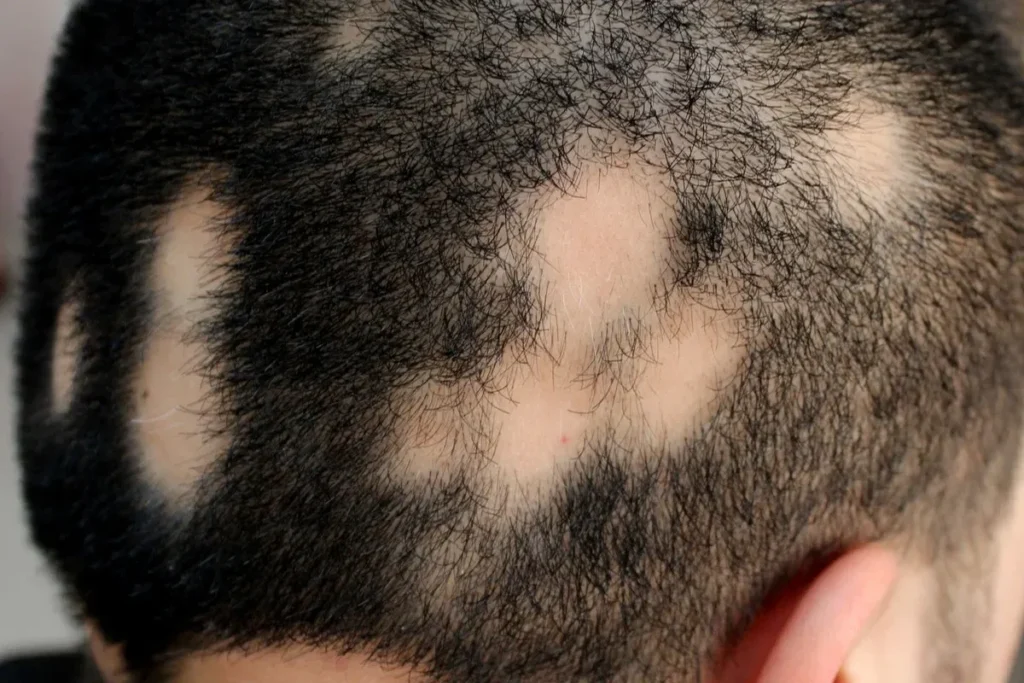
Diffuse Alopecia Areata causes widespread thinning. Get the best relief tips and medical treatments to manage this rare form of hair loss now.
Diffuse alopecia areata is a special kind of alopecia areata. It causes hair to thin all over the scalp, unlike the patches seen in regular alopecia areata. This can really affect a person’s mood, and it often looks like other hair loss conditions.
It’s important to know how diffuse alopecia areata works and what causes it. This knowledge helps doctors diagnose it early and treat it better. When both doctors and patients understand this condition, they can work together to find the best treatments.
Key Takeaways
Diffuse alopecia areata is characterized by widespread scalp hair thinning.
It can be psychologically devastating, particularlly in women.
Early diagnosis and proper management are essential for effective treatment.
Understanding the distinct features and inflammatory mechanisms is critical.
Empowering patients and healthcare professionals leads to better outcomes.
Understanding Diffuse Alopecia Areata
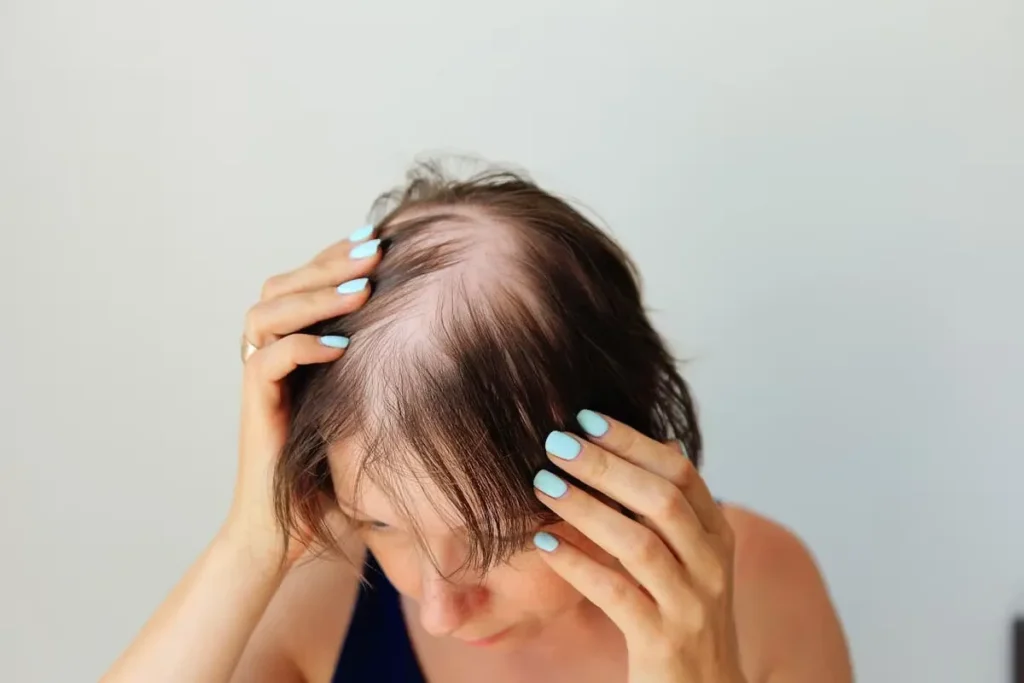
Diffuse alopecia areata has caught a lot of attention. It causes hair loss over a big area of the scalp quickly. This is different from other types of alopecia areata because it spreads out more.
Definition and Unique Characteristics
Diffuse alopecia areata is known for its rapidly progressive hair loss. It affects more of the scalp than other types, and it happens faster. People usually start to see it when they are about 27 years old.
This condition can lead to a lot of hair loss. It can really affect how people look and feel. Because it spreads out, it’s harder to spot and treat than other types of alopecia areata.
How It Differs from Patchy Alopecia Areata
Diffuse and patchy alopecia areata are different in how they show up. Patchy alopecia areata has clear patches of hair loss. But diffuse alopecia areata spreads out more evenly over the scalp.
Knowing the differences is key for figuring out what’s going on and how to treat it. The table above shows the main differences between diffuse and patchy alopecia areata. It helps people understand these conditions better.
Clinical Presentation and Diagnosis
It’s important to know the signs of diffuse alopecia areata to diagnose and treat it well. This condition is hard to deal with because it starts suddenly and affects a lot of hair.
Common Symptoms and Age of Onset
People with diffuse alopecia areata often see a lot of hair falling out. This can be very upsetting. It can happen at any age, but it’s more common in young adults. Women, in particular, struggle with diffuse alopecia in women, feeling very upset by the hair loss.
The symptoms include hair loss all over the scalp, not just in patches. This can really affect a person’s mood, making it important to find a good treatment quickly.
Inflammatory Markers and IgE Levels
One key thing about diffuse alopecia areata is that it has high levels of inflammation and IgE. These signs help doctors tell it apart from other hair loss causes, like alopecia areata diffuse hair loss.
Studies show that people with this condition have a strong inflammatory reaction. This makes their condition worse. Watching these markers can help doctors see how the disease is doing and how well treatments are working.
Diagnostic Challenges and Differential Diagnosis
It’s hard to diagnose diffuse alopecia areata because it looks like other hair loss problems. Doctors need to do a lot of tests to make sure it’s not something else, like telogen effluvium or androgenetic alopecia.
To get a correct diagnosis, doctors look at a patient’s medical history and do tests for inflammation and IgE. This helps them create a treatment plan that really helps people with diffuse hair loss women face.
Psychological and Physical Impact of Diffuse Alopecia Areata
Diffuse alopecia areata affects more than just hair. It impacts both mental and physical health. This condition can change a person’s life quality, making it key to tackle its psychological and physical sides.
Disease Severity and Gender Differences
Studies reveal gender differences in dealing with diffuse alopecia areata. Women often face more severe mental health impacts and higher anxiety rates than men. This shows the need for care tailored to each gender.
Healthcare providers must understand these differences to offer better support. Tailoring care to the unique challenges of women and men can make a big difference.
Emotional and Psychological Effects
The emotional and mental effects of diffuse alopecia areata are deep. Patients often feel low self-esteem and anxiety, made worse by the condition’s unpredictability. Hair loss can cause people to withdraw socially and lower their life quality.
The condition’s impact isn’t just on the person; it affects family and friends too. Support systems are key in helping patients deal with the condition. A supportive environment helps those with diffuse alopecia areata face their challenges.
Dealing with diffuse alopecia areata’s effects needs a full approach. This includes medical treatment, psychological support, and counseling. These steps help patients and improve their overall well-being.
Conclusion
Diffuse alopecia areata is a condition that causes hair to thin out evenly. It often starts suddenly. Knowing about this condition is key to treating it early and effectively.
Studies show that diffuse balding affects many, but it hits women harder. It can get worse over time. So, it’s important to act fast.
Trichoscopy is a big help in diagnosing this condition. It spots signs like empty yellow dots and pigtail hairs. For more details, check out the study on Dermatology Practical & Conceptual.
Recognizing the signs of hair thinning can lead to early treatment. This can help hair grow back and prevent lasting damage. Managing diffuse alopecia areata well can greatly improve life quality for those dealing with it.
FAQ
What is diffuse alopecia areata?
Diffuse alopecia areata is a type of hair loss that spreads all over the scalp. It’s different from other forms because it doesn’t show up in patches. This widespread hair loss can really affect how someone feels about their looks.
How does diffuse alopecia areata differ from patchy alopecia areata?
Unlike patchy alopecia areata, which has clear patches of hair loss, diffuse alopecia areata covers the scalp evenly. This difference is key for doctors to diagnose and plan treatment.
What are the common symptoms of diffuse alopecia areata?
People with diffuse alopecia areata often lose a lot of hair suddenly. This hair loss is not in patches like other types. It can even cover the whole scalp.
At what age does diffuse alopecia areata typically occur?
Diffuse alopecia areata can start at any age. But it often begins in young adulthood or middle age. The exact age it starts can vary a lot.
Are there any differences in how diffuse alopecia areata affects men and women?
Studies show that men and women might be affected differently. Women might feel the emotional impact more because of beauty standards. Men might also face challenges, but in different ways.
How is diffuse alopecia areata diagnosed?
Doctors use a few methods to diagnose diffuse alopecia areata. They look at the patient’s medical history and do a physical exam. Sometimes, they need more tests to make sure it’s not something else.
What are the treatment options for diffuse alopecia areata?
There are a few ways to treat diffuse alopecia areata. Doctors might use creams, shots, or pills. The best treatment depends on how bad the condition is and the patient’s health.
Can diffuse alopecia areata be cured?
There’s no sure cure for diffuse alopecia areata. But, treatments can help manage it and even grow new hair. How well these treatments work can vary.
How does diffuse alopecia areata affect mental health?
This condition can really affect someone’s mood and self-esteem. It can lead to anxiety, depression, and feeling less confident. Getting support from loved ones and doctors is very important.
Is diffuse alopecia areata related to other health conditions?
Yes, diffuse alopecia areata is linked to other autoimmune diseases. Knowing this can help doctors give better care.
Can stress trigger diffuse alopecia areata?
Stress might make diffuse alopecia areata worse. It can make the immune system react more. Finding ways to manage stress can help.
What is the prognosis for someone with diffuse alopecia areata?
The outlook depends on the person and how well they respond to treatment. Some might see a lot of hair growth, while others might keep losing hair.
References
National Center for Biotechnology Information. Evidence-Based Medical Insight. Retrieved from https://pubmed.ncbi.nlm.nih.gov/31692086/





