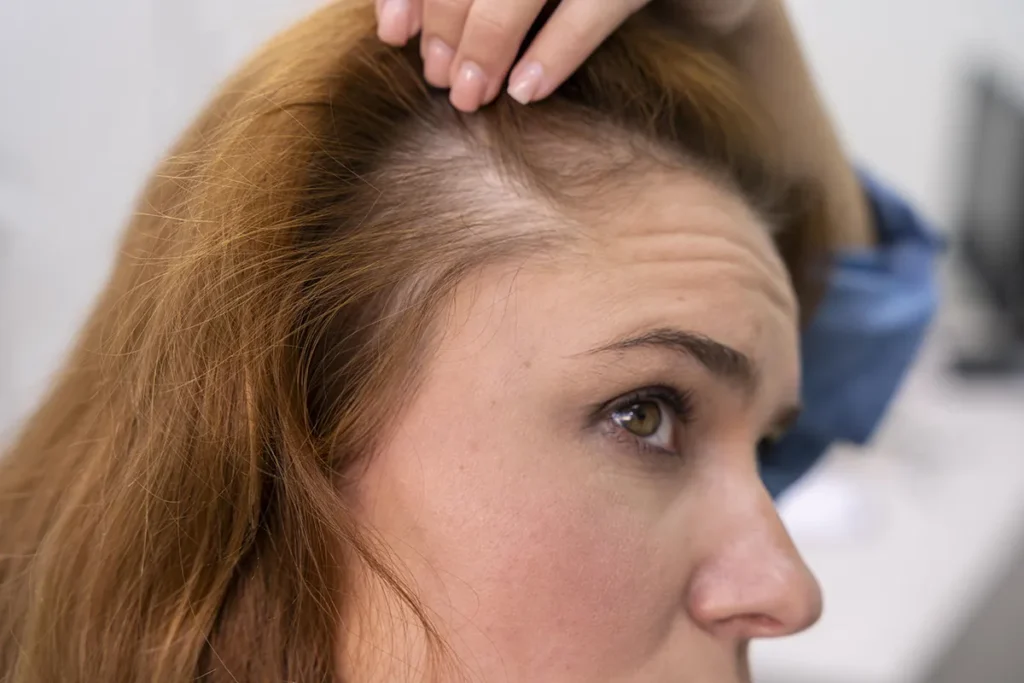
Are you noticing your hair appearing thinner and more see-through, mainly at the crown? But, you don’t have a receding hairline? This is called diffuse hair thinning. It affects millions of men and women all over the world.
It’s important to know the causes and treatment options to tackle this issue. Trusted healthcare providers offer treatments backed by science. These can slow down hair loss and even help grow hair back when started early.
Key Takeaways
Diffuse hair thinning is a common condition affecting millions worldwide.
It is characterized by an even reduction in hair density across the scalp.
Early treatment can slow progression and potentially restore hair density.
Evidence-based treatments are available from trusted healthcare providers.
Understanding the causes is key for effective treatment.
Understanding Diffuse Hair Thinning and Its Prevalence
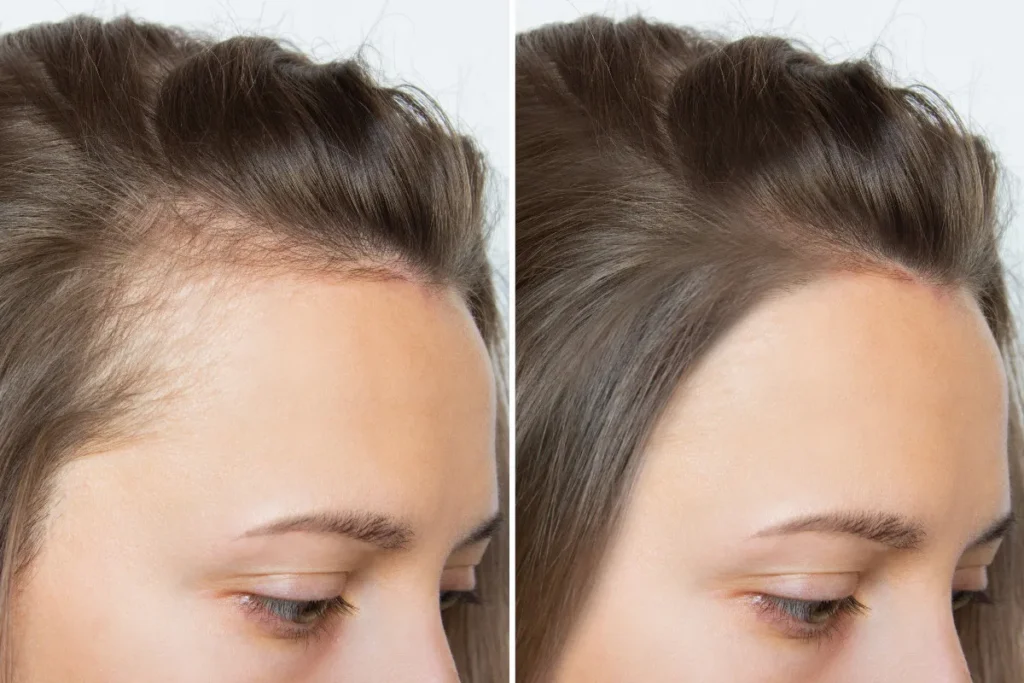
Diffuse hair thinning affects millions of men worldwide. It causes hair to thin out evenly across the scalp. This condition is different from pattern baldness, which follows a specific pattern.
It’s important to know the difference between diffuse hair thinning and pattern baldness. Pattern baldness starts with a receding hairline or thinning at the crown. Diffuse hair thinning makes hair look less thick and vibrant overall.
What Is Diffuse Thinning vs. Pattern Baldness
Diffuse thinning and pattern baldness are both hair loss conditions. But they look different. Pattern baldness has a clear pattern of hair loss, starting at the temples or crown. Diffuse thinning, on the other hand, causes hair loss all over the scalp without a pattern.
A guide on male and female pattern hair loss says understanding these differences is key to treating it effectively.
Statistics and Risk Factors in the United States
By age 50, about 30-50% of men experience hair loss, including diffuse thinning. This condition is common among men, and several factors can increase the risk.
Knowing these statistics and risk factors helps men take action against diffuse hair thinning. By spotting signs early and tackling the causes, men can slow down or even stop the thinning.
The Science Behind Diffuse Hair Loss
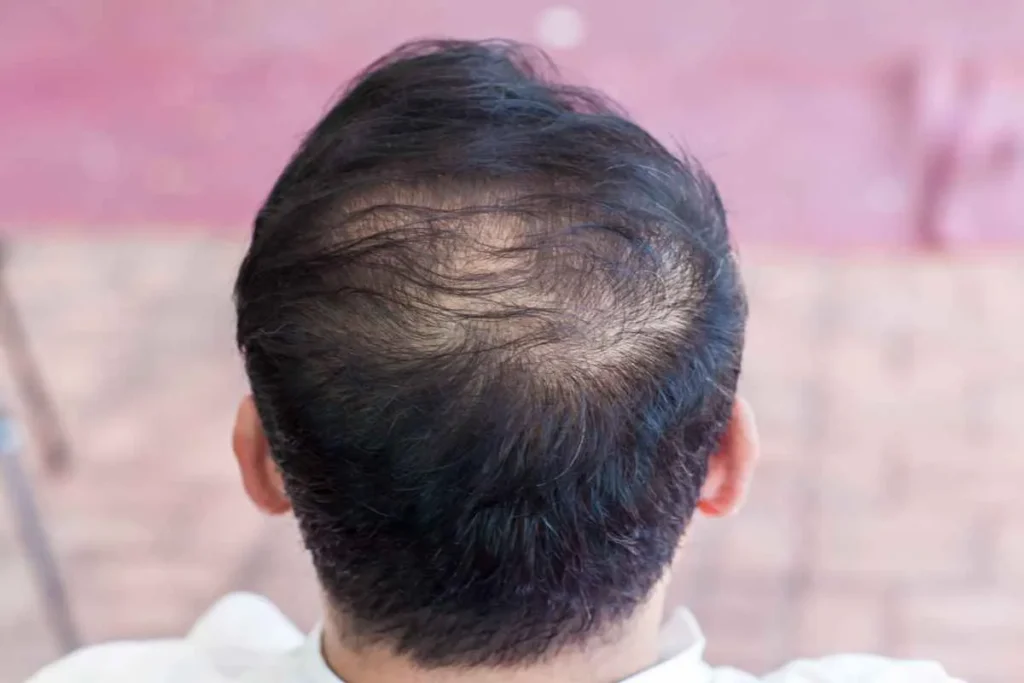
Diffuse hair loss is a complex issue. It involves DHT, follicular miniaturization, and disruptions in the hair cycle. This type of hair loss spreads across the scalp, not just in one spot. It can make hair look less dense overall.
The Role of DHT and Follicular Miniaturization
Dihydrotestosterone (DHT) is key in diffuse hair loss. It’s a strong form of testosterone that affects hair follicles. This leads to follicular miniaturization, causing hair to shrink and become thinner.
As DHT works on hair follicles, the hair cycle gets disrupted. This results in thinner, shorter hairs. The hair follicles start to shrink, turning thick, pigmented hairs into finer, less pigmented ones.
Terminal to Vellus Hair Conversion and See-Through Hair
The change from terminal to vellus hairs is a big part of diffuse hair loss. This change makes the scalp more visible, leading to see-through hair. It’s hard to treat because it needs a detailed plan to stop and possibly reverse hair loss.
Knowing how diffuse hair loss works is key to finding good treatments. By focusing on the causes, like DHT and follicular miniaturization, people can find ways to make their hair thicker and fuller again.
Effective Treatment Options for Diffuse Hair Thinning
Understanding the treatments for diffuse hair thinning is key. There are many options, from medicines to advanced therapies. With the right treatment, people can see big improvements.
FDA-Approved Medications and Their Efficacy
FDA-approved medicines are important for treating diffuse hair thinning. Minoxidil and Finasteride are two common treatments.
Minoxidil: Applied topically, minoxidil helps hair grow and slows loss. It’s easy to find and works for both men and women.
Finasteride: Taken orally, finasteride stops DHT production, which causes hair thinning. It’s mainly for men.
Both medicines have been tested well in clinical trials. They show they can treat diffuse hair thinning.
Topical Solutions for Diffuse Thinners
There are also topical solutions to help with treatment. These include:
Low-Level Laser Therapy (LLLT): LLLT devices use low-level laser or light to help hair grow.
Platelet-rich Plasma (PRP) Therapy: PRP therapy uses the patient’s blood to stimulate hair growth.
Advanced Clinical Interventions
For severe cases, advanced treatments are needed. These include:
Hair Transplantation: A surgery where hair follicles are moved to balding areas.
Scalp Micropigmentation: A non-surgical method that makes the scalp look fuller with tattoos.
These treatments offer lasting solutions for serious hair thinning.
Knowing the different treatments helps people choose the best option. Whether it’s medicines, topical solutions, or advanced treatments, there’s a way to address diffuse hair thinning.
Conclusion
Diffuse hair thinning can be upsetting, but knowing what causes it and how to treat it is key. It’s different from pattern baldness because it doesn’t always make your hairline recede. This means you need a specific plan to deal with it.
People with diffuse hair loss, including men, have many treatment choices. There are FDA-approved drugs and new clinical methods. The right one can make your hair thicker and boost your self-confidence.
It’s important to find out why your hair is thinning. It could be stress, not eating right, or hormonal issues. Fixing these problems can help stop or slow down hair loss. Getting advice from a dermatologist or trichologist can help a lot.
With the right treatment, you can feel better about yourself and have more hair. Learning about diffuse hair thinning and its treatments is a big step. It’s the first step to having healthier, fuller hair.
FAQ
What is diffuse hair thinning, and how does it differ from pattern baldness?
Diffuse hair thinning means hair thins evenly all over the scalp. Pattern baldness, on the other hand, follows a specific pattern, like a receding hairline. Knowing the difference is key to finding the right treatment.
What are the risk factors associated with diffuse hair thinning?
Factors that increase the risk of diffuse hair thinning include genetics, hormonal imbalances, stress, and certain health conditions. Men in the U.S. are often affected, with studies showing a high prevalence.
How does DHT contribute to diffuse hair loss?
Dihydrotestosterone (DHT) is a strong form of testosterone that causes hair follicles to shrink. This leads to thinner, shorter hairs, making hair appear thin or see-through.
What are the most effective treatment options for diffuse hair thinning?
Effective treatments include FDA-approved medications like minoxidil (Rogaine) and finasteride (Propecia). Topical solutions and advanced treatments like low-level laser therapy (LLLT) and platelet-rich plasma (PRP) therapy are also effective.
Can diffuse hair thinning be treated with topical solutions?
Yes, topical solutions like minoxidil can help treat diffuse hair thinning. They stimulate hair growth and extend the hair growth phase.
How does follicular miniaturization lead to see-through hair?
Follicular miniaturization makes hair follicles shrink, leading to thinner, shorter hairs. This results in less dense hair, making it appear thin or see-through.
Are there any advanced clinical interventions for treating diffuse hair thinning?
Yes, treatments like LLLT and PRP therapy have shown to promote hair growth and improve thinning hair appearance.
Can men with diffuse hair thinning benefit from using Rogaine?
Yes, men with diffuse hair thinning can benefit from Rogaine (minoxidil). It is proven to stimulate hair growth and slow down hair loss.
Is diffuse hair thinning a common condition among men in the United States?
Yes, diffuse hair thinning is common among men in the U.S. Studies show a significant prevalence.
What is the role of genetics in diffuse hair thinning?
Genetics play a big role in diffuse hair thinning. People with a family history of hair loss are more likely to experience it.
References
National Center for Biotechnology Information. Evidence-Based Medical Insight. Retrieved from https://www.ncbi.nlm.nih.gov/pmc/articles/PMC2776324/





