
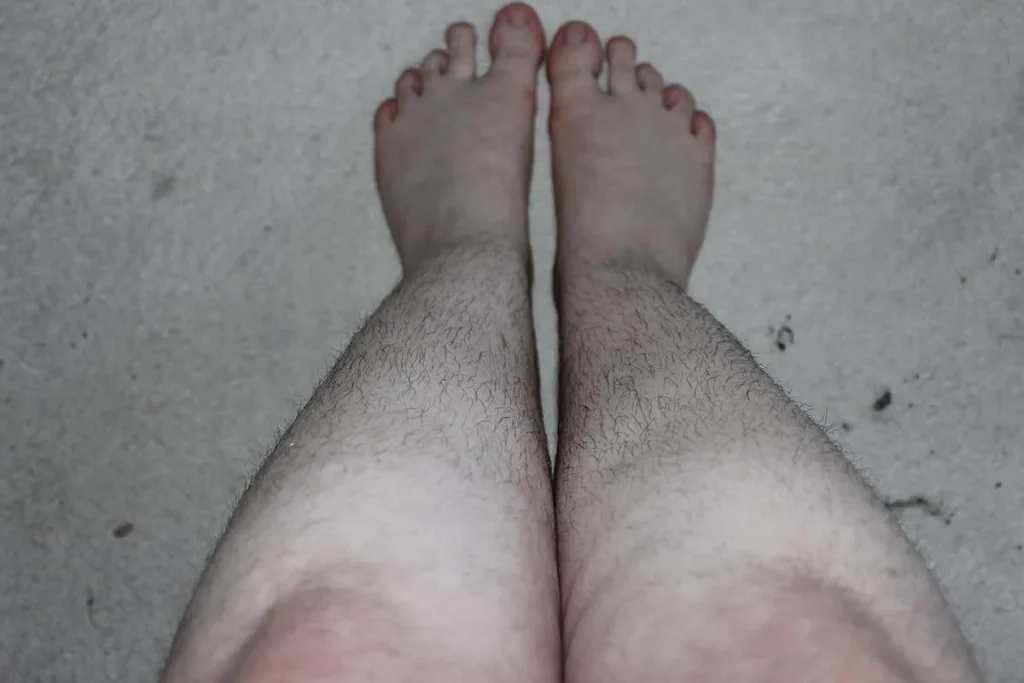
Have you noticed your leg hair becoming thinner or disappearing in patches? You’re not alone. Anterolateral leg alopecia, or hair loss on the legs, is a condition that affects both men and women. It causes concern and curiosity about its causes.
This condition isn’t just a cosmetic issue; it can be a sign of underlying health conditions. Understanding the reasons behind losing hair on legs is key for overall health and well-being. At GoldCity Center, our teams offer detailed diagnostic evaluations and tailored treatment plans.
Key Takeaways
Hair loss on legs is known as anterolateral leg alopecia.
It affects both men and women, causing concern about its causes.
The condition can be a sign of underlying health issues.
Understanding the causes is vital for overall health.
Comprehensive diagnostic evaluations can help identify the reasons.
Understanding Leg Hair Loss

Anterolateral leg alopecia is a condition where people lose hair on their legs. It’s more common than you might think. Studies show that about 35 to 40 percent of men will get it at some point in their lives.
Both men and women can have this condition. It might be a sign of Peripheral Artery Disease (PAD). Men are more likely to lose hair on their legs because of hormones, what they wear, and health risks.
What is Anterolateral Leg Alopecia?
Anterolateral leg alopecia is when hair falls off the outer and front parts of the lower legs. It’s linked to less blood flow in those areas. It’s important to know that it can show signs of vascular problems, like PAD. Both men and women can get it, but it shows up differently.
“The loss of hair on the legs can be an early warning sign of cardiovascular disease,” a study found. This shows why it’s key to notice it and get medical help if needed.
Prevalence and Normal Patterns
Hair loss on the legs happens more in men, but women can get it too, mainly after menopause. Many things can affect hair loss patterns on the legs, like genes, hormones, and health.
Knowing these patterns helps spot when hair loss might mean a health issue. For example, a big change in leg hair could mean a health problem that needs looking into.
Genetic predisposition
Hormonal fluctuations
Vascular health issues
By knowing these factors and the usual patterns of leg hair, people can tell when they’re losing too much hair.
Common Causes of Hair Loss on Legs

Hair loss on legs might signal a health problem. It can be due to poor circulation, thyroid issues, autoimmune diseases, or aging. These factors can all play a role in hair loss.
Circulatory Issues and Peripheral Artery Disease
Circulatory problems are a big reason for hair loss on legs. Peripheral Artery Disease (PAD) narrows arteries, cutting off blood flow. This can cause hair loss. High blood pressure and damaged blood vessels can make PAD worse.
For more on how vascular issues affect leg hair, check out USA Vascular Centers.
Thyroid Dysfunction Effects
Thyroid problems can really affect hair growth. Both underactive and overactive thyroid can cause hair loss on legs. Thyroid hormones control hair growth cycles, so any imbalance can lead to hair shedding.
Autoimmune Conditions
Autoimmune diseases can also cause hair loss on legs. Conditions like alopecia areata can cause bald patches on the scalp and legs.
Aging and Natural Hair Thinning
Aging is another reason for hair loss on legs. As we get older, hair grows slower and becomes thinner. This natural aging process can cause noticeable hair loss in some people.
Hair Loss Legs Women: Gender-Specific Factors
Leg hair loss in women is a common concern. It’s often linked to hormonal imbalances and other factors specific to women. As women age, hormonal changes, like those during menopause, can affect hair growth.
Hormonal Fluctuations and Menopause
During menopause, estrogen levels drop. This can make leg hair thinner or cause it to fall out. Hormonal changes can also alter hair texture and how fast it grows. Key factors include:
Decreased estrogen levels
Changes in hair growth cycles
Potential for increased hair shedding
Differences Between Male and Female Patterns
Hair loss patterns differ between men and women. Men often see balding or thinning on the scalp. Women, on the other hand, notice changes in body hair, like on their legs. Notable differences include:
Hormonal influences: Menopause in women vs. testosterone levels in men
Hair loss locations: Scalp vs. body hair
Underlying causes: Autoimmune conditions, circulatory issues, and aging
Understanding these differences is key to addressing hair loss. By recognizing gender-specific factors, women can tackle their hair loss concerns more effectively. They can then explore the right treatment options.
Diagnosis, Treatment Options and When to See a Doctor
If you’re losing hair on your legs, finding out why is key. A doctor will look at your health history, do blood tests, and examine you closely. They might check other parts of your body for hair loss, rashes, or infections.
They could also test for peripheral artery disease (PAD). This includes the ankle-brachial index (ABI) test, ultrasound, and angiogram. These tests are used at USA Vascular Centers.
Men with leg hair loss have different treatment options. If it’s due to lack of nutrients, taking supplements or changing your diet might help. Corticosteroid shots or creams can also reduce swelling.
For those with hypothyroidism, hormone treatments like levothyroxine (Synthroid) might be needed. If you’re losing hair on your ankles or have patchy hair, seeing a doctor is important. Visit Healthline for more on hair loss on legs.
Don’t ignore hair loss that’s widespread, sudden, or painful. Also, if you have symptoms like painful rashes, numbness, or severe swelling, get medical help. A vascular specialist can find the cause and suggest treatments.
FAQ
What is anterolateral leg alopecia?
Anterolateral leg alopecia is hair loss on the legs, mainly on the outside. It can happen to both men and women. It’s often linked to health problems.
Is losing hair on my legs a sign of a serious health condition?
Yes, losing hair on your legs might mean a health issue. This could be due to blood flow problems, thyroid issues, or autoimmune diseases. You should see a doctor to find out why.
Why is the hair on my legs not growing back?
Hair on your legs might not grow back for many reasons. This includes poor blood flow, hormonal imbalances, or certain health conditions. Knowing the cause is key to fixing the problem.
Can hormonal changes during menopause cause hair loss on the legs?
Yes, hormonal changes in menopause can lead to hair loss on the legs in women. Lower estrogen levels can affect hair growth.
How is hair loss on the legs diagnosed?
To diagnose hair loss on the legs, a doctor will examine you, ask about your health history, and might do tests. These tests could be blood work or imaging studies to check for health issues.
What are the treatment options for hair loss on the legs?
Treatment for hair loss on the legs varies based on the cause. It might involve fixing blood flow issues, managing thyroid problems, or treating autoimmune diseases. Sometimes, changing your lifestyle or using topical treatments is suggested.
Is hair loss on the legs a common issue in men?
Yes, men can also experience hair loss on their legs. This is often due to blood flow problems, aging, or health conditions. If a man is losing hair on his legs, he should talk to a doctor.
Can I prevent hair loss on my legs?
While some hair loss on the legs can’t be prevented, a healthy lifestyle can help. Managing health issues and keeping blood flow good can reduce the risk.
Why has my leg hair stopped growing?
Leg hair might stop growing for many reasons, like aging, hormonal changes, or health conditions. Finding the cause is important to solve the problem.
Are there any effective treatments for promoting hair growth on the legs?
Treatment for growing hair on the legs depends on the cause. Sometimes, medical treatments or lifestyle changes can help hair grow again.
Is losing leg hair a normal part of aging?
Yes, some hair loss on the legs is normal with aging. But, if you lose a lot of hair suddenly, it could be a sign of a health problem. You should see a doctor.
References
National Center for Biotechnology Information. Evidence-Based Medical Insight. Retrieved from https://pmc.ncbi.nlm.nih.gov/articles/PMC4154156/[2





