
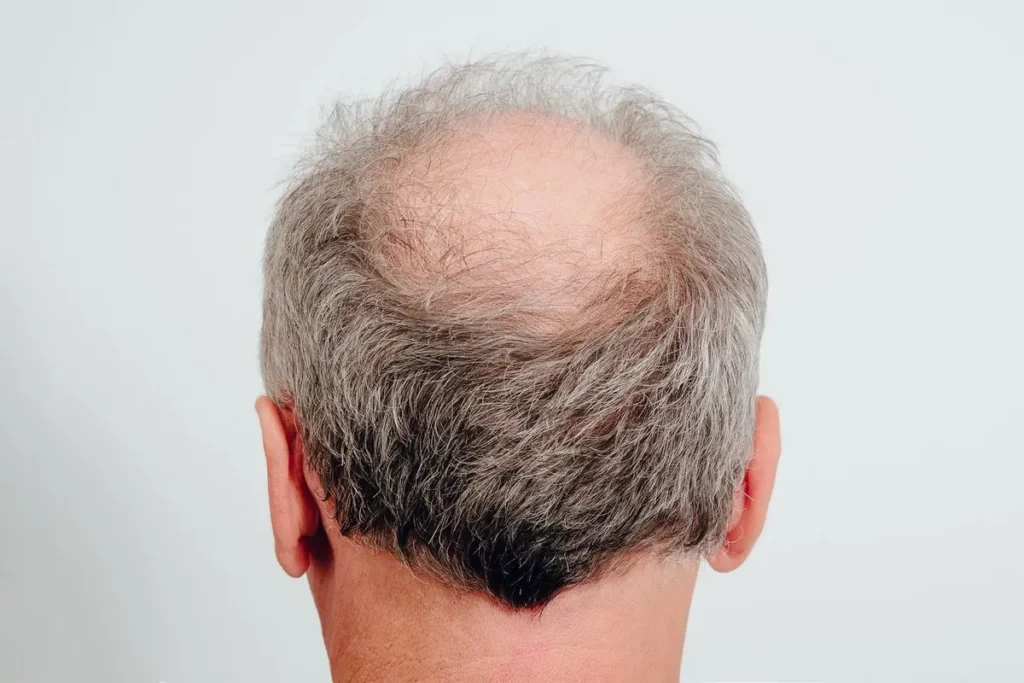
Temple hair loss is a big problem for millions of men around the world. It often shows up first as an M-shaped receding hairline. This can really hurt your self-confidence. But, there are real solutions like medical treatments and new therapies that can help.
Learning about the seven effective methods can help you take care of your hair. We’ll talk about FDA-approved medicines and advanced treatments like platelet-rich plasma therapy. You’ll get a clear guide on how to regrow hair on temples.
Key Takeaways
Understanding the causes of hair loss at the temples is key for effective treatment.
Seven proven methods are available to regrow hair on temples.
FDA-approved medications offer a reliable solution.
Advanced therapies like platelet-rich plasma therapy show promising results.
Adopting a healthy lifestyle complements medical treatments for optimal hair health.
Understanding Hair Loss at Temples

It’s important to know why hair falls out at the temples to find ways to make it grow back. Hair loss at the temples is often a sign of male pattern baldness. This condition affects many men and makes their hairline recede in an M-shape. It’s mainly caused by androgenetic alopecia, which is linked to genetics and hormones.
The Science Behind Temple Hair Recession
The hormone dihydrotestosterone (DHT) is the main reason for hair loss at the temples. DHT makes hair follicles shrink, causing hair to become thinner and shorter. Knowing how DHT affects hair is key to finding good treatments.
Identifying Early Signs of Temple Hair Loss
Early signs of temple hair loss include thinning hair, more shedding, and a receding hairline. Spotting these signs early helps take action to stop hair loss and encourage growth. Keeping your scalp clean and watching for changes can help catch hair loss early.
Key signs to look out for:
Increased hair shedding
Thinning hair at the temples
A receding hairline
Understanding the reasons and early signs of temple hair loss helps find the right treatments. This way, people can work on growing their hair back.
7 Proven Methods to Combat Hair Loss Temples Male Pattern
Male pattern baldness, mainly at the temples, can be tackled with medical treatments and lifestyle changes. Many men worry about hair loss at the temples, which can make their hairline recede and hurt their self-confidence.
Minoxidil Treatment
Minoxidil is a topical treatment that helps hair grow longer and healthier. It boosts oxygen and nutrient delivery to the hair follicle. By applying minoxidil to the scalp, people can encourage hair regrowth and slow down hair loss.
Finasteride for DHT Reduction
Finasteride reduces DHT production, the hormone causing temple hair loss. DHT makes hair follicles shrink, leading to thinner, shorter hair. Finasteride stops DHT production, helping keep hair density and promoting growth.
Platelet-Rich Plasma (PRP) Therapy
Platelet-rich plasma (PRP) therapy boosts hair growth by stimulating the scalp. It involves injecting PRP into the scalp, which stimulates hair growth and increases density.
Low-Level Laser Therapy for Temple Regrowth
Low-level laser therapy (LLLT) is a non-invasive method to grow hair at the temples. It increases blood flow to the area. LLLT uses low-level laser or light-emitting diodes to stimulate hair growth and improve density.
Using these proven methods, people can fight hair loss at the temples and encourage growth. It’s key to talk to a healthcare professional to find the best treatment and make a plan that fits you.
Conclusion: Creating Your Temple Hair Regrowth Strategy
Creating a plan to grow hair on your temples starts with knowing why you lose hair. It’s important to use proven methods like Minoxidil, Finasteride, and PRP therapy. These can help your hair grow back and make your hairline look fuller.
A good hair care routine is key. Eating well, exercising, and managing stress can help your hair grow. Taking care of your scalp is also vital. This way, you can grow hair on your temples and keep your hair looking great.
For a solid plan, talk to dermatologists at places like Dermatology Associates of Georgia. They can give you special scalp treatments and help you make a plan that works for you. By being proactive, you can get a healthy, shiny head of hair.
FAQ
What causes hair loss at the temples?
Hair loss at the temples can come from genetics, hormonal imbalances, and aging. This often leads to male pattern baldness. Stress, a poor diet, and certain health issues can also play a part.
How can I regrow hair on my temples?
To regrow hair, try medical treatments, lifestyle changes, and natural remedies. Minoxidil, finasteride, PRP therapy, and low-level laser therapy are proven methods.
Is it possible to prevent hair loss at the temples?
You can’t stop hair loss completely, but you can lower the risk. Eat well, manage stress, and use gentle hair care products. These steps help promote hair growth and reduce recession.
How long does it take to regrow hair on the temples?
Regrowing hair on the temples takes time, varying by person and treatment. With regular treatment and patience, you might see results in months to a year or more.
Can I use natural remedies to regrow hair on my temples?
Yes, natural remedies like saw palmetto, biotin, and rosemary essential oil may aid hair growth. But, always talk to a healthcare professional before starting any new treatments.
Are there any side effects associated with temple hair regrowth treatments?
Treatments like minoxidil and finasteride can cause side effects like itching, redness, and dryness. Always follow the dosage and consult a healthcare professional to avoid or minimize side effects.
Can I combine different treatments to regrow hair on my temples?
Yes, mixing treatments like minoxidil and finasteride, or PRP therapy and low-level laser therapy, can improve results. But, it’s important to talk to a healthcare professional to find the best plan for you.
References
National Center for Biotechnology Information. Evidence-Based Medical Insight. Retrieved from https://pmc.ncbi.nlm.nih.gov/articles/PMC8922312/

