
Experiencing thinning hair can be upsetting, often caused by hormonal imbalances. The good news is that hair loss due to hormonal imbalance can usually be fixed. This is true for menopause, postpartum, thyroid issues, or androgen sensitivity. Knowing how hormones and hair loss are connected is key.
At the core of hormonal hair loss is dihydrotestosterone (DHT), a strong form of testosterone. It causes hair follicles to shrink. Luckily, using treatments like minoxidil and finasteride early can reverse this. By learning the causes and trying proven treatments, you can fight hair loss effectively.
Key Takeaways
Understanding the hormonal causes of hair loss is key for effective treatment.
Dihydrotestosterone (DHT) is a main cause of hair follicle shrinkage.
Treatments like minoxidil and finasteride are proven to fight hair loss.
Starting treatment early can reverse hormonal hair loss.
A detailed plan to fix hormonal imbalances can help hair grow back.
Understanding Hormonal Hair Loss
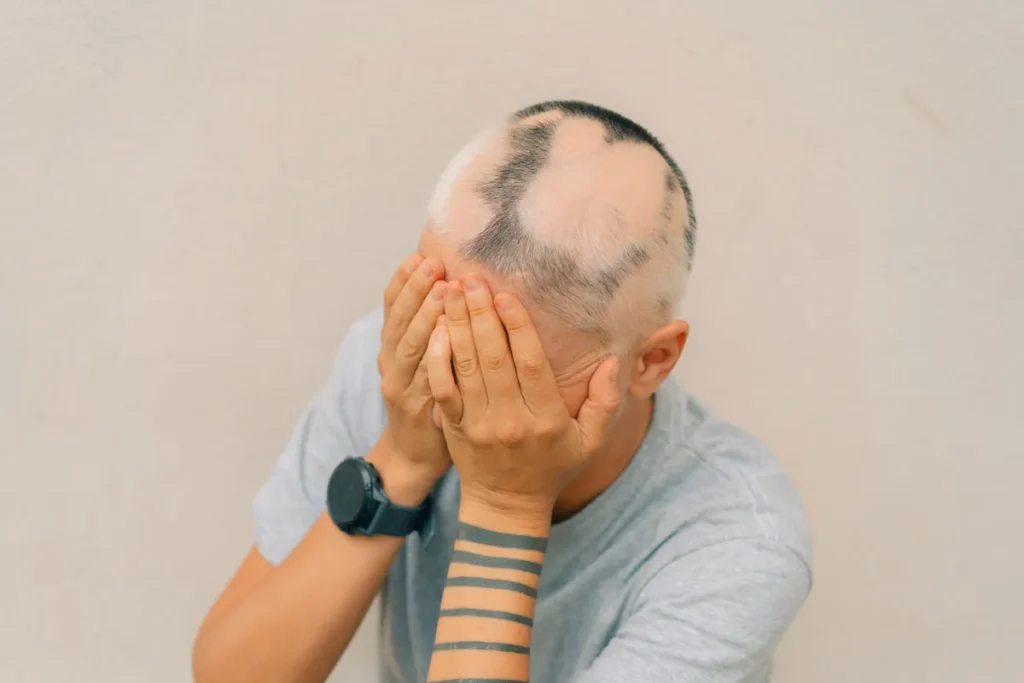
Hormones are key in hair growth. Imbalances can cause a lot of hair loss. The link between hormones and hair health is complex, influenced by many body processes. Can Hormonal Hair Loss Be Reversed? Find the best fix for thinning hair caused by hormones and learn how to restore your hair balance now.
The Role of DHT in Hair Follicle Miniaturization
Dihydrotestosterone (DHT) is a strong form of testosterone. It’s a major cause of hair follicle shrinkage. DHT makes hair follicles smaller, leading to thinner, shorter hairs, and eventually, hair loss. This is a big issue for people with a family history of androgenetic alopecia.
Knowing how DHT affects hair loss is key to finding treatments. By tackling the root cause of hair follicle shrinkage, people can stop or even reverse hair loss. For more on reversing hair loss due to hormone imbalance, check out this resource.
Hormonal Imbalances That Cause Thinning
Other hormonal issues can also make hair thinner. Changes in estrogen and progesterone during menopause or after having a baby can cause hair loss. Also, thyroid problems can mess up the hair growth cycle, leading to more hair falling out.
Fixing these hormonal imbalances is vital for hair health. By knowing the hormonal reasons for hair loss, people can look into specific treatments. This includes hormone replacement therapy and natural supplements that help balance hormones.
Can Hormonal Hair Loss Be Reversed?
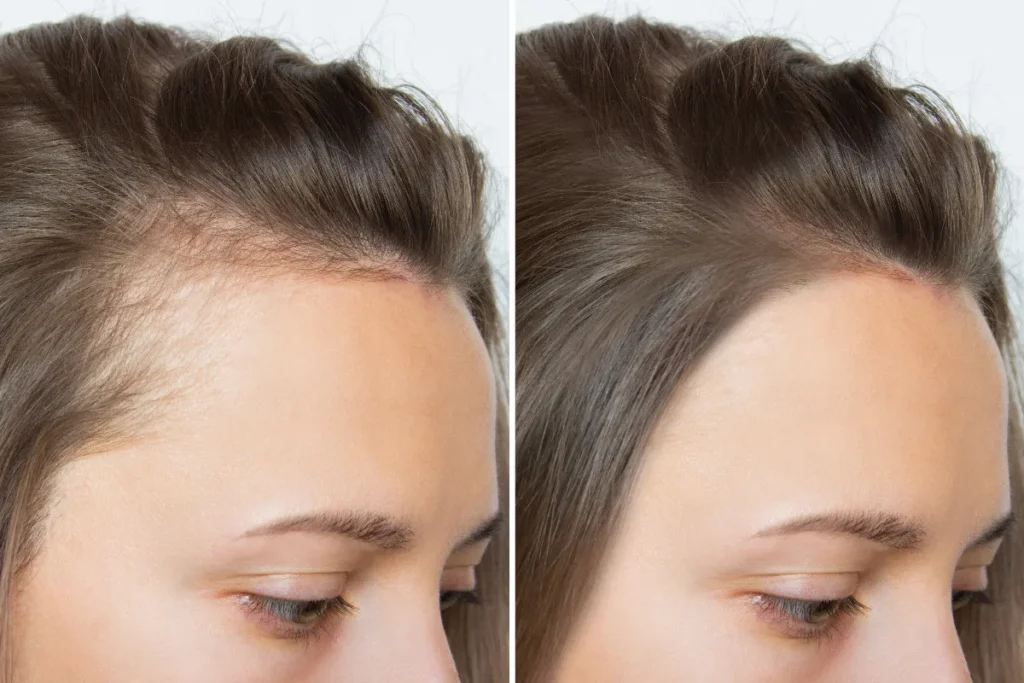
Yes, hormonal hair loss can be reversed with the right treatment. Hormonal imbalances, like those involving DHT, can cause hair loss. But, there are treatments that can help grow hair back and improve hair health.
Prescription Treatments for Androgenetic Alopecia
For those with androgenetic alopecia, minoxidil and finasteride are effective. Minoxidil, applied to the scalp, can stimulate hair growth. Finasteride, taken by mouth, blocks DHT, a hormone that shrinks hair follicles.
These treatments can be used together or separately, based on your condition and how you respond. Always talk to a healthcare professional to find the best treatment for you.
Hormone Replacement Therapy Options
Women experiencing hair loss during menopause might benefit from hormone replacement therapy (HRT). HRT replaces hormones that decrease with age, helping with symptoms like hair loss.
HRT can be customized for each person. It’s important to discuss the benefits and risks with a healthcare provider to make an informed choice.
Natural Supplements for Hormone Balance
Some natural supplements can help balance hormones and support hair growth. Biotin, vitamin D, and saw palmetto are examples. They are thought to promote hair health.
While these supplements can be helpful, it’s important to talk to a healthcare professional before starting them. They can interact with other medications or have side effects.
Conclusion: Creating Your Hair Loss Recovery Plan
Understanding how hair loss and hormones are connected is key. Hormones can cause hair loss if they’re out of balance. This is often due to dihydrotestosterone (DHT), a strong form of testosterone that shrinks hair follicles.
To stop hair loss caused by hormones, you need to know which hormones are the culprits. Hormones like thyroid hormones, estrogen, and testosterone play a big role. Knowing this helps you choose the right treatment.
Creating a plan to recover from hair loss means looking at different treatments. This includes medicines and natural supplements that help balance hormones. With the right plan, you can stop hair loss and even grow new hair. This leads to a fuller, healthier head of hair.
By taking charge of your hair loss, you can make your hair look its best. You’ll feel more confident and radiant.
FAQ
Can hormonal hair loss be reversed?
Yes, hormonal hair loss can be reversed with early action and the right treatment. Treatments like minoxidil and finasteride can stimulate new hair growth and stop hair loss.
What causes hormonal hair loss?
Hormonal hair loss is mainly caused by DHT, a byproduct of testosterone, which shrinks hair follicles. Other hormonal changes, like estrogen and progesterone shifts, and thyroid issues, can also lead to hair thinning.
How do I stop hormonal hair loss?
To stop hormonal hair loss, understanding its causes is key. Look into treatments like minoxidil and finasteride, hormone therapy, and natural supplements. These can help stop hair loss and encourage new growth.
What is the role of DHT in hair loss?
DHT plays a big role in shrinking hair follicles, mainly in those with a genetic predisposition to androgenetic alopecia. It makes hair thinner and fall out by reducing follicle size, making hair harder to grow.
Can hormone imbalance cause hair loss?
Yes, hormone imbalances, like changes in estrogen and progesterone during menopause or after childbirth, and thyroid issues, can cause hair thinning and loss.
What are the treatment options for hormonal hair loss?
For hormonal hair loss, treatments include prescription drugs like minoxidil and finasteride, hormone therapy, and natural supplements. These help balance hormones and promote hair growth.
How do hormones affect hair growth?
Hormones are vital for hair growth, and imbalances can lead to thinning and loss. Knowing how hormones affect hair growth is important for finding the right treatment.
Can thyroid disorders cause hair loss?
Yes, thyroid disorders can cause hair loss due to hormonal imbalances. Treating the thyroid condition can help reduce hair loss symptoms.
Are there natural supplements that can help with hormonal hair loss?
Yes, some natural supplements may help balance hormones and support hair growth. But, always talk to a healthcare professional before adding supplements to your treatment plan.
References
National Center for Biotechnology Information. Evidence-Based Medical Insight. Retrieved from https://pubmed.ncbi.nlm.nih.gov/9777765/





