
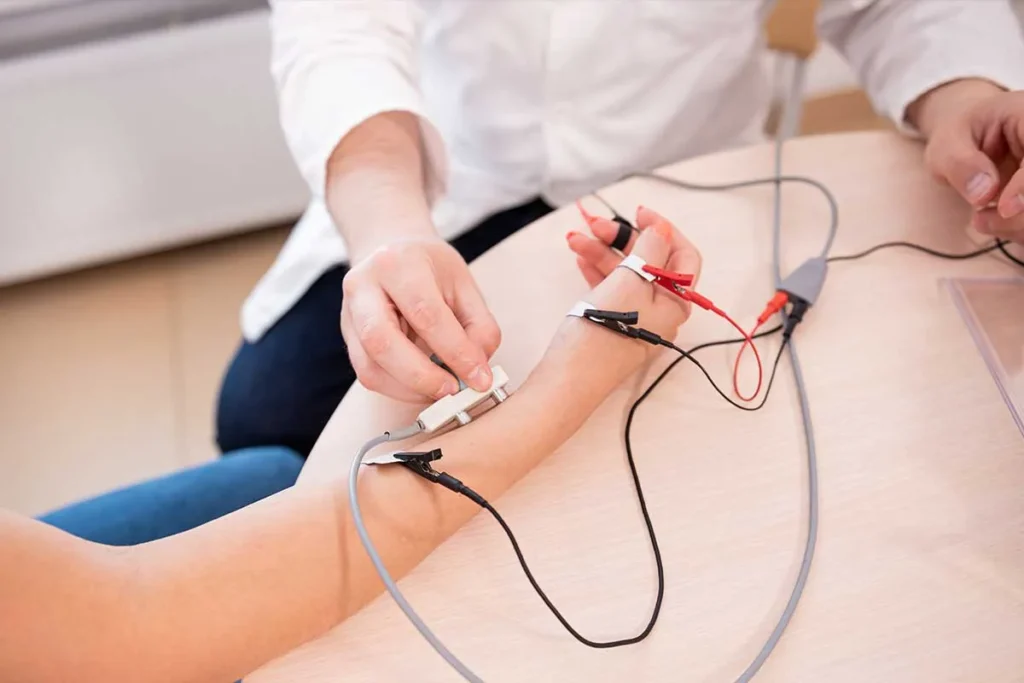
Feeling pain, numbness, tingling, or weakness in your arms or legs can be scary. Luckily, tests like electromyography (EMG) and nerve conduction studies (NCS) can help. These tests check the electrical activity of nerves and muscles. They help doctors find out what’s causing your symptoms.
EMG looks at how muscles work when they’re at rest and when they’re active. NCS checks how fast electrical signals move through nerves. Together, they figure out if the problem is with the muscles or the nerves. This helps doctors know where and how bad the nerve damage is.
By knowing how these tests work, patients can understand their health better. This knowledge helps them take the right steps to get better.
Key Takeaways
EMG and NCS are diagnostic tests used to evaluate nerve and muscle function.
These tests help diagnose conditions like carpal tunnel syndrome and peripheral neuropathy.
EMG measures muscle electrical activity, while NCS assesses nerve impulse speed.
Together, they provide a complete view of nerve damage or disease.
The tests are minimally invasive with few side effects.
Understanding Nerve Damage and What Will Calm Muscle Nerves

It’s key to know the signs of nerve damage to get the right medical help. This can help ease the pain. Nerve damage can really affect how well you live.
Common Signs and Symptoms of Nerve Damage
Nerve damage can show in many ways, like muscle weakness and numbness. You might feel tingling or pain. Spotting these signs early is important for treatment.
Conditions Diagnosed with EMG and NCS Tests
EMG and NCS tests help find many neuromuscular issues. They can spot problems like sciatica and diabetic neuropathy. These tests check how nerves and muscles work.
When Diagnostic Testing Is Recommended
EMG and NCS tests are needed when nerve damage symptoms show up. They help find issues like nerve entrapment. These tests help doctors give the right treatment fast.
EMG and NCS tests are vital for diagnosing nerve damage. They give doctors the info they need to help patients. This way, patients get the care they need.
EMG and NCS Testing Procedures Explained
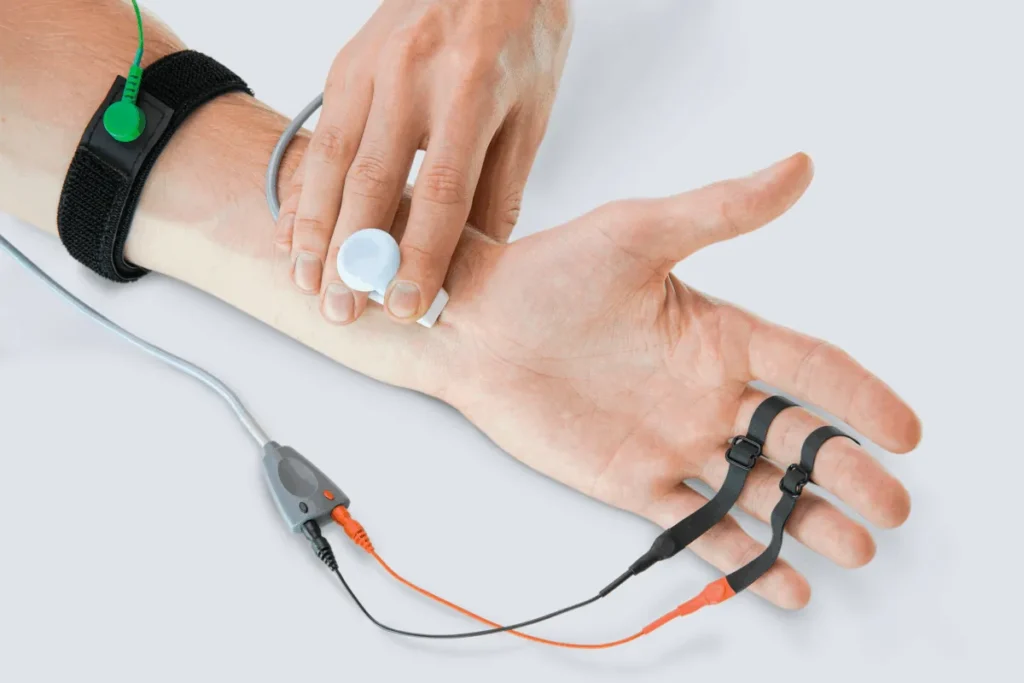
Learning about EMG and NCS tests can make patients feel less anxious. These tests help find nerve damage and muscle problems.
Preparing for Your EMG and NCS Tests
Before the tests, keep your skin clean and dry. Avoid using lotions or oils on the test day. This helps the tests work better.
Key Preparation Steps:
Wear loose, comfy clothes for easy access.
Tell your doctor about any medicines, like blood thinners.
Take off any jewelry that might get in the way.
Electromyography (EMG) Test Process
The EMG test uses a thin needle to check muscle electrical activity. It helps find muscle damage or problems.
The EMG test process includes:
The area is cleaned and might be numbed.
A needle electrode is inserted into the muscle.
You’ll contract and relax the muscle to measure its activity.
Nerve Conduction Studies (NCS) Methodology
NCS tests nerves with electrical impulses to see how fast signals travel. It’s key for finding nerve damage or compression.
NCS Procedure:
Electrodes are placed on the skin over the nerve.
A mild electrical impulse is sent to the nerve.
The response is recorded, and the nerve signal speed is calculated.
Potential Side Effects and Recovery
EMG and NCS tests are usually safe. But, some might feel minor side effects like pain or discomfort at the needle site.
Knowing what to expect can make patients feel more at ease during the tests.
Conclusion: Benefits and Importance of Early Nerve Damage Testing
Early diagnosis is key to treating nerve damage effectively. Tests like EMG and NCS give important insights into nerve and muscle health. This helps doctors create the right treatment plans.
Early detection of nerve damage through tests like EMG and NCS can greatly help patients. It can stop further damage and lower the chance of long-term problems. If you think you might have nerve damage, see a doctor for tests.
Knowing about EMG and NCV tests is important. These tests help find nerve damage early. By getting tested, patients can start on the path to better health and a better life.
FAQ
What is an EMG and NCS test?
An EMG and NCS test are tools to check for nerve and muscle problems. EMG looks at muscle electrical activity. NCS checks nerve signal speed and strength.
How do I prepare for an EMG and NCS test?
To get ready, don’t use lotions or oils on your skin the day of the test. Wear loose, comfy clothes. You might also need to avoid some medicines or activities beforehand.
What conditions can be diagnosed with EMG and NCS tests?
These tests can find issues like carpal tunnel syndrome and nerve damage. They also check for muscle and nerve problems.
Are EMG and NCS tests painful?
These tests are not very painful. You might feel a bit of discomfort when the needle is put in for EMG. NCS might cause a brief tingling feeling.
How long do EMG and NCS tests take?
EMG and NCS tests usually take one to three hours. This depends on how many nerves are tested.
What are the possible side effects of EMG and NCS tests?
Side effects are rare. You might feel a bit sore or bruised where the needle was inserted.
How is nerve damage diagnosed using EMG and NCS tests?
These tests check muscle and nerve electrical activity. They help find the cause of weakness, numbness, or pain.
What is the difference between EMG and NCS tests?
EMG looks at muscle electrical activity. NCS checks nerve signal speed and strength. Together, they give a full picture of nerve and muscle health.
Can EMG and NCS tests be performed together?
Yes, EMG and NCS tests are often done together. They help diagnose many neuromuscular disorders.
How do I know if I need an EMG and NCS test?
You might need these tests if you have muscle weakness, tingling, numbness, or pain. Your doctor will decide if you need them to find the cause.
References
National Center for Biotechnology Information. Evidence-Based Medical Insight. Retrieved from https://www.ncbi.nlm.nih.gov/books/NBK611987/