
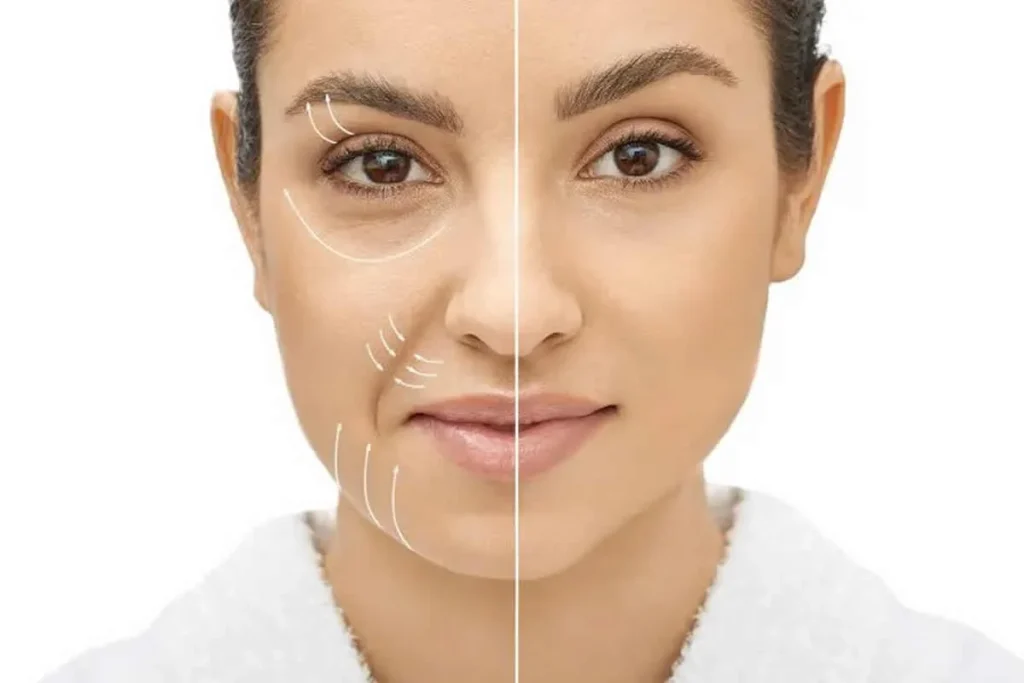
Injectable dermal fillers have changed the game in non-surgical beauty treatments. They give a radiant glow and timeless beauty. These gel-like substances add volume, soften wrinkles, and enhance facial features. They offer a luxury transformation for those wanting a youthful look.
What is facial filler made of? Learn about the high-quality materials used to safely enhance your beauty and smooth away wrinkles.
There are many types of fillers out there. Knowing what they’re made of is key. From natural hyaluronic acid to advanced biocompatible materials, they’re safe and approved by the FDA. When thinking about dermal fillers, it’s important to consider the good and bad. Always talk to a professional for a safe and effective treatment.
Key Takeaways
Dermal fillers are gel-like substances injected into or under the skin.
They are made from various materials, including hyaluronic acid and biocompatible materials.
Understanding the composition of dermal fillers is key for safe and effective treatment.
Consulting with a professional is essential to weigh the pros and cons.
Dermal fillers have gained FDA approval and medical acceptance.
What Is Facial Filler Made Of: Common Materials
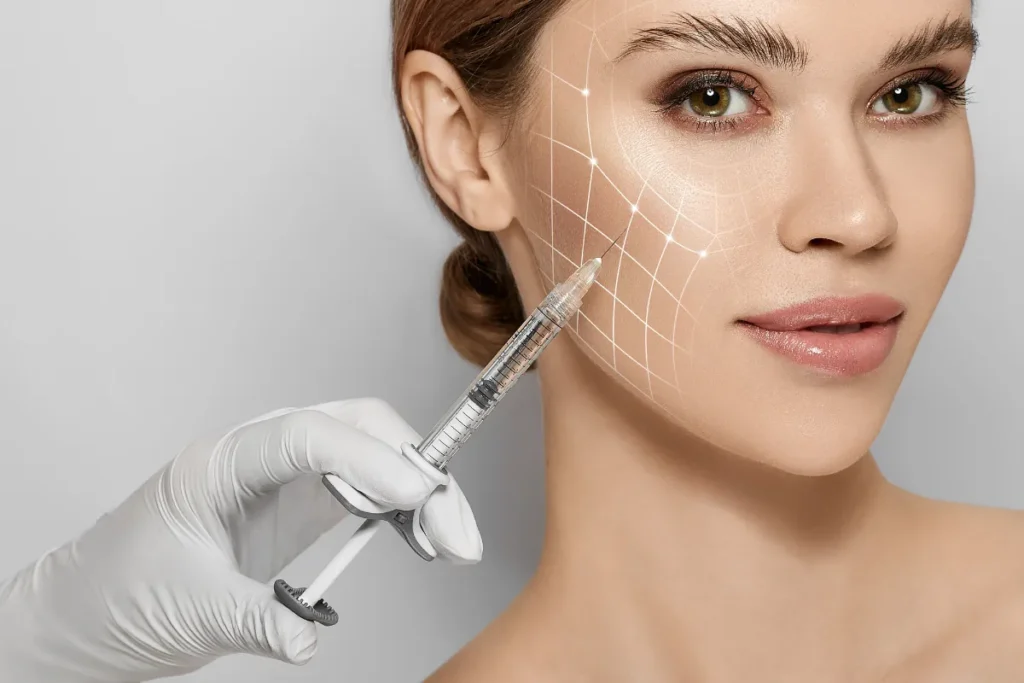
Facial fillers come from different materials, each with its own benefits. The most common ones are hyaluronic acid (HA), calcium hydroxylapatite (CaHA), and poly-L-lactic acid (PLLA). These are picked for their ability to give timeless beauty and luxury transformation.
Hyaluronic Acid (HA) Fillers
Hyaluronic acid fillers, like Juvéderm and Restylane, are made to last longer. HA is found naturally in our bodies and holds moisture well. “Hyaluronic acid fillers are a game-changer in skincare,” says a top dermatologist. “They’re safe and effective for glowing, young-looking skin.”
Calcium Hydroxylapatite (CaHA) Fillers
Calcium hydroxylapatite (CaHA) is a mineral in our teeth and bones. It helps grow collagen, making the results natural and lasting. CaHA fillers are great for deeper lines and boost collagen.
Stimulates collagen production
Longer-lasting results
Ideal for deeper facial folds
Poly-L-lactic Acid (PLLA) Fillers
Poly-L-lactic acid (PLLA) fillers boost collagen over time, for a natural look. PLLA is good for adding volume and is often used in a series for best results.
Knowing about facial filler materials helps people choose better for their skincare. This way, they can get the luxury transformation they want.
Safety Profile and Risks

It’s important to know about the safety of facial fillers before you use them. These fillers can make your face look radiant and youthful. But, they can also have risks and side effects.
Common Side Effects and Complications
Side effects of facial fillers include bruising, swelling, and tenderness. These usually go away in a few days. But, serious problems like allergic reactions, infection, and vascular occlusion can happen. It’s key to talk about these risks with your doctor.
Choosing a skilled and experienced doctor is vital. They should use FDA-approved fillers. Weigh the pros and cons of fillers based on your health and beauty goals.
FDA Approval Status of Different Fillers
The FDA’s approval of facial fillers is important for their safety and effectiveness. Hyaluronic acid (HA) fillers are FDA-approved for many cosmetic uses. Other fillers, like Calcium Hydroxylapatite (CaHA) and Poly-L-lactic Acid (PPLA), also have FDA approval. Always check if a filler is FDA-approved before getting it.
Who Should Avoid Facial Fillers
Facial fillers can be safe and effective for many people. But, some should avoid them. Those with active infections or severe allergies should not get fillers. People with certain health issues or taking certain medicines should also be careful. Always talk to a doctor before getting fillers.
In summary, facial fillers have many benefits. But, knowing their safety and risks is key. By choosing a qualified doctor, you can enjoy the benefits while avoiding risks.
Conclusion
Knowing what facial fillers are made of is key to smart beauty choices. Different materials like Hyaluronic Acid, Calcium Hydroxylapatite, and Poly-L-lactic Acid are used. Each has its own benefits and risks.
The question “are fillers dangerous” is fair. But, the dangers can be lessened by picking a skilled practitioner. It’s also important to know the ingredients and the process. Not all fillers are safe for everyone, and misuse can be harmful.
Being informed and careful can help you use facial fillers wisely. They can give you a glowing look and timeless beauty. Your beauty journey begins now, and with the right advice, you can enhance your look.
Understanding facial fillers can change your life. It’s about moving towards flawless skin with the right knowledge. So, start your journey to confidence by learning about facial fillers and their effects on your beauty.
FAQ
What are facial fillers made of?
Facial fillers come in different materials. You’ll find hyaluronic acid, calcium hydroxylapatite, and poly-L-lactic acid. Each has its own use and makeup.
Are facial fillers safe?
Facial fillers are usually safe when a skilled professional does the treatment. But, like any medical treatment, they can have risks and side effects.
What are the common side effects of facial fillers?
Side effects like redness, swelling, bruising, and itching can happen. These are usually mild and go away quickly.
Are dermal fillers FDA-approved?
Yes, many dermal fillers are FDA-approved. This includes hyaluronic acid, calcium hydroxylapatite, and poly-L-lactic acid. They’ve been tested for safety and work well.
Who should avoid facial fillers?
People with bleeding disorders or active infections should not get facial fillers. Also, those who are pregnant or breastfeeding should avoid them.
Can facial fillers be used on all skin types?
Facial fillers work on different skin types. But, it’s best to talk to a professional to find the right treatment for your skin.
How long do facial fillers last?
Facial fillers last different lengths of time. Some can last months to years. Others might need more frequent touch-ups.
What are the risks of facial fillers?
Risks include infection, allergic reactions, and vascular problems. But, these are rare if a qualified professional does the treatment.
Can facial fillers be reversed?
Some fillers, like hyaluronic acid, can be reversed with hyaluronidase. Others might be harder to reverse.
References
National Center for Biotechnology Information. Evidence-Based Medical Insight. Retrieved from https://pmc.ncbi.nlm.nih.gov/articles/PMC10413051





