
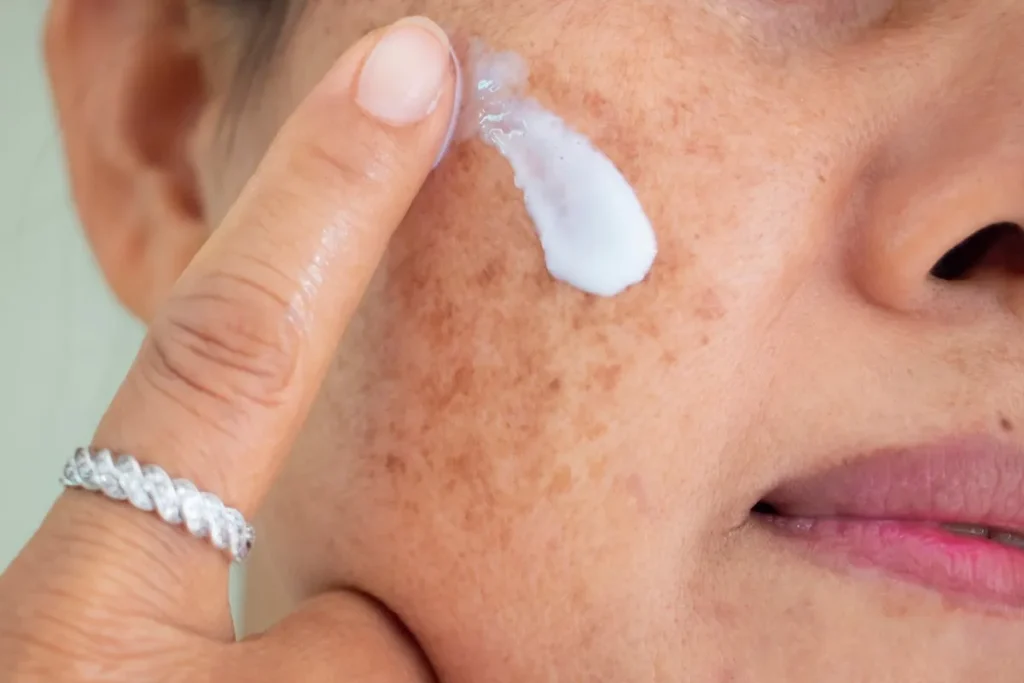
Knowing how to spot flaky dark spots on skin is key for good skincare and a radiant glow. These spots might show up for many reasons, from simple age spots to serious skin problems. Medical News Today says skin color changes can happen for lots of reasons, like pigmentation and inflammation.
At GoldCity Center, our skilled dermatology team uses top medical standards and focuses on you. They help you understand and treat these spots with confidence and knowledge. By learning about these spots, you can start on the path to healthier, brighter skin.
Key Takeaways
Flaky dark spots can be a sign of various underlying skin conditions.
Proper identification is key to effective treatment and skincare.
Consulting a dermatology team can provide personalized guidance.
Understanding the causes can empower individuals to take control of their skin health.
Maintaining a radiant glow requires effective skincare and awareness.
Common Types of Flaky Dark Spots on Skin
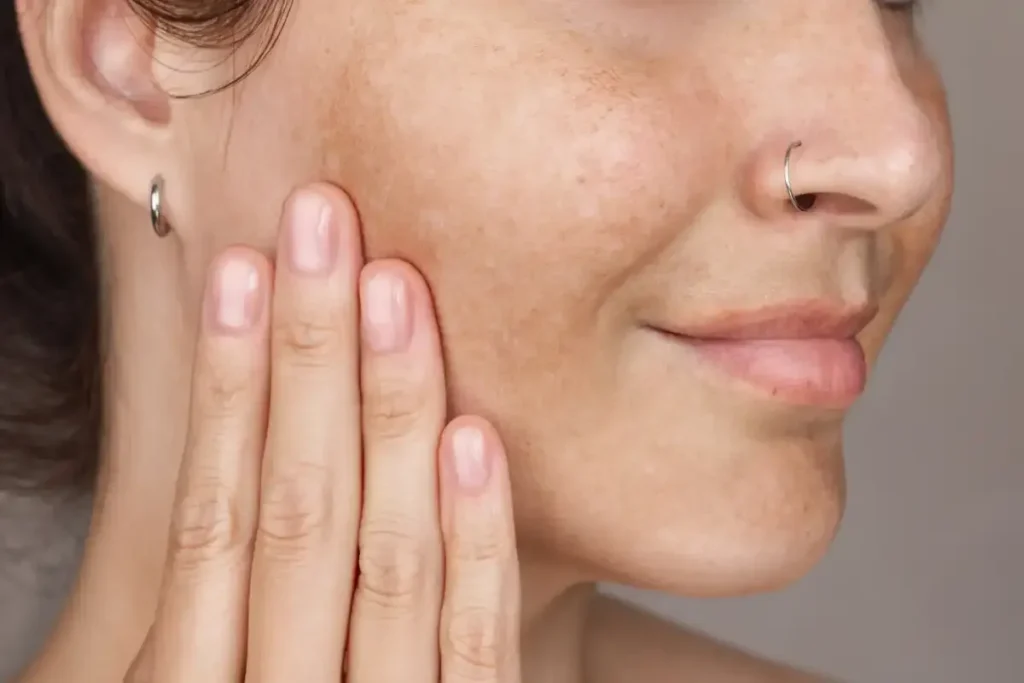
It’s important to know about the different kinds of flaky dark spots on the skin. These spots can be signs of various skin issues, some of which are harmless, while others need medical care.
Many factors can cause dark spots, like sun exposure, hormonal changes, and aging. Knowing the different types of dark spots is key to treating them well.
Age Spots (Sun Spots)
Age spots, also known as sun spots or solar lentigines, are flat brown or black spots. They show up on sun-exposed areas. The American Academy of Dermatology says they’re caused by UV radiation from the sun or tanning beds.
These spots are more common in adults over 50. They often appear on sun-exposed areas like the face, hands, shoulders, and upper back.
Melasma (Chloasma)
Melasma is a condition with patches of discoloration, mainly on the face. It’s more common in women and linked to hormonal changes and sun exposure. Melasma can cause patchy brown, tan, or blue-gray spots, mostly on the cheeks, forehead, nose, and upper lip.
Actinic Keratosis
Actinic keratosis is a precancerous condition with rough, scaly patches. It’s caused by long-term sun exposure. These patches often appear on sun-exposed areas like the face, ears, and hands.
Actinic keratosis is a sign of skin cancer and needs a dermatologist’s check-up.
Understanding the characteristics and causes of these common dark spots is key. Whether it’s age spots, melasma, or actinic keratosis, knowing what they are is the first step to treating and preventing them.
How to Identify Flaky Dark Spots on Skin
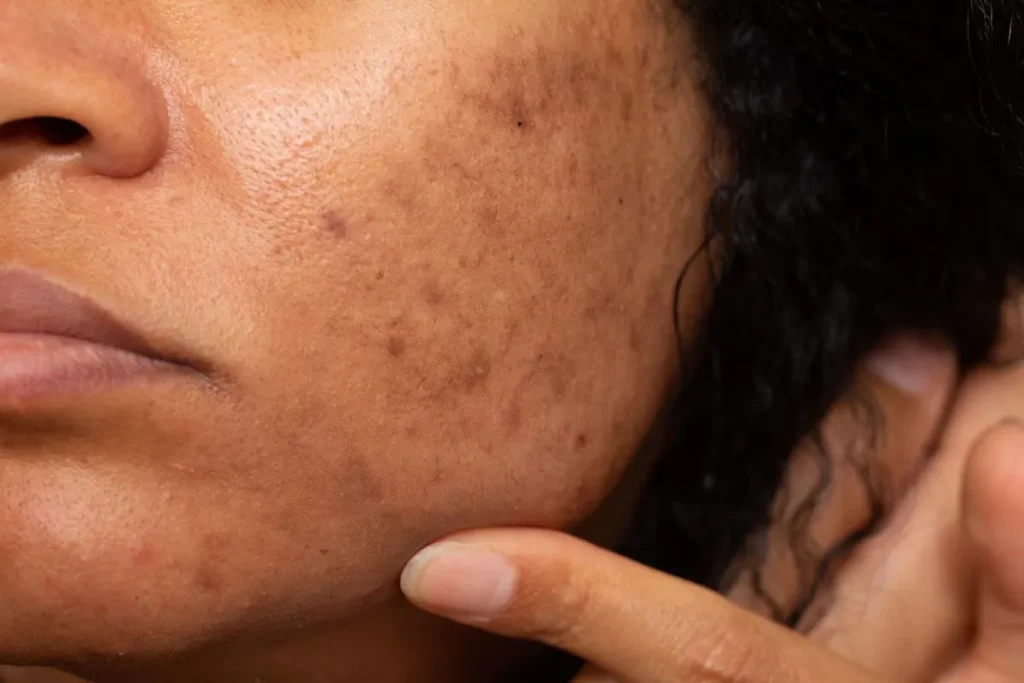
To keep your skin healthy and radiant, it’s important to know how to spot flaky dark spots. These spots can be caused by many things, from harmless age spots to serious skin cancer.
Visual Characteristics to Look For
When checking your skin, look for certain signs in flaky dark spots. Notice their size, shape, color, and texture. Age spots are usually flat, round, and brown or black. But, spots that might be cancerous are often irregular, grow fast, or change shape.
Differentiating Between Benign and Concerning Spots
It’s key to tell the difference between harmless and worrying spots. Benign spots, like age spots or melasma, are mostly okay but can look bad. But, spots that look odd, are many colors, or change size or shape need a doctor’s check.
Self-Examination Techniques
Checking your skin regularly is a great way to keep it healthy. Use bright light and mirrors to see all areas. Look for new or changing spots and their details. If unsure, see a dermatologist for advice.
Being proactive and knowing your skin can help you unlock your inner glow. Regular checks and knowing what to look for in spots are important steps.
When to Seek Medical Attention
Knowing when to see a doctor for flaky dark spots on your skin is key to keeping your skin healthy and glowing. If you notice a new dark spot or spots that don’t go away, it’s time to visit a doctor. Watch out for spots that are flat, smooth, or sunken.
If a spot on your face or body changes size, shape, or texture, get medical help. Medical News Today says a mole change could mean something serious. For more on skin issues, check out Medical organization.
Looking after your skin can lead to a luxury transformation and reveal your inner glow. If you’re worried about a spot on your face or a sunken spot, see a healthcare expert. They can figure out the problem and tell you the best treatment.
FAQ
What are flaky dark spots on the skin?
Flaky dark spots can mean different things. They might be harmless age spots or something more serious like skin cancer.
What are the common types of flaky dark spots on the skin?
Common spots include age spots, melasma, and actinic keratosis. Each has its own look and reason for being there.
How do I identify flaky dark spots on my skin?
Look at the size, shape, color, and texture of the spots. Use self-examination to tell if they’re okay or not.
What are age spots, and how do they differ from other types of dark spots?
Age spots, or sun spots, are flat and brown or black. They show up where the sun hits most and are usually not a problem.
What is melasma, and how is it characterized?
Melasma causes patches of color on the face. It’s linked to hormones and sun exposure.
What is actinic keratosis, and is it a cause for concern?
Actinic keratosis is a warning sign. It’s rough and scaly from too much sun. You should see a doctor to stop it from getting worse.
When should I seek medical attention for flaky dark spots on my skin?
See a doctor if a spot changes size, shape, color, or texture. Also, if it itches, bleeds, or hurts.
How can I differentiate between benign and concerning spots?
Look for signs like uneven shapes and colors. If unsure, talk to a doctor.
What are some self-examination techniques for identifying flaky dark spots?
Use a mirror to check your skin. Focus on sun-exposed areas. A magnifying glass can help you see spots better.
Can flaky dark spots be a sign of skin cancer?
Yes, some spots can be a sign of skin cancer. It’s important to watch your skin and get help if you notice anything odd.
How can I achieve healthier, more luminous skin?
Learn about your skin spots, take care of your skin, and see a doctor when needed. This will help you have glowing, healthy skin.
References
National Center for Biotechnology Information. Evidence-Based Medical Insight. Retrieved from https://pmc.ncbi.nlm.nih.gov/articles/PMC10304091/





