

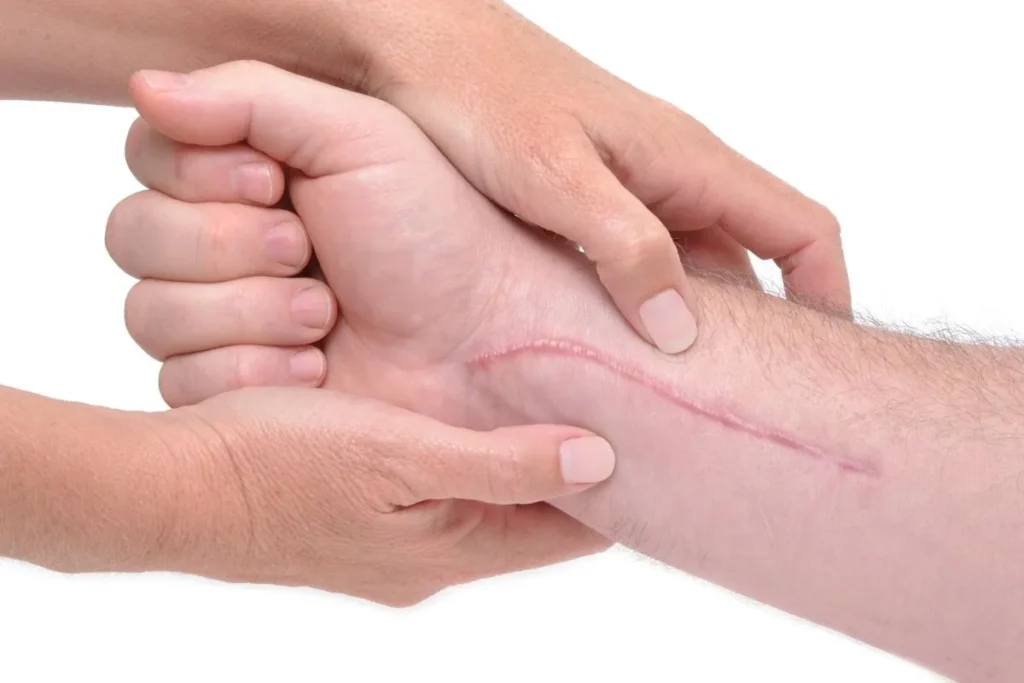
Hypertrophic scars are thick, raised lesions that happen when wounds heal abnormally. This is because of too much collagen and less elastin in the wound area. These scars can appear anywhere on the body but often show up on the chest, back, shoulders, or face.
What causes hypertrophic scars to form? Discover the vital secrets and amazing factors behind scar tissue development for an incredible recovery.
At Liv Hospital, we know that hypertrophic scarring affects patients a lot. It changes their life both physically and mentally. The scars form because of how wounds heal abnormally, leading to too much collagen.
Key Takeaways
Hypertrophic scars result from an abnormal wound healing process.
Excessive collagen production is a key factor in their development.
These scars can form on various body parts, including the chest, back, shoulders, and face.
Hypertrophic scarring can significantly impact patient quality of life.
Liv Hospital is dedicated to addressing the physical and psychological effects of hypertrophic scarring.
Understanding Hypertrophic Scars

Hypertrophic scars are marks that appear after skin injuries or surgeries. They are raised and can be unsightly. These scars can affect how people feel about their appearance.
Definition and Characteristics
Hypertrophic scars look raised and are often red or purple. They feel firm or rubbery when touched. The body’s healing process creates these scars by making collagen.
People are affected differently by hypertrophic scars. This depends on their genes, where the scar is, and the type of injury. Some might be more likely to get these scars because of their genes.
Difference Between Hypertrophic Scars and Other Scar Types
It’s important to know the difference between hypertrophic scars and other scars. For example, keloid scars grow beyond the original wound. Here’s a quick comparison:
Common Locations and Appearance
Hypertrophic scars often appear on the chest, back, shoulders, or face. They can happen after surgery, burns, or deep cuts. These scars stand out because they are raised.
Knowing about hypertrophic scars helps people understand their treatment options. It also helps them know what to expect when trying to improve their scars.
Causes of Hypertrophic Scars: The Formation Process

Hypertrophic scars form from a mix of factors during wound healing. This process involves a balance of physiological and environmental elements.
Normal vs. Abnormal Wound Healing
Wound healing goes through three stages: inflammation, proliferation, and remodeling. Abnormal wound healing can cause hypertrophic scars. Factors like mechanical tension on the wound, infection, and genetics can disrupt healing.
Research shows that mechanical tension is a big cause of hypertrophic scars, mainly in tight skin areas. This tension leads to too much collagen, causing raised scars.
Common Triggers and Injuries
Hypertrophic scars can start from surgical incisions, burns, and trauma. The injury’s severity and location affect scar risk. For example, scars are more common in tight skin areas like the chest and back.
Biological Mechanisms of Formation
The formation of hypertrophic scars involves complex cellular and molecular processes. Research shows they have too much collagen and an imbalance in growth factors.
The dysregulation of wound healing leads to too much collagen. This causes raised scars. Knowing these mechanisms helps in finding treatments for hypertrophic scars.
Risk Factors for Development
Several factors increase the risk of hypertrophic scars, including genetic predisposition, skin type, and ethnicity. People with a family history of these scars are at higher risk. Certain skin types and ethnicities are also more likely due to skin tension and collagen differences.
Knowing these risk factors helps in preventing hypertrophic scars.
Conclusion: Prevention and Management Considerations
Knowing what causes hypertrophic scars is key to preventing and managing them. Proper wound care, avoiding skin injuries, and using silicone gel sheets can help. These steps can greatly lower the chance of getting these scars.
If you already have hypertrophic scars, there are many ways to manage them. Options include topical treatments, steroid injections, and laser therapy. Silicone-based products are the top choice for treating these scars without surgery. They are a trusted way to make scars less noticeable.
To get healthier, more beautiful skin, it’s important to understand hypertrophic tissue. Using a mix of prevention and treatment strategies can help. With the right approach, you can achieve skin that looks and feels great, boosting your confidence and beauty.
FAQ
What are hypertrophic scars?
Hypertrophic scars are thick, raised skin areas. They happen when the skin heals too much, making too much collagen.
What causes hypertrophic scarring?
They occur when the skin reacts too strongly to injury. This leads to too much collagen and thick, raised scars.
How do hypertrophic scars differ from other types of scars?
Unlike keloid or atrophic scars, hypertrophic scars are raised. They stay within the wound’s original area.
What are the common locations for hypertrophic scars?
They can appear anywhere but often show up in tight areas. This includes the chest, back, and shoulders.
What are the risk factors for developing hypertrophic scars?
Certain factors increase the risk. These include genetics, skin type, injury severity, and environmental issues like infection or slow healing.
Can hypertrophic scars be prevented?
Not all can be prevented, but good wound care helps. Keeping the wound clean and moist can reduce the risk.
How are hypertrophic scars treated?
Treatments include topical silicone gel or sheeting, corticosteroid injections, and laser therapy.
Are hypertrophic scars permanent?
While they can last, they can fade with the right treatment. In some cases, they may become less visible over time.
References
National Center for Biotechnology Information. Evidence-Based Medical Insight. Retrieved from https://pmc.ncbi.nlm.nih.gov/articles/PMC3889252/[1


