
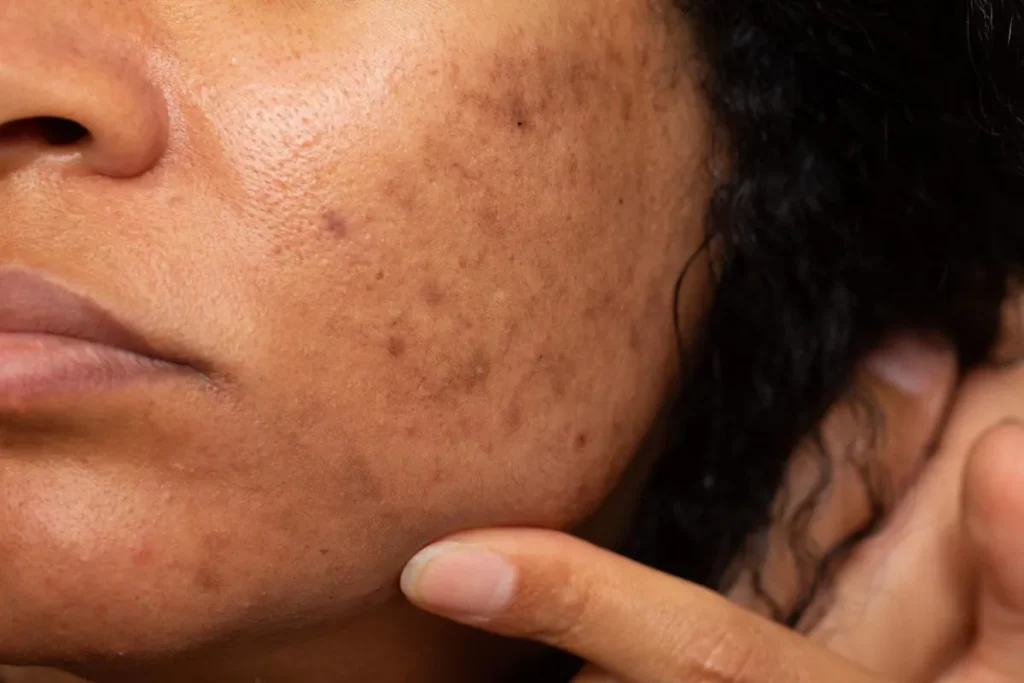
Achieving a radiant glow is a dream for everyone. But for those with darker skin, hyperpigmentation can make it hard.
Erase dark spots on dark skin with powerful healing ways. Discover amazing, incredible treatments to achieve a flawless and beautiful glow.
Dark spots and patches can come from acne scars, sun damage, or hormonal changes. They can really affect how you feel about yourself. It’s important to understand how melanin-rich skin works to treat it right.
Modern dermatology has many proven ways to help dark skin. This guide will cover what causes dark spots, their types, and how to treat them. You’ll learn how to get timeless beauty back.
Key Takeaways
Understanding hyperpigmentation is key to effective treatment.
Various treatments are available, tailored to individual skin types.
Modern dermatology offers cutting-edge solutions for hyperpigmentation.
Achieving radiant, even-toned skin is possible with the right approach.
Consulting a dermatologist is essential for personalized advice.
Understanding Dark Spots on Dark Skin
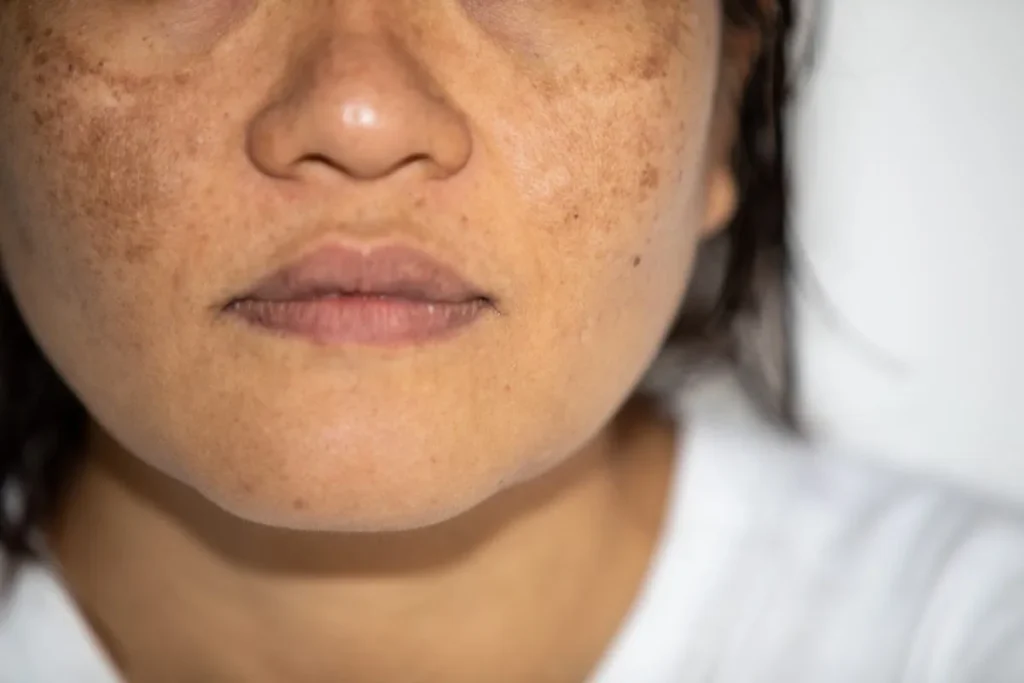
Hyperpigmentation is common in people with darker skin tones. Dark spots can make it hard for them to feel confident and manage their skincare. It’s a big issue for many.
Prevalence in Darker Skin Tones
About 65 percent of African Americans deal with post-inflammatory hyperpigmentation. This condition leads to dark spots. It shows we need special skincare and education for darker skin.
Common Causes and Triggers
Many things can cause dark spots on dark skin. These include:
Post-inflammatory hyperpigmentation from acne, injuries, or inflammation
Hormonal changes and melasma
Too much sun leading to sun spots
Getting older and age spots
The table below shows what causes dark spots and how they affect the skin:
Knowing what causes dark spots helps people prevent and treat them. It’s a step towards better skin care.
Types of Hyperpigmentation in Dark Skin
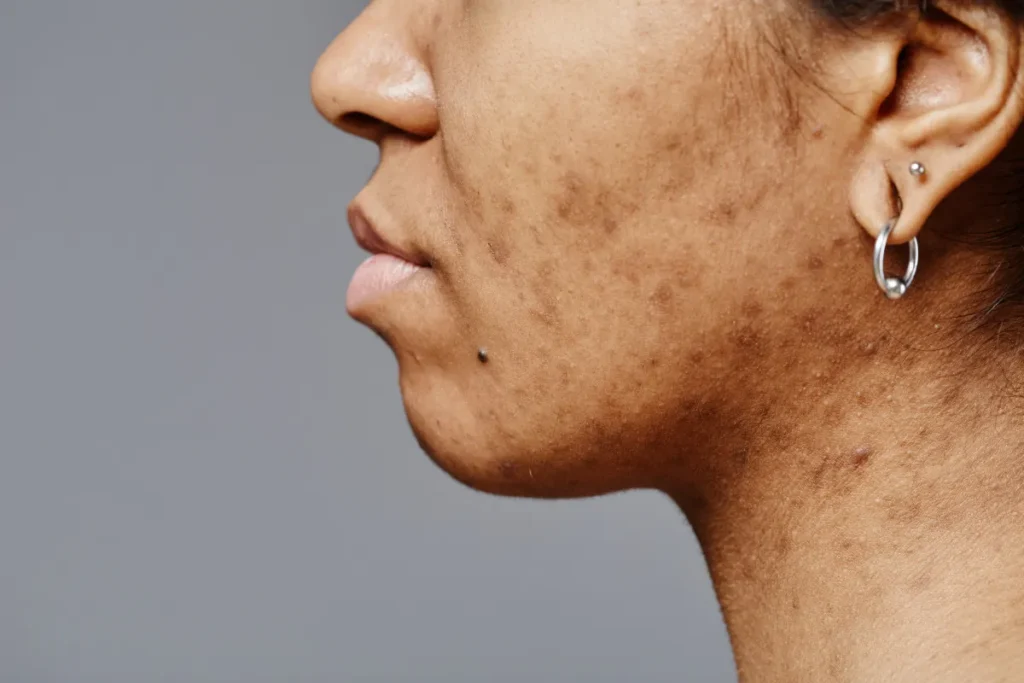
Hyperpigmentation in dark skin comes in many forms, each with its own causes and signs. Knowing these differences is key to treating it well and getting a bright, even skin tone.
Post-Inflammatory Hyperpigmentation
Post-inflammatory hyperpigmentation (PIH) happens after skin injuries like acne, cuts, or burns. It’s more common in darker skin because of more melanin. PIH can be hard to treat because it affects deeper skin layers.
To fight PIH, use gentle treatments that calm the skin and help it renew. Niacinamide and retinoids are good for fading PIH over time.
Sun and Age Spots
UV rays can cause sun spots and age spots, or solar lentigines. These spots are more visible on darker skin and can be prevented with good sun protection. Use broad-spectrum sunscreens and wear protective clothes.
Use a broad-spectrum sunscreen with at least SPF 30 daily.
Wear protective clothing, such as hats and long-sleeved shirts, when outdoors.
Seek shade, specially during peak sun hours.
Melasma and Hormonal Triggers
Melasma is a common condition with patches of discoloration, usually on the face. Hormonal changes, like during pregnancy or with hormonal birth control, can cause it. Learn more about hyperpigmentation on black.
Treating melasma needs a mix of topical treatments, like hydroquinone and retinoids, and sun protection. Also, fix any hormonal imbalances.
Other Forms of Discoloration
Other hyperpigmentation includes freckles, birthmarks, and discoloration from some medicines or health issues. Each needs a special treatment plan. It’s vital to see a dermatologist to find the best treatment.
By knowing the different hyperpigmentation types and their causes, you can start working towards a more even and bright skin. Whether through professional treatments or a good skincare routine, you can regain control over hyperpigmentation.
Effective Treatments for Dark Spots on Dark Skin
Discover the latest ways to tackle dark spots on dark skin. These methods are backed by science and expert advice. Dark spots, or hyperpigmentation, can be tough to get rid of, but the right treatments can help.
Topical Solutions and Ingredients
Topical treatments are a great start against dark spots. Ingredients like hydroquinone, retinoids, and vitamin C are effective. Hydroquinone stops melanin production, while retinoids help fade spots over time. Vitamin C brightens the skin and protects it from damage.
Choose products made for dark skin and avoid harsh chemicals. Look for niacinamide or licorice extract for extra benefits. They reduce inflammation and even out your skin tone.
Hydroquinone: Inhibits melanin production
Retinoids: Promotes cell turnover
Vitamin C: Antioxidant properties, brightens skin
Niacinamide: Reduces inflammation
Licorice Extract: Promotes even skin tone
Professional Treatments
For stubborn dark spots, professional treatments are key. Chemical peels and laser therapy are top choices. Chemical peels remove the top skin layers where spots are most visible. Laser therapy breaks down melanin in spots, allowing the body to absorb it.
It’s important to talk to a dermatologist or skincare expert. They can create a treatment plan that fits your skin needs.
Natural and DIY Remedies
For a natural approach, try DIY remedies. Aloe vera soothes the skin and reduces inflammation. Licorice root extract and green tea brighten the skin and have antioxidant benefits.
Always patch test new ingredients to avoid sensitivity. Natural remedies take longer to show results, but they’re worth it.
By mixing these treatments and being patient, you can see big improvements in dark spots on dark skin. Whether you choose topical solutions, professional treatments, or natural remedies, a brighter complexion is within reach.
Conclusion: Prevention and Maintaining Even Skin Tone
Preventing dark spots and keeping your skin tone even is a journey. It needs consistency and the right skincare routine. Use sunscreen every day, avoid picking pimples, and choose gentle products to reduce black marks.
To get rid of black spots and keep your face glowing, add vitamin C and retinoids to your routine. These ingredients brighten and even your skin, making it radiant.
Even skin tone is more than just treating dark spots. It’s about a complete skincare approach. The right products and a consistent routine can give you a flawless glow that highlights your natural beauty.
Your skin is worth this transformation. Focus on prevention and a skincare routine that suits you. Say goodbye to dark spots and hello to a brighter, more even complexion.
FAQ
What causes dark spots on dark skin?
Dark spots on dark skin can come from many things. These include post-inflammatory hyperpigmentation, sun damage, hormonal changes, and skin injuries. Knowing the cause helps find the right treatment.
How can I remove dark spots on my face?
To get rid of dark spots on your face, use a mix of products, treatments, and natural remedies. Look for products with vitamin C, niacinamide, and retinoids. Chemical peels and laser therapy can also work well.
Are dark spots on dark skin permanent?
Dark spots on dark skin are not always permanent. They can fade with the right treatment and care. Using sunscreen, gentle products, and targeted treatments can help.
Can I prevent dark spots from forming on my skin?
Yes, you can stop dark spots from forming. Use sunscreen every day, avoid picking pimples, and stick to a skincare routine. Gentle products and sun protection are key.
What is the best treatment for melasma on dark skin?
Treating melasma on dark skin needs a full plan. This includes creams, chemical peels, and laser therapy. Look for products with hydroquinone, tranexamic acid, and niacinamide.
How long does it take to see results from dark spot treatments?
Results from dark spot treatments vary. It depends on the treatment and your skin. Proven treatments can show big changes in weeks to months.
Can I use natural remedies to remove dark spots on dark skin?
Yes, natural remedies like turmeric, aloe vera, and lemon juice can help. But, always test them first and talk to a dermatologist before trying new remedies.
How can I maintain an even skin tone after treating dark spots?
To keep your skin tone even after treating dark spots, follow a consistent skincare routine. Use sunscreen daily and choose gentle products. Regular exfoliation and brightening products can also help.
References
National Center for Biotechnology Information. Evidence-Based Medical Insight. Retrieved from https://pmc.ncbi.nlm.nih.gov/articles/PMC2921758/