

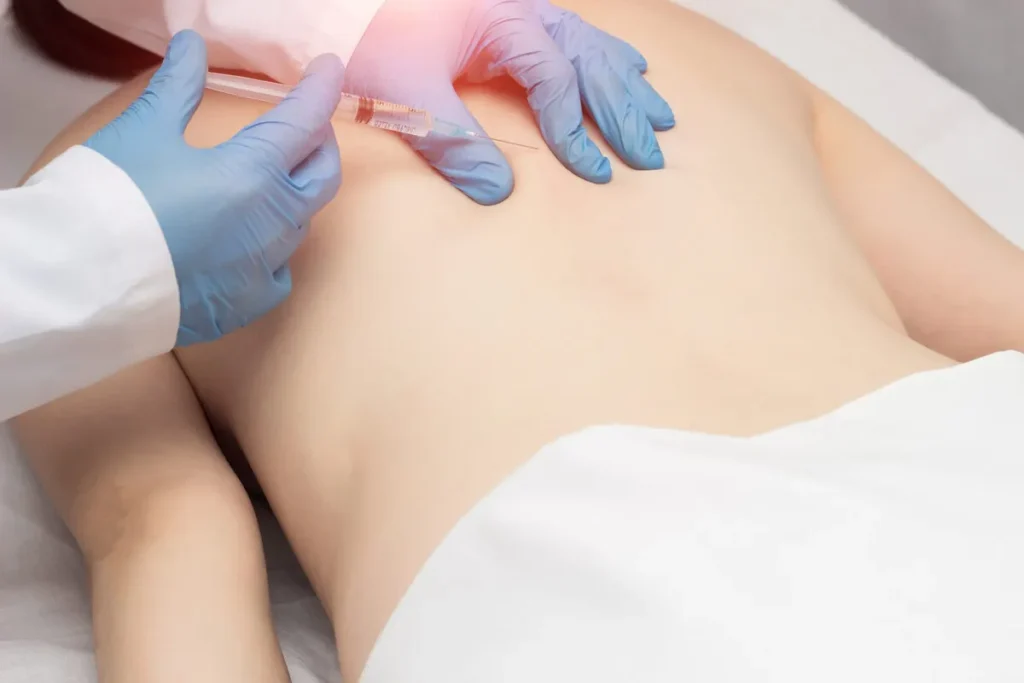
Myofascial pain syndrome affects millions, causing chronic pain in the upper back and trapezius regions. Trigger point injection therapy is a minimally invasive treatment. It helps manage this condition effectively. Master upper back trigger point injections for fast pain relief. This guide covers everything you need for a successful and safe procedure.
Trigger point injections use local anesthetics like lidocaine. They are injected directly into the affected muscles. This provides targeted pain relief and helps restore muscle function.
Studies show that combining trigger point injections with exercise leads to better pain relief. This is more effective than exercise alone.
It’s important for patients to understand the trigger point injection procedure. With the right technique and aftercare, patients can see significant pain relief. They can also experience improved mobility.
Key Takeaways
Trigger point injections are a minimally invasive treatment for myofascial pain syndrome.
The procedure involves administering local anesthetics directly into affected muscle tissues.
Combining trigger point injection therapy with exercise yields superior pain reduction outcomes.
Understanding the trigger point injection procedure is essential for informed decision-making.
Patients can experience significant pain relief and improved mobility with proper technique and aftercare.
Understanding Myofascial Pain and Trigger Points

It’s important to understand myofascial pain to manage and treat it well. Myofascial pain syndrome is a long-term condition that affects the fascia, the tissue around muscles. Trigger points are key signs of this condition, leading to pain and stiffness.
What Are Trigger Points and Their Causes
Trigger points are specific, sensitive spots in muscles that cause pain. This pain can be felt in other parts of the body, known as referred pain. They are often linked to myofascial pain syndrome.
There are many reasons why trigger points form. Muscle overuse, injury, or poor ergonomics are common causes. For example, doing the same motion over and over or having bad posture can lead to them.
Trigger points have a palpable nodule in a tight muscle band. They can be active or latent. Active ones hurt at rest or with movement. Latent ones only hurt when pressed.
Clinical Evidence for Trigger Point Therapy
Research backs up the use of trigger point injections for myofascial pain syndrome. The treatment involves injecting local anesthetics, like lidocaine, into the trigger point. This helps reduce pain and swelling.
Studies show that these injections, along with physical therapy and exercise, can greatly help. The use of lidocaine in these injections is well-studied. It’s effective in managing chronic pain from trigger points, improving life quality for those with myofascial pain syndrome.
Preparation for Upper Back Trigger Point Injections

Before starting upper back trigger point injections, thorough preparation is key. This ensures a safe and effective procedure. Healthcare providers must follow important steps to achieve this.
Essential Equipment and Medications
The first step is to gather all needed equipment and medications. Trigger point injections need a sterile syringe, a thin needle, and the injection medication. This is usually a local anesthetic like lidocaine or a corticosteroid.
Studies show that lidocaine injections work well, reducing pain by more than 50% in about 75% of cases. The medication choice depends on the patient’s health and history. It’s important to use sterile equipment to avoid infections.
Patient Positioning and Trigger Point Identification
Getting the patient in the right position is essential. They are usually sat or laid down to access the upper back muscles. The healthcare provider then finds the trigger point by feeling the muscle and listening to the patient’s symptoms.
Trigger point identification is key. It involves feeling the muscle for tension and tenderness. This step is important for the injection’s success. The whole process takes about 10–15 minutes and happens in a doctor’s office.
Safety Considerations and Contraindications
Safety is a big part of preparing for trigger point injections. Healthcare providers must know about possible contraindications. These include bleeding disorders, infections, or allergies to the medications.
Knowing these risks helps keep the procedure safe. By looking at the patient’s medical history, providers can make the treatment safer and more effective. This ensures the pressure point injections work well for the patient.
Performing Upper Back Trigger Point Injections
To do upper back trigger point injections well, healthcare providers need to know the right techniques. They must understand how to work on the trapezius, rhomboid, and levator scapulae muscles. This knowledge helps them give better care and improve patient results.
Trapezius Muscle Injection Technique
The trapezius muscle is often treated with trigger point injections because it’s often in pain. The method is to find the trigger point, usually in the middle and lower parts of the muscle. Then, the needle is placed at the right angle to get the medicine where it needs to be.
Identify the trigger point through palpation.
Use a needle appropriate for the muscle depth.
Administer the medication, typically a local anesthetic or corticosteroid.
Rhomboid and Levator Scapulae Injection Sites
The rhomboid and levator scapulae muscles are also common for trigger points. This is often due to bad posture or repetitive strain. Finding these trigger points correctly is key for good treatment.
Locate the rhomboid muscles between the scapula and the spine.
Identify the levator scapulae muscle at the side of the neck.
Use the appropriate needle length and angle for each muscle.
Injection Depth and Angle Considerations
The needle’s depth and angle are very important for trigger point injections. Knowing the anatomy well is vital to avoid problems.
For the trapezius and rhomboid muscles, the needle goes in at a 90-degree angle. For the levator scapulae, the angle might change based on the patient’s body.
Post-Injection Protocol and Exercise Recommendations
After the injection, patients need to know how to care for themselves. Doing gentle stretches and strengthening exercises helps keep the muscles relaxed and prevents new trigger points.
Recommend gentle stretching exercises for the upper back.
Advise on strengthening exercises to improve posture.
Encourage patients to maintain good posture and take regular breaks if their work involves repetitive strain.
Conclusion
Upper back trigger point injections are a great way to treat myofascial pain syndrome. They combine injections with steroids to help patients feel better and move more easily.
Using steroids in these injections can really help reduce swelling and pain. The type of steroid used depends on the patient’s needs and what the doctor thinks is best.
These injections are part of a bigger plan to help people feel better for good. Adding things like physical therapy and relaxation methods can make a big difference. This way, patients can live a better life, free from constant pain.
FAQ
What are trigger point injections used for?
Trigger point injections treat myofascial pain syndrome. They inject anesthetic and sometimes a corticosteroid into the muscle knot. This relaxes the muscle, reduces inflammation, and stops the pain cycle.
What is a trigger point?
A trigger point is a muscle area with tangled fibers. It cuts off blood supply and causes pain. Ergonomics and arthritis can cause them.
What medications are used in trigger point injections?
The injections use a local anesthetic like lidocaine. Sometimes, a corticosteroid is added to reduce inflammation.
What are the benefits of trigger point injections?
These injections offer significant pain relief and improved mobility. They provide lasting relief from myofascial pain syndrome, along with exercise and proper care.
How are trigger points identified?
Doctors identify trigger points through a detailed examination and palpation. They use manual pressure to check for a response.
What are the common injection sites for upper back trigger point injections?
Common sites for upper back injections include the trapezius, rhomboid, and levator scapulae muscles.
What is the proper technique for performing upper back trigger point injections?
The right technique involves the correct injection method and considering depth and angle. Proper patient positioning is also key for the best results.
What are the safety considerations for trigger point injections?
Safety includes avoiding certain medications and knowing what not to use. It’s also important to minimize risks of complications.
What is the role of exercise in maintaining the benefits of trigger point injections?
Exercise is vital in keeping the benefits of injections. It helps maintain muscle flexibility and strength. This reduces the chance of new trigger points forming.
Can trigger point injections be used in conjunction with other therapies?
Yes, injections can be used with other treatments like physical therapy and medication. This is part of a complete treatment plan for better health outcomes.
What is the expected outcome of upper back trigger point injections?
The expected outcome is significant pain relief and improved mobility. Patients can regain control over their pain and improve their quality of life.
References
National Center for Biotechnology Information. Evidence-Based Medical Insight. Retrieved from https://www.ncbi.nlm.nih.gov/books/NBK542196/[4


