Scars can remind us of past injuries or surgeries, affecting our self-esteem. It’s important to know how scars form and the treatment options available. Modern medicine has many ways to make scars less noticeable, helping us feel more confident and radiant.
Learning about scar maturation and proven treatments helps us make better choices for our skin. There are many ways to reduce scar appearance, from creams to laser therapies. Getting advice from a board-certified dermatologist can offer tailored solutions, as explained on Healthline.
Will a scar go away on its own? Get the best amazing truth and learn powerful ways to achieve an incredible skin recovery fast.
Key Takeaways
Understanding scar formation is key to effective treatment.
Several proven methods can reduce the appearance of scars.
Consulting a dermatologist can provide personalized treatment options.
Topical creams and advanced laser therapies are available treatments.
Evidence-based treatments can help individuals achieve a more radiant glow.
Understanding Scar Formation and Healing Process
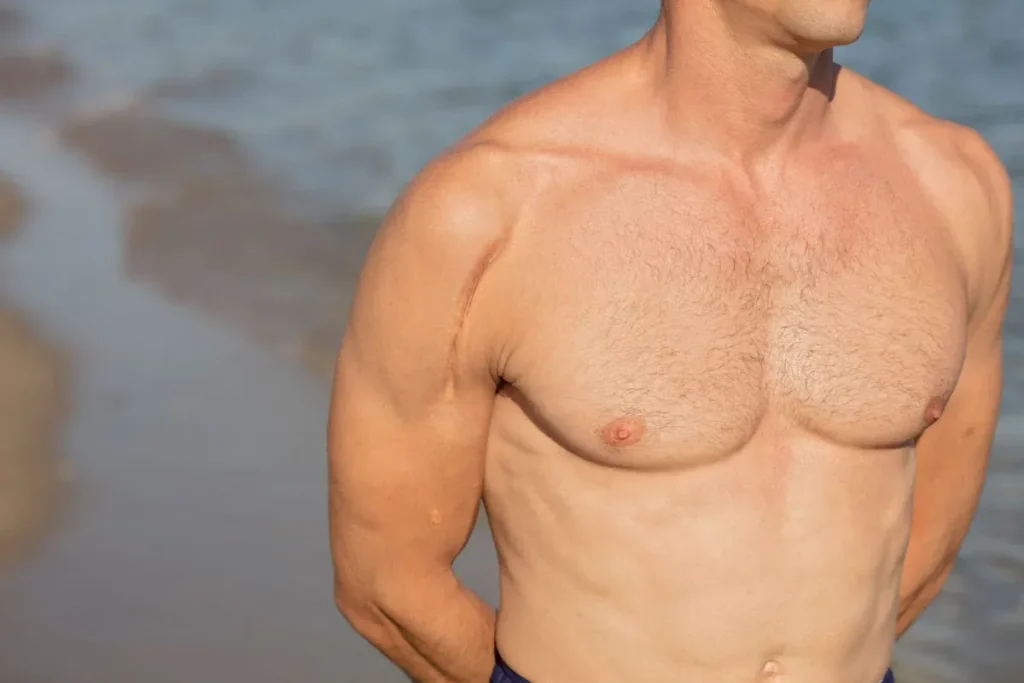
Learning about scar healing is key to looking and feeling great. Scar tissue forms after injuries or surgery. It’s made of fibrous tissue, which can make it stand out more than regular skin.
Types of Scars and Their Characteristics
Scars vary, each with its own traits that affect how they’re treated. The main types are:
Keloid Scars: Raised, thick scars that can grow beyond the original wound site.
Hypertrophic Scars: Similar to keloid scars but stay within the wound’s boundaries.
Atrophic Scars: Depressed scars often caused by acne or chickenpox.
Contracture Scars: Scars that tighten the skin, often from burns.
Stretch Marks: Scars from rapid skin stretching, common in pregnancy or puberty.
The Three Phases of Scar Healing
The scar healing process has three main stages:
Inflammatory Stage: The body’s first response to injury, with increased blood flow and white blood cells fighting infection.
Proliferative Stage: The body rebuilds tissue by producing collagen, forming granulation tissue.
Remodeling or Maturation Stage: The final stage where the new tissue is reorganized, and the scar matures, potentially fading over time.
Scars usually mature and fade over months to years. Knowing these stages and scar types helps find the best treatment. By understanding how long do scars take to fade and what helps a scar heal, you can choose better skin care.
Will a Scar Go Away? Realistic Healing Timelines
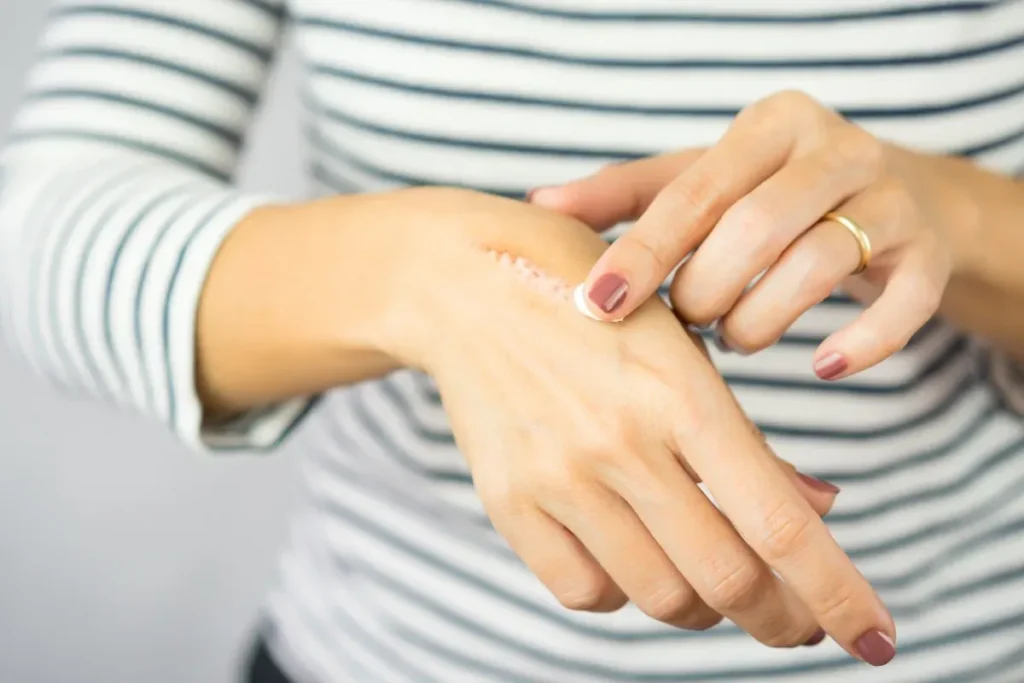
Scars are permanent, but their look can change with care and patience. Knowing what affects scar healing and setting realistic goals is key. This helps people reduce scar visibility.
Factors Affecting Scar Healing
Many things influence how a scar heals. Age, skin type, wound depth, and where on the body it is matter. Younger people heal faster because their bodies make more collagen. Older adults heal slower because they make less collagen and face other aging issues.
Skin color also plays a big part. Darker skin tones may show more scarring because of more melanin during healing. The size and depth of the wound also impact the scar’s look, with deeper wounds leading to more noticeable scars.
Expected Timeline for Different Types of Scars
Scars heal at different rates based on their type. Here’s what you can expect for various scars:
Scar redness usually fades in about 7 months. But, scars can take up to 2 years to fully mature. Knowing these timelines helps manage expectations and choose the right treatments.
Understanding what affects scar healing and setting realistic goals helps manage scars. There are many ways to reduce scar appearance, from professional treatments to home care. These options can lead to healthier, more radiant skin.
7 Proven Methods to Reduce Scar Appearance
There are many treatments that can make scars less noticeable. Whether it’s acne, surgical, or injury scars, the right treatment can help a lot.
Silicone-Based Products
Silicone-based products are great for hydrating scar tissue. They make scars look better by creating a protective barrier on the skin’s surface. This helps flatten and soften raised scars.
Benefits of Silicone-Based Products:
Hydrates scar tissue
Improves scar appearance
Available in various forms (gels, sheets, creams)
Natural Remedies (Aloe Vera, Vitamin E)
Natural remedies like aloe vera and vitamin E have anti-inflammatory properties. Aloe vera soothes, while vitamin E promotes skin health.
How to Use Natural Remedies:
Apply aloe vera gel directly to the scar
Use vitamin E oil as a topical treatment
Professional Laser Therapy
Professional laser therapy is very effective for reducing scar appearance. Lasers promote collagen production and skin renewal. This helps make scars less visible.
Benefits of Laser Therapy:
Promotes collagen production
Enhances skin renewal
Can be tailored to different scar types
Microdermabrasion and Chemical Peels
Microdermabrasion and chemical peels are professional treatments that improve scar appearance. Microdermabrasion exfoliates the skin. Chemical peels remove top skin layers to reveal smoother skin underneath.
Exploring these 7 proven methods can help find an effective solution for scars. This way, individuals can achieve smoother, more radiant skin.
Conclusion: Choosing the Right Scar Treatment Approach
Understanding how scars form and heal is key to managing them well. Knowing the type of scar you have helps you choose the right care. Options like silicone products, natural remedies, laser therapy, and microdermabrasion can improve scar appearance.
For the best scar treatment, talk to a dermatologist or skincare expert. They can tailor advice to your skin and scar type. This way, you can find the best way to help scars heal or get rid of a scar.
With the right treatment, scars can fade. Knowing what to use on scars and how to heal scar tissue is important. This leads to a more radiant and confident you. By picking the right treatment, you can unlock your skin’s full beauty.
FAQ
How long do scars take to fade?
Scar redness usually fades in about 7 months. But, it can take up to 2 years for scars to fully mature.
Will a scar ever go away?
Whether a scar will completely disappear depends on several factors. These include the scar’s type, location, and your skin. While some scars may fade a lot, others might stay more visible.
What helps heal scars?
Scar healing can be aided by silicone-based products and natural remedies like aloe vera and vitamin E. Professional treatments like laser therapy, microdermabrasion, and chemical peels also help improve scar appearance.
How to make scars heal quicker?
The right treatment for your scar type can speed up healing. This includes using silicone-based products or professional laser therapy. These methods help produce collagen and renew skin, leading to faster healing.
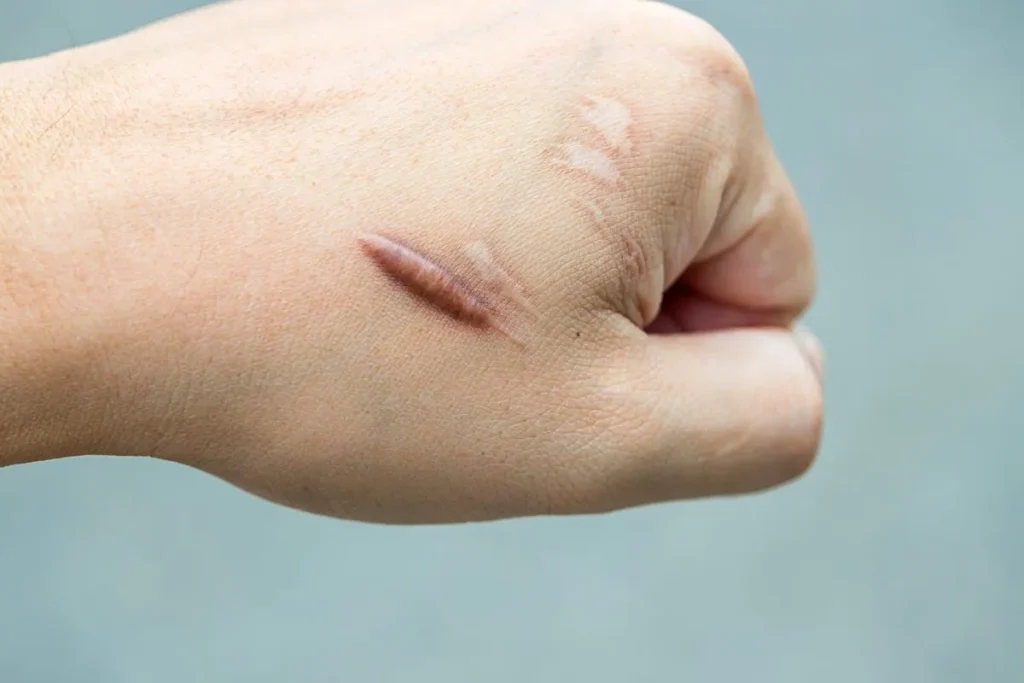
How to get rid of scars on hands?
To reduce scars on hands, try silicone-based products, natural remedies, and professional treatments. Laser therapy and microdermabrasion are effective options.
What can I use to get rid of scars?
There are many treatments available. These include silicone-based products, natural remedies, and professional treatments. Options like laser therapy, microdermabrasion, and chemical peels can help.
How to heal a scar on my face?
For facial scars, choose the right treatment. This could be silicone-based products or professional laser therapy. These methods promote collagen and skin renewal, improving appearance.
What helps heal scar tissue?
Scar tissue healing can be aided by silicone-based products and natural remedies. Aloe vera and vitamin E are good examples. Professional treatments also help by promoting collagen and skin renewal.
How long does it take for scars to heal?
Scar healing times vary. It depends on the scar type, location, and your skin. Some scars may take up to 2 years to fully mature.
References
National Center for Biotechnology Information. Evidence-Based Medical Insight. Retrieved from https://pubmed.ncbi.nlm.nih.gov/23734802/