

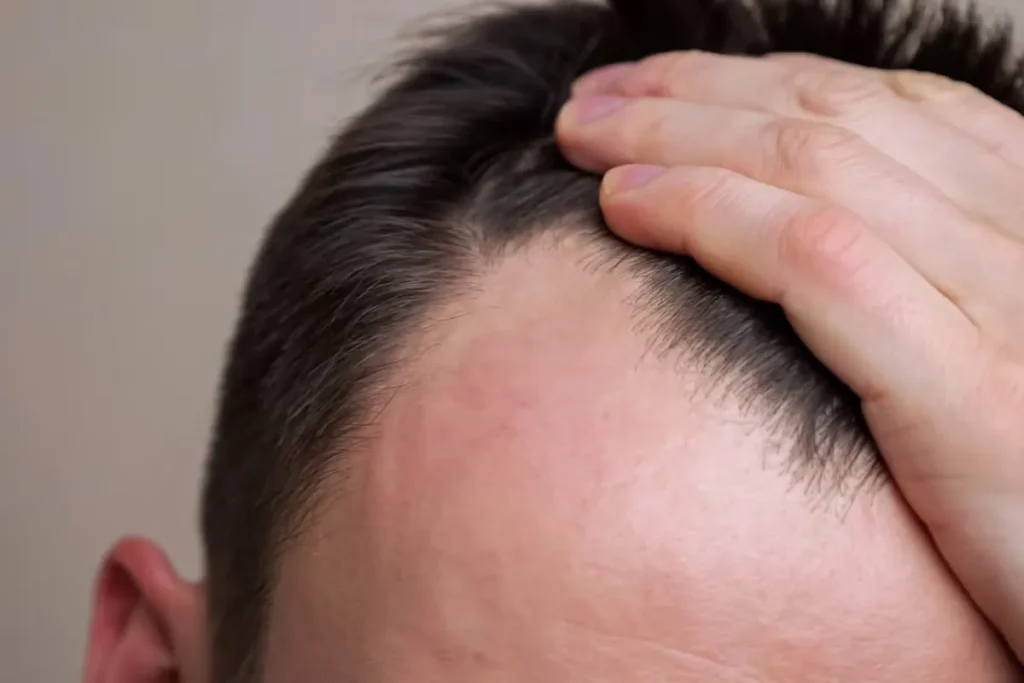
Millions of men face the challenge of male pattern baldness. They look for ways to bring back their hair. Clinically proven treatments give them hope, with one being an FDA-approved drug called Propecia.
This drug stops the enzyme that turns testosterone into dihydrotestosterone (DHT). DHT is a hormone that shrinks hair follicles. Knowing how it works helps people choose the right treatment for their hair loss.
At GoldCity Center, we use the latest in healthcare to help our patients. But does this drug really grow hair back in bald spots, or just slow down hair loss?
Key Takeaways
Finasteride is an FDA-approved medication for treating male pattern baldness.
It works by inhibiting the enzyme responsible for converting testosterone into DHT.
This medication has been shown to promote hair regrowth in some individuals.
Understanding how finasteride works can help individuals make informed decisions about their treatment options.
GoldCity Center offers evidence-based healthcare innovations for optimal health outcomes.
How Finasteride Works to Combat Hair Loss

Finasteride fights hair loss by stopping DHT production. DHT is a strong form of testosterone that causes hair loss. Knowing how finasteride works with DHT helps us see its role in fighting baldness.
The Science Behind DHT and Hair Follicle Miniaturization
DHT makes hair follicles shrink, leading to thinner, shorter hair and loss. Finasteride blocks the enzyme 5-alpha-reductase, which turns testosterone into DHT. This lowers DHT levels, slowing hair loss and possibly growing new hair.
Key Effects of Finasteride on DHT and Hair Follicles:
Reduces DHT levels by inhibiting 5-alpha-reductase
Slows down hair follicle miniaturization
Potentially stimulates hair regrowth by maintaining healthier hair follicles
FDA-Approved Treatment Process
Finasteride is approved by the FDA for male pattern baldness. Take 1mg daily. Consistent use is key for best results.
Clinical studies show finasteride lowers DHT, reducing hair loss and increasing regrowth.
Understanding how finasteride works helps in choosing hair loss treatments. It’s effective in lowering DHT and promoting hair growth, making it a top choice for fighting baldness.
Clinical Evidence: Does Finasteride Regrow Hair?

Clinical trials have been key in figuring out how finasteride helps with hair growth. They give us a detailed look at how well the drug works.
Landmark Clinical Trial Results
Research shows finasteride can really boost hair numbers. It can add 107-138 hairs per square inch of balding scalp in 1 and 2 years, respectively.
This data proves finasteride is good for fighting hair loss. The clinical evidence backing it up is key for those thinking about trying it.
Crown vs. Vertex Regrowth Statistics
Looking at how finasteride affects different scalp spots is important. We need to see how it works on the crown and vertex.
At the crown, 48% of finasteride users saw hair growth improvements in 1 year.
This number jumped to 66% at 2 years, showing hair growth keeps getting better.
These numbers show finasteride can help grow hair, mainly in the crown. This is a big deal for people worried about hair loss.
Timeline for Visible Results
Knowing when you’ll see results is key. Studies show:
Improvements start to show in the first year of treatment.
More growth happens with ongoing use, with big gains at 2 years.
Sticking to a treatment plan boosts your chances of seeing hair growth.
Conclusion: Realistic Expectations for Hair Regrowth
Finasteride can slow down hair loss and help hair grow back. But, how much it works can vary for each person. It’s key to have realistic hopes when using finasteride for hair growth.
Studies show finasteride can help hair grow back, but how much can differ. It’s important to remember it’s a long-term treatment. Stopping it can undo the good it does.
Knowing about Propecia, a finasteride brand, is helpful. It’s proven to help hair grow back. Keeping up with treatment can help you see better results.
Finasteride can be a good choice for those losing hair. It offers a chance to have a fuller head of hair. By being realistic and consistent, you can get the most out of finasteride treatment.
FAQ
Does finasteride really regrow hair in bald spots?
Yes, finasteride can help regrow hair in bald spots, mainly for male pattern baldness. It works by lowering DHT levels. This helps keep hair follicles healthy and promotes new hair growth.
How long does it take to see results from finasteride treatment?
Seeing results from finasteride can take time. Most people start noticing improvements in 3-6 months. After a year of use, you might see more significant hair regrowth.
Can finasteride regrow hair on the crown and vertex areas of the scalp?
Yes, finasteride can help grow hair on the crown and vertex areas. Studies show it leads to noticeable hair growth in these spots. But, results can differ from person to person.
Will I continue to regrow hair as long as I take finasteride?
Finasteride works best when taken regularly. If you keep taking it, you’ll likely keep the hair you’ve grown. Stopping it might cause your hair loss to return.
Does finasteride work for everyone experiencing hair loss?
Finasteride helps many men with male pattern baldness. But, it doesn’t work the same for everyone. Your hair loss extent, health, and genetics can affect how well it works.
Can women use finasteride for hair regrowth?
Women should not take finasteride, except in rare cases. It’s not safe for pregnant or breastfeeding women. If you’re a woman with hair loss, talk to a doctor about other options.
Is finasteride the same as Propecia?
Finasteride is the key ingredient in Propecia, a treatment for male baldness. Propecia is a brand name, but finasteride is also available as a generic.
Can I use finasteride in combination with other hair loss treatments?
Some people mix finasteride with other treatments, like minoxidil. But, always talk to a doctor before trying this. They can help you understand any risks or benefits.
References
National Center for Biotechnology Information. Evidence-Based Medical Insight. Retrieved from https://pubmed.ncbi.nlm.nih.gov/9777765/


