

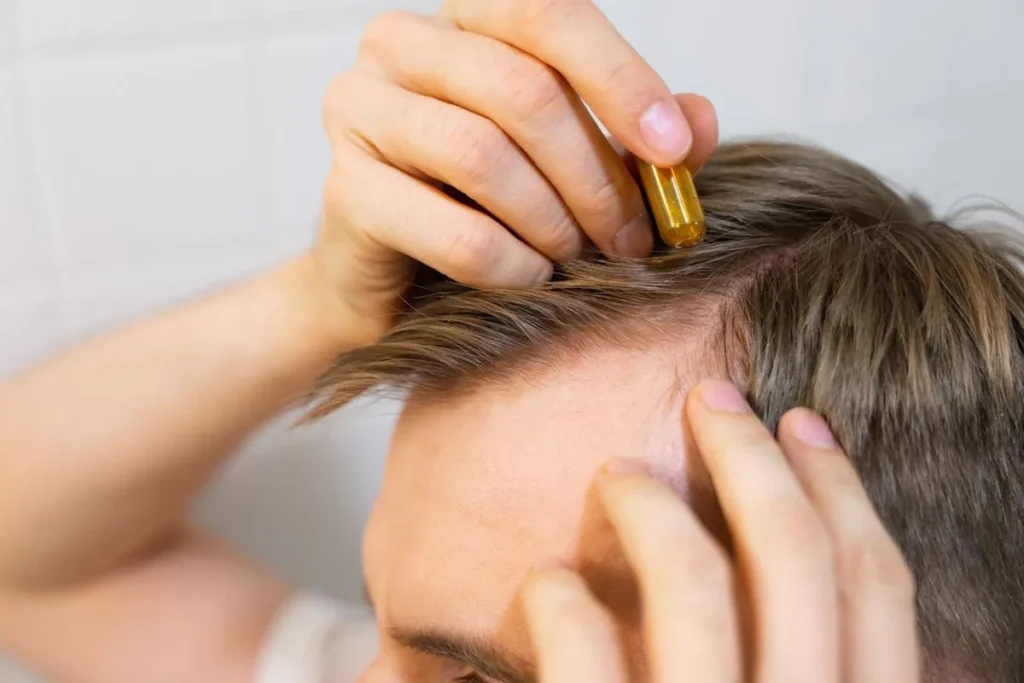
Millions of men take finasteride every day to fight hair loss. But, worries about its effects on sex health keep growing. The link between finasteride and erectile dysfunction is tricky. It’s key to understand the latest research to make smart choices about treatment.
Finasteride lowers dihydrotestosterone (DHT) levels. This helps hair grow and eases urinary problems from enlarged prostate. Yet, this drop in DHT might cause sexual side effects in some people. By looking at the facts and what experts say, we can fully understand this complex issue.
Key Takeaways
Finasteride can cause erectile dysfunction, but it’s relatively rare.
The incidence of erectile dysfunction varies depending on the dosage and condition being treated.
Understanding the possible risks and benefits is key for making informed treatment choices.
Clinical evidence shows the risk of erectile dysfunction is higher with the 5 mg dose for enlarged prostate.
It’s important to consider if erectile dysfunction can go away after stopping finasteride.
Understanding Finasteride and Its Mechanism
To understand the side effects of finasteride, we need to know how it works. Finasteride is a 5-alpha reductase inhibitor. It helps reduce dihydrotestosterone (DHT) levels in the body.
What Is Finasteride and How It Reduces DHT
Finasteride blocks the enzyme 5-alpha-reductase. This enzyme turns testosterone into DHT. By lowering DHT, finasteride slows hair loss and boosts hair growth in men with baldness.
The half-life of finasteride is key. It affects how the drug works and how long it stays in the body.
The process involves:
Inhibiting the conversion of testosterone to DHT
Reducing DHT levels in the scalp and prostate
Slowing down hair loss and promoting hair growth
Alleviating symptoms of benign prostatic hyperplasia
Common Uses: Male Pattern Hair Loss and Benign Prostate Hyperplasia
Finasteride treats two main conditions: male pattern hair loss and benign prostatic hyperplasia. For hair loss, men take 1mg of finasteride daily. It helps slow hair loss and grow new hair.
For an enlarged prostate, men take 5mg daily. This reduces prostate size and eases urinary issues.
The benefits of finasteride include:
Effective reduction in DHT levels
Slowing down or halting male pattern hair loss
Promoting hair regrowth
Relieving symptoms of an enlarged prostate
Knowing how finasteride works and its uses is key. It affects libido and erectile function. Finasteride’s impact on DHT levels is important for many bodily functions.
Finasteride Side Effects Percentage: Sexual Dysfunction Data

Finasteride is known to treat male hair loss and prostate issues. But, it can also affect sexual health. It’s important for men to know about these risks before starting treatment.
Erectile Dysfunction Rates at 1mg Dosage
Studies show that finasteride’s impact on sex varies by dosage. At 1 mg, used for hair loss, only about 1.3% of men experience erectile dysfunction. This means most men won’t see a big change in their ability to get an erection at this dose.
Higher ED Incidence at 5mg Dosage
But, the 5 mg dose for prostate issues raises the risk of erectile dysfunction. More men taking this dose may face sexual problems. It’s key for those with BPH to talk to their doctor about this risk.
Other Sexual Side Effects: Reduced Libido and Arousal
Finasteride can also lower libido and arousal. These effects can really affect a man’s life. For more on these issues, check out this resource.
Reversibility and Management of Finasteride-Related ED
Most cases of finasteride-related erectile dysfunction can be reversed. Many men see improvements in sexual function after stopping the drug. In some cases, ED can even get better while taking finasteride. The finasteride erectile dysfunction link is complex. Knowing finasteride’s half-life is key. It’s cleared from the body in a few days, with a half-life of about 6 hours.
Men with ED while on finasteride should talk to a healthcare professional. They can offer personalized advice. Options like sildenafil (Viagra) and tadalafil (Cialis) have shown to work well, with a success rate of around 76%. Lifestyle changes, like a Mediterranean diet, exercise, and quitting smoking, can also help.
It’s good to know that finasteride-related ED is often reversible. With the right steps, men can regain their sexual health. Understanding how finasteride affects libido and erectile function helps make better treatment choices.
FAQ
Does finasteride cause erectile dysfunction?
Finasteride might cause erectile dysfunction in some men. The risk depends on the dose. At 1 mg for hair loss, about 1.3% of men are affected.
What is the half-life of finasteride?
Finasteride’s half-life is about 6-8 hours. It leaves the body in a few days.
Can finasteride cause impotence?
Yes, finasteride can lead to impotence or erectile dysfunction. This is more common at higher doses for prostate issues.
How does finasteride affect libido?
Finasteride might lower libido in some. The effect varies by dose and individual.
Is finasteride-related erectile dysfunction reversible?
Most erectile dysfunction from finasteride goes away. Many men see improvement after stopping the drug.
Can I continue taking finasteride if I experience erectile dysfunction?
If you get erectile dysfunction on finasteride, talk to a doctor. They can offer advice. Some men’s ED improves while on the drug.
How can I manage finasteride-related erectile dysfunction?
To handle erectile dysfunction from finasteride, try lifestyle changes or other treatments. A doctor’s guidance is also helpful.
What are the common uses of finasteride?
Finasteride treats male hair loss and prostate issues. It works by lowering DHT levels.
Does finasteride lower libido permanently?
Most libido changes from finasteride are not permanent. But, some men might face ongoing effects.
References
National Center for Biotechnology Information. Evidence-Based Medical Insight. Retrieved from https://pubmed.ncbi.nlm.nih.gov/10096388/


