

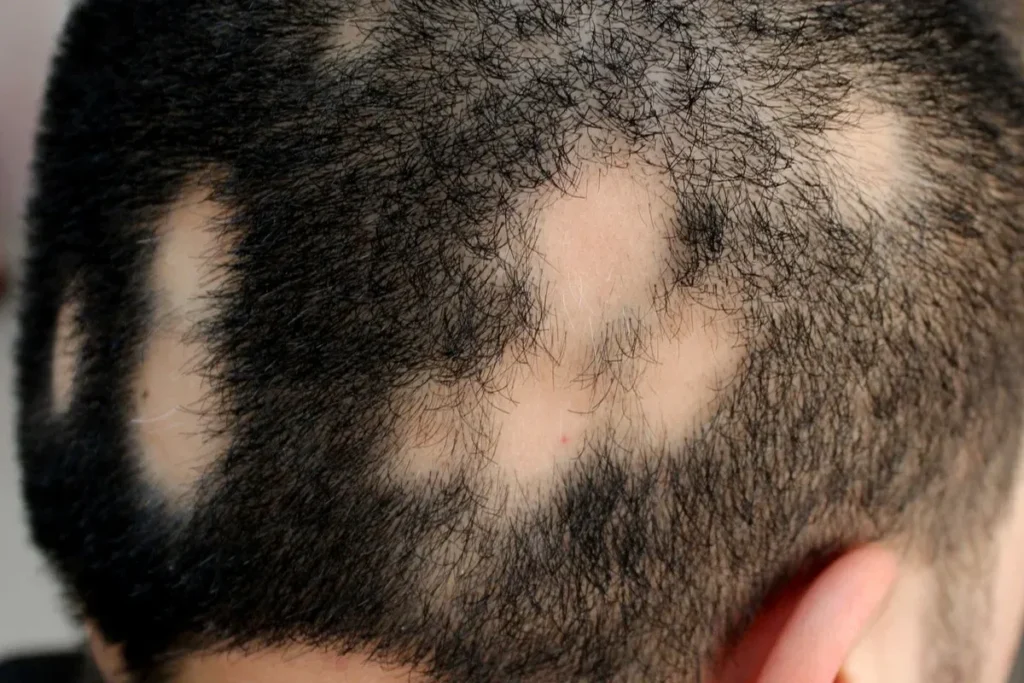
How common is alopecia areata? Discover the shocking truth and vital facts about this condition and how millions manage it daily.
Alopecia areata affects millions worldwide, yet many are unaware of its prevalence and impact. Approximately 2% of the global population is affected by this autoimmune condition. In the United States, nearly 7 million people live with it.
Understanding alopecia areata is key for those affected and their families. With a lifetime risk of about 1 in 50 individuals, it’s vital to learn about this common hair loss condition.
Key Takeaways
Alopecia areata affects approximately 2% of the global population.
Nearly 7 million people in the United States live with alopecia areata.
The condition can develop at any age, with a lifetime risk of 1 in 50.
Alopecia areata is an autoimmune condition that causes hair loss.
Understanding its prevalence and characteristics is vital for those affected.
Understanding Alopecia Areata: The Basics

Learning about alopecia areata starts with understanding what it is. This autoimmune condition can cause hair loss on the scalp. It might start with small patches but can get worse.
What Is Alopecia Areata?
Alopecia areata is when your immune system attacks hair follicles. This leads to hair loss. It’s not just about looks; it involves genetics, environment, and the immune system. The exact cause is not known, but it’s thought to be a mix of genetics and environmental factors.
Recognizing the Signs and Symptoms
The symptoms of alopecia areata can differ from person to person. Common signs include:
Patchy hair loss on the scalp or other parts of the body
Smooth, round bald spots
Hair loss on the face, including eyebrows and eyelashes
Nail changes, such as pitting or brittleness
In some cases, it can get worse. This might mean losing all hair on the scalp (alopecia totalis) or the whole body (alopecia universalis).
Knowing these symptoms is key for early treatment. If you notice any, see a doctor right away.
How Common Is Alopecia Areata? Global and US Statistics

Alopecia areata is a complex condition that affects hair follicles. It leads to hair loss on the scalp, face, or body. Knowing how common it is helps raise awareness and fund research for better treatments.
Lifetime Risk and Prevalence Rates
In the United States and Europe, about 2 in 100 people will get alopecia areata at some point. This shows it’s a widespread condition. It affects many people, making it a significant concern.
The condition can start at any age, but often in childhood or young adulthood. Early diagnosis and treatment are key to improving quality of life.
Annual Incidence of New Cases
Every year, around 20.2 per 100,000 people in the United States get alopecia areata. This means thousands of new cases each year. It shows the need for ongoing awareness and support.
Research is ongoing to understand alopecia areata better. This research helps develop effective treatments and support for those affected.
Demographics: Age and Gender Distribution
Alopecia areata can affect anyone, but it’s more common in certain groups. It often starts before 30, with a peak between 25 and 36.
It affects both men and women equally, but some studies suggest women might be slightly more affected. This highlights the need for tailored support and treatment.
Understanding who gets alopecia areata is key for healthcare and research. It helps develop better diagnosis, treatment, and support strategies.
Living With Alopecia Areata: What You Need to Know
Living with alopecia areata can be tough, but knowing about it is key. This condition causes patchy hair loss, including on arms, and affects many people. Learning about alopecia areata and its effects on hair follicles helps in finding ways to cope.
There are many treatments available, from medicines to lifestyle changes. Exploring these options can help manage the condition and boost confidence. This way, people can find what works best for them.
It’s important to celebrate individuality and unique beauty. With the right attitude and support, living with alopecia areata can be a journey of self-discovery. Embrace your beauty, knowing that it’s not just about hair.
Understanding alopecia areata and its effects helps unlock your inner glow. It promotes a culture of inclusive beauty and universal radiance. Own your beauty and shine!
FAQ
Can you be born with alopecia areata?
Some people might be more likely to get alopecia areata because of their genes. But, it’s not a sure thing that you’ll have it from birth.
What are the common signs and symptoms of alopecia areata?
Alopecia areata often shows up as patchy hair loss on the scalp, face, or body. It can sometimes cause more hair to fall out. You might also see nail changes or feel itching and redness where it’s happening.
How rare is alopecia areata?
About 2% of people worldwide have alopecia areata, making it fairly common. It’s thought that about 1 in 50 people will get it at some point in their lives.
Can alopecia areata be treated?
There’s no cure, but there are ways to manage it. Doctors can suggest medicines, lifestyle changes, and other treatments. With the right plan, you can find ways to deal with it.
What age group is most affected by alopecia areata?
Anyone can get alopecia areata, but it’s most common in people under 30. It can even happen in kids. If you notice hair loss, it’s important to see a doctor.
Is alopecia areata an autoimmune disease?
Yes, it is. In alopecia areata, the immune system mistakenly attacks hair follicles, causing hair loss.
How does alopecia areata affect mental health?
Alopecia areata can really affect your mental health. It can make you feel self-conscious, anxious, or depressed. It’s key to get support and help when you need it.
Are there any effective coping strategies for managing alopecia areata?
Yes, there are. Having a positive outlook, trying different treatments, and connecting with others can help. These strategies can help you manage the condition and feel better overall.
References
National Center for Biotechnology Information. Evidence-Based Medical Insight. Retrieved from https://pubmed.ncbi.nlm.nih.gov/38332643/


