

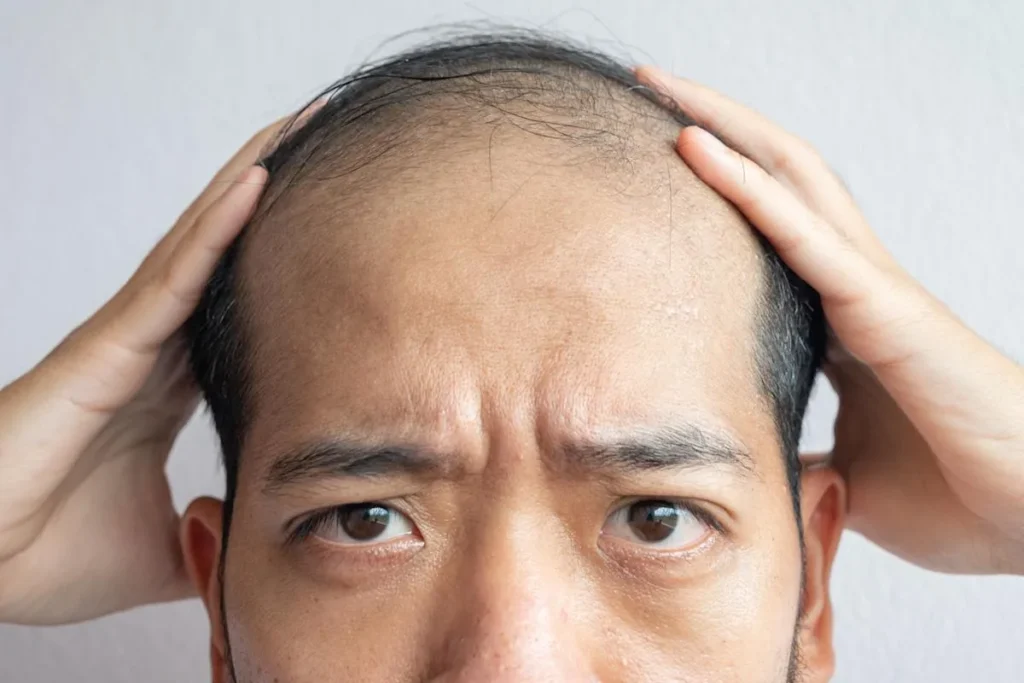
How do you know if your going bald? Watch for these easy early signs to take action quickly and keep your hair looking great.
Noticing small changes in your hair can be the first step to dealing with a bigger issue. Are you finding more hairs in your shower drain or seeing a wider part line? These could be early signs of balding, a problem that affects millions globally.
Spotting these signs early lets you take action and find treatments that can slow or stop hair loss. A receding hairline, often shaped like an M or V, is a common sign. Other signs include thinning on the crown and thinning all over the scalp. Spotting these early signs helps people find ways to treat their hair loss.
Key Takeaways
Early signs of balding include a receding hairline and thinning on the crown or across the scalp.
Recognizing these signs early enables timely intervention.
Treatment options like minoxidil, laser therapy, and hair transplants can help prevent further hair loss.
GoldCity Center offers a patient-centered approach with international best medical outcomes for addressing hair loss concerns.
Accurate diagnosis and evidence-based care are key for managing hair loss effectively.
Common Early Signs of Hair Loss

Knowing the first signs of hair loss can help you act fast. Hair loss is a big issue for millions globally. Spotting early signs is key to stopping it.
Receding Hairline: The M or V Pattern
A receding hairline is often the first sign of balding. It starts at the temples. Hair on the front and sides thins, forming an M or V shape.
Experts say, “A receding hairline is a common early sign of male pattern baldness. It’s caused by hormonal changes.”
Crown Thinning: The Circular Pattern
Crown thinning shows as a circular pattern of hair loss on the top of the head. It can happen to both men and women. Watching how fast your hair is thinning is important. If it gets worse, get professional help.
Diffuse Thinning Across the Scalp
Diffuse thinning means hair loss all over the scalp. It can be due to genetics, hormonal imbalances, or medical conditions. An expert notes, “Diffuse thinning shows hair follicles are affected. Early treatment can stop more hair loss.”
By knowing these early signs, you can start treatments to stop balding. It’s vital to tackle hair loss early for the best results.
How Do You Know If You’re Going Bald: Understanding Hair Loss Patterns

It’s important to know about hair loss patterns to see if you’re going bald. Hair loss, or alopecia, can show up in many ways. Knowing the different signs and patterns helps you deal with it better.
Normal vs. Excessive Daily Hair Shedding
It’s normal to lose some hair every day, about 50-100 strands. But, if you’re losing more hair than usual, it might be a sign of balding. To check if your hair loss is normal or not, look at these points:
Check your hairbrush or comb for a lot of hair.
See if there’s more hair than usual on your pillow or in the shower drain.
Notice any big changes in your hair’s thickness or density.
If you’re losing a lot of hair, seeing a doctor is a good idea. They can check for any health problems.
Age-Related Hair Loss Timeline for Men and Women
Hair loss can start at any age, but it’s common in the 30s and 40s. Men usually start losing hair earlier than women, sometimes in their late teens. Here’s a general timeline:
Recognizing Androgenetic Alopecia
Androgenetic alopecia, also known as male or female pattern baldness, is the most common hair loss. It shows a specific pattern of hair loss, mainly on the scalp. To spot androgenetic alopecia, look for:
A receding hairline or an M-shaped hairline in men.
Crown thinning or a Christmas tree pattern of hair loss in women.
Gradual thinning of hair over time.
By understanding these patterns and signs, you can start addressing your hair loss. Eating well, reducing stress, and using gentle hair care products can help your hair grow and prevent more loss.
Conclusion
Spotting balding signs early is key to acting fast. If you’re unsure if you’re losing hair or just have thinning, knowing the signs can guide you. This knowledge helps you take action sooner.
Options like minoxidil, laser therapy, and hair transplants can stop hair loss and even grow new hair. It’s important to talk to a healthcare expert or a hair loss specialist. They can help find the best treatment for you.
Learning how to identify hair loss is the first step to keeping your hair fuller. With the right treatment, you can manage hair loss and look great. This approach helps you feel confident and radiant.
FAQ
What are the early signs of balding?
Early signs of balding include a receding hairline that forms an M or V shape. You might also notice thinning at the crown and diffuse thinning across the scalp. Spotting these signs early can help you find treatments to stop hair loss.
How do I know if I’m going bald or just shedding hair?
Losing 50-100 strands of hair daily is normal. If you lose more, it might be balding. Talking to a healthcare professional or hair loss specialist can help figure out why you’re losing hair.
What causes hair loss, and can it be treated?
Hair loss can come from genetics, hormonal changes, or medical conditions. Treatments like minoxidil, laser therapy, and hair transplants can slow down hair loss. They might even help your hair grow back.
What’s the difference between a receding hairline and crown thinning?
A receding hairline starts at the temples, forming an M or V shape. Crown thinning looks like a circular pattern of hair loss. Both are signs of balding.
Can a healthy diet help promote hair growth?
Yes, eating well can help your hair grow. A diet full of vitamins and minerals is key for a healthy scalp and hair growth.
What’s androgenetic alopecia, and how does it affect hair loss?
Androgenetic alopecia, or male/female pattern baldness, is a common hair loss cause. It’s due to hormonal changes and affects both men and women.
How can I tell if I’m experiencing age-related hair loss?
Hair loss with age looks different for men and women. Men often start losing hair earlier. If your hair loss is speeding up, it might be age-related.
Are there any effective treatments for balding?
Yes, treatments like minoxidil, laser therapy, and hair transplants can help. They can slow down hair loss and even grow new hair. A healthcare professional or hair loss specialist can help find the best treatment for you.
References
Male Androgenetic Alopecia. https://www.ncbi.nlm.nih.gov/books/NBK278957/


