

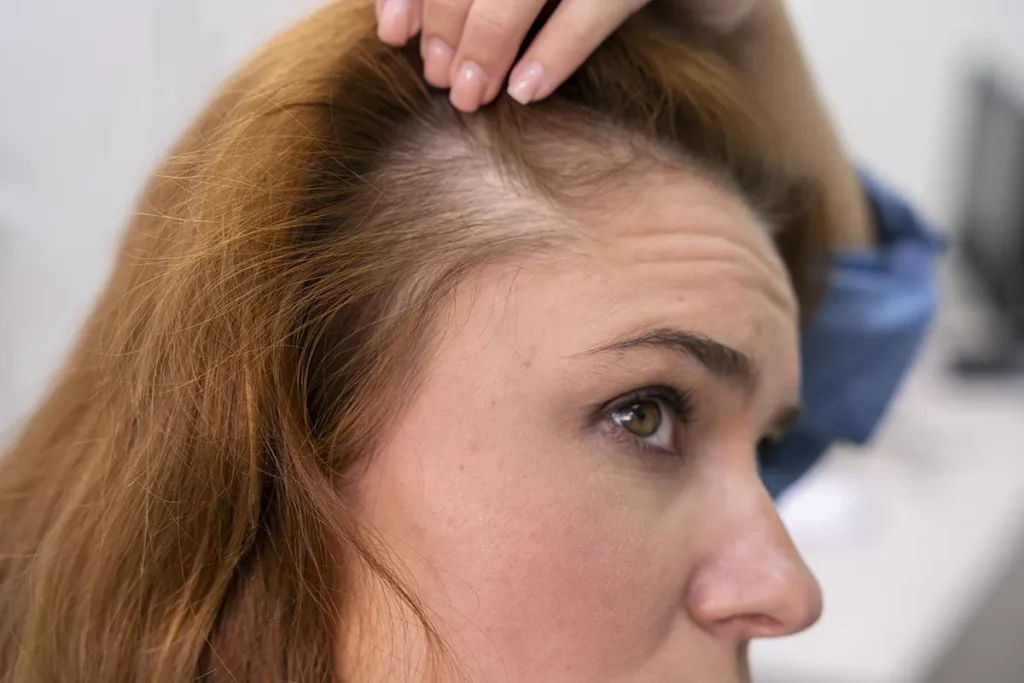
How do you know if your hair is thinning men? Check these 7 clear signs to identify hair loss early and find a powerful solution.
Hair thinning is a big worry for millions of men around the world. About 85% of men face hair loss or thinning at some time. It’s a common issue that needs attention and understanding.
Are you wondering if your hair is thinning or if you’re just being paranoid? It’s important to tell normal shedding from thinning. Male pattern baldness, or androgenetic alopecia, is the main cause of hair loss in men. It’s often due to genetics and hormonal changes.
At GoldCity Center, we take hair loss seriously. We use advanced tests and care for our patients. By spotting the signs of hair thinning, you can start to understand your situation. Then, you can find the best way to deal with it.
Key Takeaways
Understanding the prevalence and causes of hair thinning is essential.
Male pattern baldness is the most common cause of hair loss in men.
Distinguishing between normal shedding and thinning is key.
Genetics and hormonal changes play big roles in hair loss.
Acting quickly can greatly help with hair thinning.
Understanding How Do You Know If Your Hair Is Thinning Men

As men get older, they often see changes in their hair. This can make them worry about thinning hair and balding. Hair thinning is a common problem for many men, caused by different factors.
The Statistics Behind Male Hair Thinning
Many men worry about hair thinning. By age 35, about 65% of men see signs of thinning hair. By age 50, this number jumps to about 85%. These numbers show how common hair thinning is among men.
Androgenetic Alopecia: The Science of Male Pattern Baldness
Male pattern baldness, or androgenetic alopecia, is mainly caused by genetics and hormones. It leads to hair thinning, mostly at the temples and crown. Knowing about androgenetic alopecia helps men deal with their hair loss.
Key factors contributing to male pattern baldness include:
Genetic predisposition
Hormonal influences, like the conversion of testosterone to dihydrotestosterone (DHT)
Age-related changes
By spotting the signs of hair thinning and knowing the causes, men can act early. They can look into treatments to stop or slow down hair loss.
7 Clear Signs Your Hair Is Thinning

Wondering if your hair is thinning? There are clear signs to look out for. Recognizing these signs is the first step to addressing hair thinning. Here are the key indicators that your hair might be thinning.
Excessive Shedding Beyond 100 Hairs Daily
It’s normal to lose 50 to 100 hairs a day. But, if you’re shedding more, it could mean your hair is thinning. Excessive shedding can be caused by stress, poor nutrition, or bad hair care. Finding clumps of hair on your pillow or comb is a sign to pay attention.
Visible Recession at the Temples or Hairline
A receding hairline, common in men, is a sign of hair thinning. This is known as androgenetic alopecia or male pattern baldness. It’s caused by genetics and hormones. If your hairline is receding or your temples are more visible, your hair might be thinning.
Noticeable Thinning at the Crown Area
The crown area is another spot where hair thinning often happens. If the hair at the crown is thinner or your scalp is more visible, you might be losing hair. This area is sensitive to dihydrotestosterone (DHT), leading to balding.
Increased Visibility of Your Scalp
Seeing more of your scalp is a clear sign of hair thinning. This happens when there’s less hair density or diameter. If your scalp is more visible, even when your hair is wet or pulled back, your hair is thinning.
Spotting these signs early can help you take action. Whether it’s medical treatments, changing your hair care, or other steps, knowing the signs is the first step to finding a solution.
Conclusion: When to Seek Help for Hair Thinning
If you’re wondering “am I losing hair” or “am I losing my hair,” it’s time to act fast. Spotting the signs of hair thinning is the first step to fixing the problem.
Figuring out if you have thin hair or are balding can be tough and emotional. But, by getting help, you can start a journey to regain your confidence and beauty.
Knowing if your hair is thinning is key to finding the right solution. With the right advice, you can try treatments and make lifestyle changes for healthier hair.
By tackling your hair loss worries, you can start a journey to a brighter you. Don’t delay – begin your journey now and find a more confident, beautiful you.
FAQ
Is my hair thinning or am I just being paranoid?
If you notice a lot of shedding, a hairline that’s moving back, or hair thinning at the top, it’s probably not just your imagination. A dermatologist can help figure out why.
How do I know if my hair is thinning or if I’m balding?
Thinning hair happens slowly, while balding is more noticeable. If you see a big drop in hair density, it could mean you’re balding. Look for a clear scalp, a hairline that’s moving back, or an “M” shape.
Does thinning hair mean I’m going bald?
Not always. Thinning hair can be caused by genetics, stress, or bad hair care. It might lead to balding, but it’s not a sure thing. Fixing the cause can stop more hair loss.
How can I tell if I’m losing my hair?
Look for a lot of shedding, a hairline that’s moving back, or thinning at the top. Try a simple test by running your fingers through your hair. If you see more hair coming out than usual, you might be losing it.
What’s the difference between thin hair and balding?
Thin hair means you don’t have much hair density. Balding is when you lose a lot of hair and see your scalp. Thin hair can lead to balding, but they’re not the same.
Can I stop or reverse hair thinning?
Yes, sometimes. Fixing the cause, using gentle hair products, and living healthy can slow down or even stop hair thinning. A dermatologist can give you advice tailored to you.
How do I know if my hair is thinning due to genetics or other factors?
If you start losing hair young, it might be genetic. But stress, bad diet, or harsh hair care can also cause thinning. A dermatologist can help find out why.
References
National Center for Biotechnology Information. Evidence-Based Medical Insight. Retrieved from https://www.ncbi.nlm.nih.gov/books/NBK278957/


