

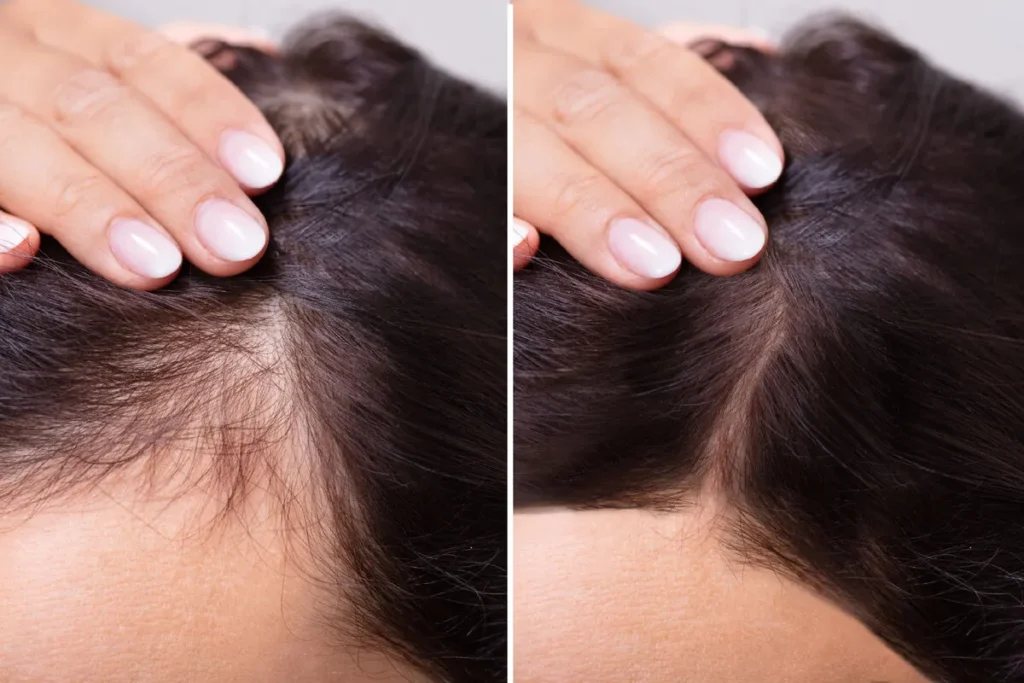
How does thinning hair work? Understand the incredible science of hair cycles and find the best way to reverse the process today.
Reversing thinning hair is a journey many take to have fuller, healthier hair. Androgenetic alopecia affects about 50 million males and 30 million females in the U.S. It’s important to know why hair thinning happens.
New research shows how hair thins, like age-related DNA damage in hair follicle stem cells. This damage stops Collagen 17A1 protein, making stem cells turn into skin cells instead of hair. But, there are proven ways to combat thinning hair.
The good news is that with the right approach, you can reverse thinning hair. By learning about hair growth and loss, you can find ways to bring back your hair.
Key Takeaways
Understanding the biological mechanisms behind hair thinning is essential for finding effective solutions.
Age-related DNA damage and hormonal sensitivities are among the key factors contributing to hair thinning.
Multiple evidence-based solutions exist to combat thinning hair, including FDA-approved medications and emerging treatments.
A holistic approach is necessary to reverse hair thinning.
Science-backed solutions offer new hope for individuals experiencing hair loss.
How Does Thinning Hair Work: The Science Explained

Recent breakthroughs in hair research have shed new light on the complex processes behind thinning hair. Understanding the underlying biological mechanisms and risk factors is key to addressing this common concern.
The Biological Mechanisms of Hair Loss
Hair loss happens through several mechanisms. It involves the depletion of stem cells in the hair follicle. Researchers found that stem cells in the upper and middle sections of the hair follicle are vital for hair growth.
Depleting these stem cells stops hair growth. This suggests a new treatment approach for hair loss. Also, the Collagen 17A1 protein is key for keeping hair follicles intact. Its degradation can lead to hair thinning.
Hormonal sensitivity to dihydrotestosterone (DHT) is another critical factor. DHT can cause hair follicles to shrink. This results in thinner, shorter hairs. Understanding these mechanisms gives us insights into hair thinning causes and treatment options.
Risk Factors That Accelerate Thinning
Several risk factors can speed up hair thinning. These include age-related DNA damage, obesity-induced stress, and genetic predisposition. As we age, DNA damage can harm hair follicle stem cells, causing hair loss.
Obesity can also stress the body, disrupting the hair growth cycle. This adds to thinning. Genetic predisposition also plays a big role, making some more prone to hair loss. Knowing these risk factors helps us take steps to slow down or reverse hair thinning.
Scientifically Proven Solutions to Reverse Hair Thinning

Looking for thicker, fuller hair? It’s all about using scientifically proven ways to stop hair thinning. Knowing how hair loss works helps find effective treatments.
FDA-Approved Medical Treatments
Minoxidil and finasteride are top FDA-approved treatments. Minoxidil, known as Rogaine or Theroxidil, comes in 2% and 5% strengths. Finasteride helps slow or stop hair loss in almost 90% of men.
Prices vary, but minoxidil costs $20 to $50 a month. Finasteride is $50 to $70 monthly. Here’s a comparison:
Natural and Lifestyle Interventions
Natural supplements like biotin and folic acid help hair grow. Eating right, managing stress, and gentle hair care are also key.
Using these proven methods can help stop thinning hair. You can get a fuller, healthier head of hair.
Conclusion: Creating Your Personalized Hair Recovery Strategy
Understanding hair thinning and its causes is key. This knowledge helps in creating a plan to save your hair. Researchers think keeping stem cells active might help grow more hair.
To keep your hair healthy, mix science with the best treatments. This could be medical options, natural supplements, or changing your lifestyle. A plan made just for you can bring back your hair’s natural beauty.
Yes, hair can grow back after thinning. The right steps, including looking into treatment costs, can lead to a fuller head of hair. Taking care of your hair health brings out a radiant glow and lets you show off your beauty.
FAQ
How can I regrow hair follicles?
To regrow hair follicles, you need a mix of science and natural methods. Use FDA-approved treatments like minoxidil and finasteride. Also, eat right and manage stress.
What are the scientifically proven ways to grow thicker hair?
To grow thicker hair, use FDA-approved treatments. Also, try natural methods and eat well. A diet full of nutrients helps hair grow.
How to reverse thinning hair naturally?
To reverse thinning hair naturally, change your diet and manage stress. Use gentle hair care and natural supplements for hair growth.
What is the cost of hair regrowth treatment?
Hair regrowth treatment costs vary. FDA-approved treatments like minoxidil are affordable. But, hair transplantation is pricier, costing from hundreds to thousands of dollars.
Can hair grow back after thinning?
Yes, hair can grow back with the right treatment. Use FDA-approved treatments, natural methods, and lifestyle changes for hair growth.
How to thicken a thinning hairline?
To thicken a thinning hairline, use FDA-approved treatments and natural methods. Change your diet, manage stress, and care for your hair gently.
Is hair thinning reversible?
Yes, hair thinning is reversible. Use FDA-approved treatments, natural methods, and lifestyle changes for hair growth and to stop loss.
How to stop thinning hair?
To stop thinning hair, use a mix of science and natural methods. Include FDA-approved treatments, natural interventions, and lifestyle changes for hair growth.
What are the risk factors that accelerate thinning hair?
Risk factors for thinning hair include age, obesity, genetics, and hormonal sensitivity to DHT.
How to save my hair from thinning?
To save your hair from thinning, be proactive. Adopt a healthy lifestyle, use gentle hair care, and try science-backed solutions like FDA-approved treatments and natural methods.
References
National Center for Biotechnology Information. Evidence-Based Medical Insight. Retrieved from https://pmc.ncbi.nlm.nih.gov/articles/PMC9411357/


