

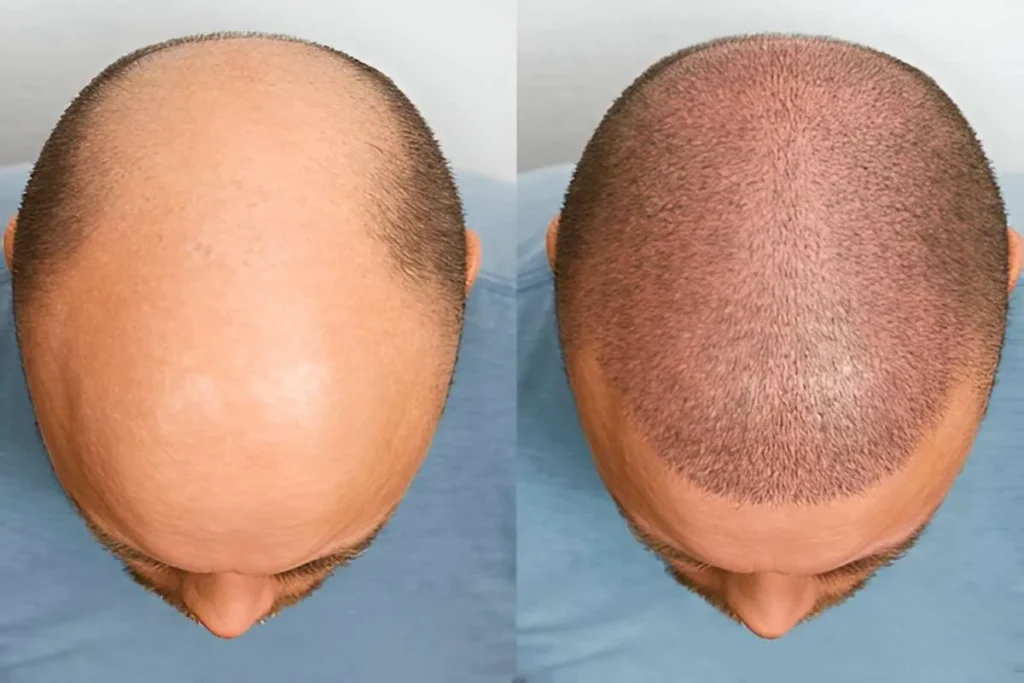
How long do hair implants take to grow? Get the definitive timeline for your hair transplant results and see amazing new growth.
Starting a hair restoration journey is a big step towards feeling confident again. The journey is slow, but the outcome is amazing. At GoldCity Center, we support you every step of the way. We use the latest surgical methods and care tailored just for you.
Usually, people see new hair growth about 3 to 4 months after the surgery. This time is important as it marks the start of your hair growth journey.
Knowing the typical stages and times for hair growth after a transplant is key. Most people see a lot of growth between 4-6 months after the surgery. And, the full effects can take up to 9-12 months to show.
Key Takeaways
New hair growth is typically noticeable around 3-4 months post-transplant.
Significant growth occurs between 4-6 months after surgery.
Full results from the hair transplant may take up to 9-12 months.
Understanding the growth timeline helps manage expectations.
Personalized care and advanced techniques enhance the hair restoration journey.
The Hair Transplant Growth Timeline

Knowing the hair transplant growth timeline is key to setting the right expectations. The journey includes several stages, from healing to the final growth of the transplanted hair.
Initial Healing Phase (0-2 Weeks)
The initial healing phase is a critical time after the surgery. During this period, the body heals, and the transplanted hair follicles settle. It’s important to follow the post-operative instructions carefully to ensure proper healing and avoid complications.
Shedding Phase (2-4 Weeks)
After healing, the transplanted hair goes into a shedding phase. This can be scary for some, but it’s normal. The shedding is due to the shock the hair follicles experience during the transplant. It’s a sign that the follicles are responding to the transplant and preparing for new growth.
During this phase, patients might see the transplanted hair falling out. But, this doesn’t mean the transplant failed. Instead, it’s a step towards growing new hair.
Dormant Phase (1-3 Months)
After shedding, the transplanted hair follicles enter a dormant phase. In this time, they prepare for new hair growth. Patience is key as this phase can last several months. Most patients start to see new hair growth around 3 to 4 months after the procedure.
The hair growth cycle after a transplant includes several phases: anagen, catagen, telogen, and exogen. Knowing these phases helps set realistic expectations. The anagen phase is where the hair grows, and this is what most patients look forward to.
By understanding the different phases of the hair transplant growth timeline, patients can better navigate their hair restoration journey. They can have realistic expectations about their progress.
How Long Do Hair Implants Take to Grow

The growth of hair implants is a multi-stage process that requires patience. But the end result is well worth the wait. After a hair transplant, the body undergoes a series of changes as it heals and the transplanted hair begins to grow.
Early Growth Stage (3-4 Months)
During the early growth stage, typically around 3-4 months post-transplant, the first signs of new hair become visible. This period is critical as it marks the beginning of the hair growth cycle. The transplanted hair starts to shed, making way for new growth. It’s essential to be patient during this phase, as the hair follicles are adjusting and preparing for the growth spurt to come.
Significant Growth Period (4-6 Months)
The most significant growth occurs between months 4 and 6. By this stage, not only is the density of hair improving, but the overall appearance of the transplant area is transforming. The growth rate of transplanted hair is similar to that of natural hair, approximately 0.8 to 1 cm per month. Factors like age, genetics, and overall health can influence this rate, but generally, patients start to see a noticeable improvement.
By the 6-month milestone, patients typically experience approximately 40-50% density. This period is a testament to the body’s ability to heal and regenerate. The hair continues to thicken and become more vibrant, signaling a successful transplant.
Final Results (9-18 Months)
The final results of a hair transplant become apparent around 9-18 months post-procedure. This is when the full density and natural look of the transplanted hair are realized. The patience and dedication of the patient are rewarded as they see a natural, fuller head of hair. The end result is a transformed appearance that boosts confidence and self-esteem.
In conclusion, understanding the timeline for hair implant growth helps manage expectations and appreciate the gradual transformation. From the early signs of growth at 3-4 months to the significant improvements between 4-6 months, and then to the full results at 9-18 months, the journey is a rewarding one.
Factors Affecting Hair Transplant Growth Rates
The success of a hair transplant depends on many things. Knowing these factors helps set the right expectations and get the best results.
Patient-Specific Factors
Things about you can affect how well your hair grows after a transplant. Age is key, as younger people usually see faster growth. Genetic predispositions also play a big role, with some people’s genes making their hair grow stronger.
Ethnicity and overall health status also matter. Different ethnicities may have hair that responds differently to transplants. Also, health issues or smoking can slow down hair growth.
Procedure-Related Factors
The skill of the surgeon and the transplant method are very important. Using FUE (Follicular Unit Extraction) can make the results look more natural and grow faster. The quality of the donor hair and how well it’s grafted also affect success.
The skill and experience of the surgeon
The technique used for the transplant
The quality of the donor hair
Understanding these factors helps patients make better choices for their hair restoration. Working with their surgeons, they can aim for the best results.
Conclusion: Setting Realistic Expectations
When starting a hair transplant journey, knowing the growth timeline is key. By 3 months, you might see the first signs of new hair growth. This is the start of the end of the dormant phase.
The time it takes for hair to grow varies from person to person. But, most see big changes between 4 to 6 months. By 9 to 12 months, the final results are usually clear. Some might even see more improvement up to 18 months.
Understanding what affects hair growth and the typical milestones helps. It makes the journey more meaningful. It’s not just about looking good. It’s about growing as a person, becoming more confident and radiant.
FAQ
How long after a hair transplant does hair start to grow?
Patients usually see new hair growth 3 to 4 months after the transplant. This is the start of your hair restoration journey.
Does transplanted hair grow?
Yes, transplanted hair grows. It goes through shedding, a dormant phase, and then grows new hair.
How long does it take to see the final results of a hair transplant?
It takes about 9-18 months to see the final results of a hair transplant. This is when the transplanted hair reaches full growth and density.
What factors influence the growth rate of transplanted hair?
Several factors affect transplanted hair growth. These include age, ethnicity, health, and the surgeon’s skill.
Is it normal for transplanted hair to shed after the procedure?
Yes, shedding is normal after a transplant. It’s part of the process, followed by a dormant phase before new hair starts growing.
Can I achieve a natural, fuller head of hair with a hair transplant?
Yes, with proper care and patience, you can get a fuller head of hair. The journey is gradual, but the results are worth it.
How long does the hair transplant growth process take?
The growth process is complex and takes time. It includes recovery, shedding, a dormant phase, and new growth. Full results are seen in 9-18 months.
Does the donor area regrow after a FUE hair transplant?
The donor area usually heals well after a FUE transplant. Most follicles are taken from areas that don’t get too depleted, allowing for natural regrowth.
References
National Center for Biotechnology Information. Evidence-Based Medical Insight. Retrieved from https://pubmed.ncbi.nlm.nih.gov/19608248/


