

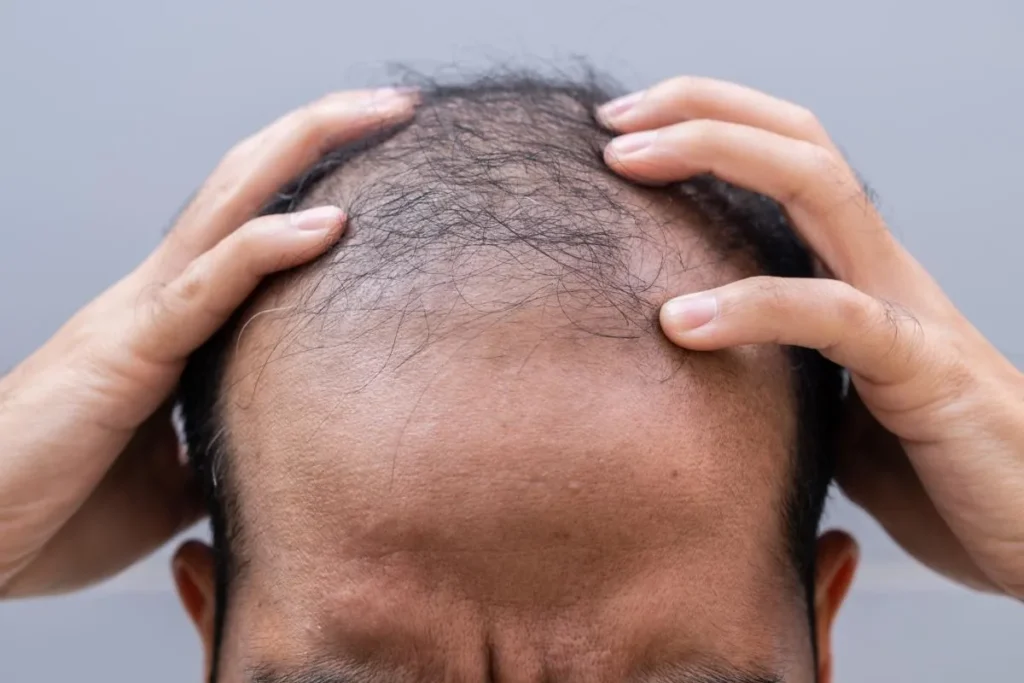
Finasteride is a proven treatment for hair loss in men. It blocks the conversion of testosterone to dihydrotestosterone (DHT). DHT is the hormone that causes male pattern baldness. Finasteride reduces DHT levels by 65% in just 24 hours, protecting hair follicles right away.
Knowing how long finasteride takes to work is key. It starts working immediately. But, seeing hair grow back takes time because of the hair growth cycle.
Most men notice improvements in 3 to 6 months. Finasteride can lead to a luxury transformation in hair growth. This makes men feel more confident and radiant.
Key Takeaways
Finasteride works by blocking the conversion of testosterone to DHT.
DHT is the hormone responsible for hair loss in male pattern baldness.
Finasteride reduces DHT levels by 65% within 24 hours.
Visible hair regrowth takes time due to the natural hair growth cycle.
Most men see noticeable improvements within 3 to 6 months.
Understanding How Finasteride Works for Hair Loss

Finasteride is a medication used to treat male pattern baldness. This condition is caused by hair loss due to testosterone turning into dihydrotestosterone (DHT). The science behind finasteride’s ability to combat hair loss lies in its impact on DHT.
The Science Behind DHT and Hair Loss
DHT is a strong form of testosterone that plays a big role in male pattern baldness. It works by attaching to androgen receptors in hair follicles. This causes the follicles to shrink, leading to thinner, shorter hair. The reduction of DHT levels is key in slowing down or even reversing the balding process.
DHT causes hair follicles to shrink, leading to thinner hair.
Finasteride works by inhibiting the production of DHT.
By reducing DHT levels, finasteride helps to slow down hair loss.
Finasteride’s Mechanism of Action
Finasteride’s effectiveness in treating hair loss comes from its ability to block the enzyme 5-alpha-reductase. This enzyme is responsible for turning testosterone into DHT. By blocking this conversion, finasteride significantly reduces scalp DHT levels, promoting a healthier hair growth environment. Studies show that finasteride can cut scalp DHT by 62-72%, making it a top choice for treating male pattern baldness.
Finasteride inhibits 5-alpha-reductase, the enzyme that converts testosterone to DHT.
This inhibition leads to a significant reduction in DHT levels.
Lower DHT levels result in less hair loss and potentially stimulate hair regrowth.
Clinical evidence supports finasteride’s effectiveness in treating hair loss. After five years of treatment, 90% of participants saw a decrease in hair loss and/or hair regrowth. This makes finasteride a trusted and reliable option for those seeking to address balding.
How Long Does It Take Finasteride to Work?

Knowing how long it takes for finasteride to work is key. It’s a treatment for hair loss that’s proven to be effective. But, it takes time to see the results.
Immediate Effects (First 24 Hours)
Finasteride starts working right away. It cuts Dihydrotestosterone (DHT) levels by 65% in just 24 hours. This is the start of its long-term effects on hair loss.
Medium-Term Results (3-6 Months)
Men start to see less hair loss or some regrowth after 3 to 6 months of taking finasteride. This is when you’ll first notice improvements in hair density and slower hair loss.
Long-Term Outcomes (6-12+ Months)
Finasteride’s full effects come with long-term use. Peak results are seen after about a year of use. Some men see even more improvement after 12 months. It’s important to keep using it to keep the results, as stopping can cause hair loss to come back.
Understanding when you’ll see results from finasteride helps manage expectations. It helps make better choices about your treatment.
Factors Affecting Finasteride’s Effectiveness
Knowing what affects finasteride’s success is key. Finasteride works best when started early. It can wake up hair follicles that have been asleep for up to 5 years.
Early Intervention
Starting finasteride early is vital. It stops hair loss and helps hair grow back. Clinical trials show early starters get better results.
“The earlier you start finasteride, the better your chances of maintaining a healthy hairline.” Finasteride blocks DHT, a hormone that causes hair loss.
Consistency is Key
Using finasteride regularly is important. Skipping doses or stopping treatment can reduce its effect. Always take it as directed for the best results.
Clinical evidence supports the importance of consistent finasteride usage. Men who stick to the treatment plan see better results.
Clinical Evidence and Success Rates
Finasteride’s success is proven by many studies. About 90% of men see a slowdown in hair loss after a year. Around 85% stop losing hair, and 65% grow new hair with regular use.
Finasteride is usually safe, but some men might get constipation. But, many find the benefits worth the risks.
Thinking about using finasteride? The choice depends on your hair loss and health.
In summary, finasteride’s success depends on starting early, using it regularly, and how well it works for you. Understanding these points helps men make smart choices about treating hair loss.
Conclusion
Finasteride is a proven treatment for hair loss, showing clear results and boosting confidence. It works by stopping the production of dihydrotestosterone (DHT), a hormone that causes hair loss.
Using finasteride long-term shows it keeps working well, with most hair growth seen in the first year. It’s a safe and popular choice for men wanting to stop hair loss and grow new hair. When taken regularly, finasteride is safe and effective, bringing many benefits to men with hair loss.
Finasteride does more than just grow hair. It helps men feel confident and look younger. As a trusted treatment, finasteride lets men take charge of their hair loss and reach their full beauty.
FAQ
How long does it take for finasteride to start working?
Finasteride works right away, reducing DHT levels by about 65% within 24 hours. However, visible changes in hair loss or regrowth usually appear after 3 to 6 months of consistent use.
Is finasteride safe to use for hair loss?
Yes, finasteride is considered safe and is clinically proven to treat hair loss in men. Always follow the prescribed dosage and consult a doctor before starting treatment.
How does finasteride work for hair loss?
Finasteride blocks the enzyme 5-alpha-reductase, which converts testosterone into DHT. Lower DHT levels help slow hair loss and may promote hair regrowth.
Can I consume alcohol while taking finasteride?
Alcohol does not directly interfere with finasteride. However, excessive alcohol consumption can negatively affect overall health, including hair health. Drinking in moderation is generally safe, but consult a doctor if unsure.
How long do I need to take finasteride to see results?
Finasteride must be taken continuously to maintain results. Stopping the medication allows DHT levels to rise again, leading to renewed hair loss. Many men see improvements within 12 months, and ongoing use is usually necessary.
Does finasteride block DHT?
Yes, finasteride blocks DHT by inhibiting the 5-alpha-reductase enzyme, reducing DHT levels and helping prevent further hair loss.
What are the benefits of taking finasteride for hair loss?
Finasteride helps slow hair loss, promotes regrowth, and improves hair density. It is a proven treatment for male pattern baldness.
Is finasteride effective for everyone?
Finasteride is effective for many men, but results can vary. Factors such as early treatment, consistent use, and overall health influence effectiveness.
Can finasteride cause constipation?
Constipation is not a common side effect of finasteride. Individual reactions may vary, so consult a doctor if you experience unusual symptoms.
How does finasteride work for hair regrowth?
Finasteride lowers DHT levels, preventing hair follicles from shrinking. This helps slow hair loss and supports healthier, thicker hair growth over time.
References
National Center for Biotechnology Information. Evidence-Based Medical Insight. Retrieved from https://pubmed.ncbi.nlm.nih.gov/9777765/


