

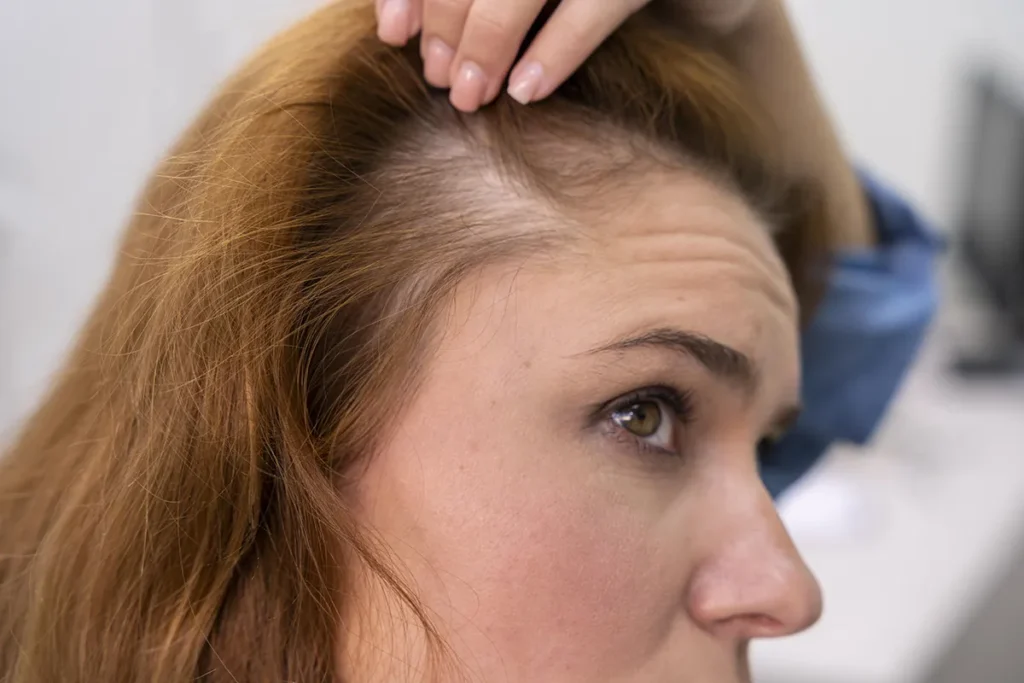
Seeing more hair in your brush or your scalp showing through your part can be scary. Hair thinning is a common issue affecting millions worldwide. By age 40, about 40% of both men and women notice their hair thinning.
Hair loss is a big problem, causing not just physical changes but also emotional distress and low self-confidence. Knowing the signs of hair thinning is key for early treatment. GoldCity Center offers trusted, patient-focused help in finding and treating hair loss. They use detailed dermatological checks and tailor care plans for each patient.
Key Takeaways
Spotting the early signs of hair thinning is vital for quick action.
Hair thinning impacts a large number of people, with 40% of men and women noticing it by age 40.
Thorough dermatological assessments are important for understanding hair loss.
Custom care plans can effectively tackle hair thinning.
Early treatment and detection can help keep your hair healthy and full.
Understanding Hair Thinning: Facts and Statistics

Learning about hair thinning can give us important insights. It’s a natural part of aging, but it’s also affected by genetics, hormones, and lifestyle.
Hair thinning is common, affecting many people. By age 50, about 85% of men see a lot of thinning hair. This is often linked to male pattern baldness.
The Prevalence of Hair Thinning Across Age Groups
Hair thinning starts and gets worse at different times for everyone. Women face female pattern hair loss around 10% by age 50. By age 70, it affects about 30%.
This shows hair thinning isn’t just about getting older. It’s also about genetics and hormones.
Normal Hair Loss vs. Clinical Hair Thinning
It’s key to know the difference between normal hair loss and clinical hair thinning. Losing 50 to 100 hairs a day is normal. But, losing more or seeing bald spots means it might be a serious issue.
Knowing the signs and causes of hair thinning helps people get the right treatment. By understanding hair thinning, we can take better care of our hair.
How to Know If Your Hair Is Thinning: 5 Key Signs

It can be hard to tell if your hair is thinning. But, there are clear signs to watch for. Knowing these signs helps you keep an eye on your hair’s health. If you see any unusual changes, it’s time to get professional advice.
1. Gradual Thinning on Top of the Scalp
One common sign is thinning on the top of your scalp. This is often seen in both men and women. Androgenetic alopecia is the main cause of this thinning. It’s important to spot it early.
2. Increased Hair Shedding During Brushing or Washing
Seeing more hair fall out when you brush or wash can worry you. Some hair loss is normal, but too much might mean thinning. It’s key to tell the difference between normal and thinning hair.
3. Widening of the Center Hair Part
A wider center hair part is a subtle but important sign. As hair thins, the scalp shows more, making the part look wider. Keep an eye on your hair’s changes.
4. More Visible Scalp Through Hair
When hair gets thinner, the scalp shows more. This is a clear sign of thinning. Look at your hair from different angles to spot this.
To understand hair thinning signs better, let’s look at some stats:
By knowing these signs and their causes, you can start to address hair thinning. If you’re worried about your hair, talking to a professional can help. They can offer advice and treatment options tailored for you.
Conclusion
Spotting early signs of hair thinning is key to acting fast. If you’re wondering if your hair is thinning, knowing the signs can help a lot. It’s important for keeping your hair healthy and full.
Acting early can slow down or even stop hair loss. This keeps your hair looking bright and lively. Learning how to spot thinning hair lets you take steps to fix it and bring back your hair’s natural beauty.
If you notice your hair is thinning, getting professional help is a must. They can guide you on the best steps to take. This way, you can get the hair you’ve always wanted.
Being proactive and seeking advice can make your hair fuller and healthier. Take charge of your hair’s health now. You’ll feel more confident and have a fuller head of hair.
FAQ
How to tell if hair is thinning?
Look for signs like gradual thinning on top of the scalp. Also, check for more hair shedding when brushing or washing. If your hair part is widening or you see more scalp, it might be thinning.
What does hair thinning look like?
Hair thinning shows up in different ways. You might see a receding hairline or thinning on the crown. It can also make your scalp more visible.
Is my hair thinning or is it just normal hair loss?
Normal hair loss is losing some hairs every day. But hair thinning means losing more hair density. It’s often due to genetics, hormonal changes, or other factors.
How can you tell if your hair is thinning?
Watch your hair loss patterns and check for visible scalp. If your ponytail is getting thinner or hair falls out in clumps, it might be thinning.
What are the signs of hair thinning?
Signs include gradual thinning on top, more shedding, and a wider hair part. You’ll also see more scalp through your hair.
How to know if you have thinning hair?
Check your scalp for thinning signs and look at your hair loss patterns. If you’re worried, talk to a professional.
Can hair thinning be treated?
Yes, you can treat hair thinning. Options include medications, hair transplantation, and changing your lifestyle. It depends on why you’re losing hair.
How to tell if your hair is thin?
Check your hair’s density and look for visible scalp. Thin hair breaks easily and can be dry. Assess your hair’s health to see if it’s thin.
References
National Center for Biotechnology Information. Evidence-Based Medical Insight. Retrieved from https://pubmed.ncbi.nlm.nih.gov/27828643/


