

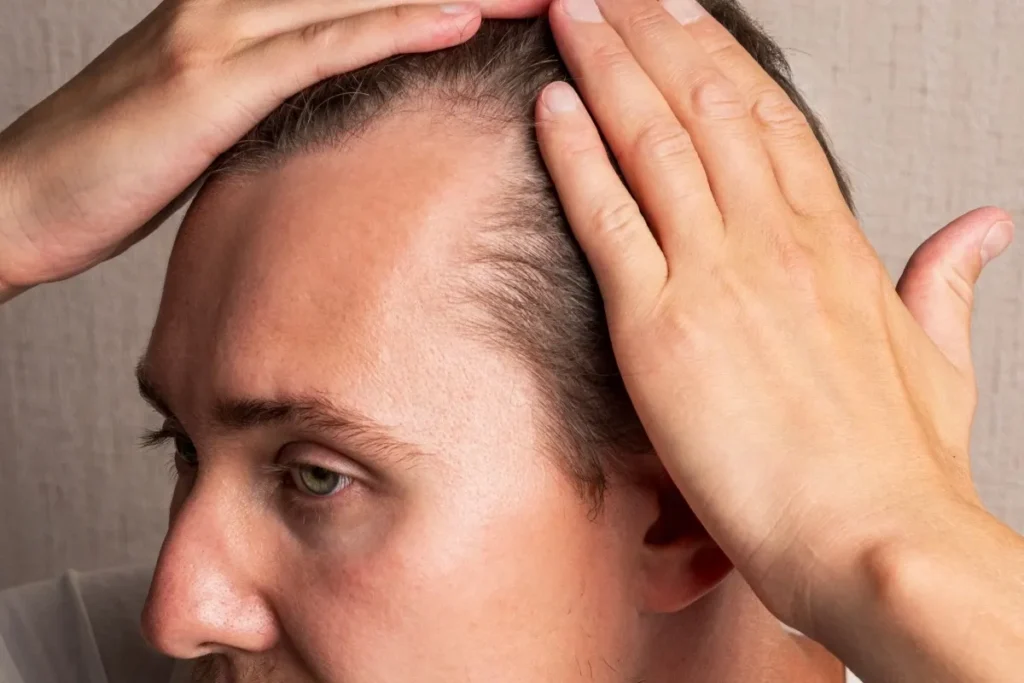
Changes in your hairline can be worrying. Knowing the signs of a receding hairline early is key. A receding hairline happens when hair thins and moves back over time. It affects many men and women, with male pattern baldness hitting 85% of men by 50.
Spotting the early signs of receding hairline lets you act fast. With the right dermatology care and treatments, you can fight hair loss. GoldCity Center offers top-notch care and personalized plans to keep your hairline healthy.
Key Takeaways
Understand the early signs of a receding hairline for timely intervention.
Recognize the difference between a receding hairline and a mature hairline.
Identify the symptoms of male pattern baldness.
Explore expert dermatological care and treatment options.
Take proactive steps to maintain a healthy hairline.
Understanding Receding Hairlines vs. Mature Hairlines

The difference between a receding and a mature hairline can be tricky. Knowing the differences is key to understanding your hair health. It helps you decide what steps to take next.
What Defines a Receding Hairline
A receding hairline shows uneven recession, often looking like an M. It’s also marked by thinning hair. This condition can get worse and might need medical help.
Signs of a receding hairline include:
Uneven hair loss
Formation of an M-shaped hairline
Noticeable thinning, mainly at the temples or forehead
The Natural Process of Hairline Maturation
A mature hairline is a natural change as you grow older. It happens between 18 and 30. This change is symmetrical and gradual.
Key Differences Between Recession and Maturation
The main differences are in age of onset, pattern of hair loss, and presence of thinning. A mature hairline is just part of aging. But a receding hairline might mean you’re losing hair and need treatment.
To sum it up:
5 Clear Signs to Know If You Have a Receding Hairline

Wondering if your hairline is receding? Look for these key signs. Spotting the signs of receding hairline early can help you tackle the problem effectively.
Gradual Thinning at the Temples or Forehead
One early sign is hair thinning at the temples or forehead. This change might be subtle but is a key indicator. As hair thins, the skin underneath shows more, making your hairline seem to recede.
Formation of an M-Shaped Hairline Pattern
Another sign is an M-shaped hairline. This happens when hair at the temples recedes more than at the forehead’s center. It forms an ‘M’ shape, a common sign of receding hairline, mainly in men.
Widening Part Lines
Widening part lines also signal a receding hairline. As hair thins, the part line gets wider, showing more scalp. This is a clear sign your hairline is receding.
Increased Hair Shedding (Beyond 50-100 Hairs Daily)
Normal hair loss is 50-100 hairs a day. But, losing more than this can hint at issues like a receding hairline. If you see a lot of hair falling out, it’s time to look into it.
Knowing these receding hairline symptoms helps you spot hairline recession early. By catching these signs early, you can start addressing your hair loss and keep your hair healthy and full.
Who Is Most at Risk for Developing a Receding Hairline
Not everyone is at the same risk for a receding hairline. Some people are more likely to experience it due to certain factors. Knowing these factors can help spot who might be at risk.
Age-Related Statistics and Risk Factors
Age is a big factor in hairline recession. Men over 30 often see hair loss. This is because of aging and a hormone called DHT that shrinks hair follicles.
Genetic Predisposition and Family History
Genetics play a big role in hairline recession risk. If your family has male pattern baldness, you might lose hair too. Male pattern baldness is caused by DHT.
Gender Differences in Hairline Recession
Men are more likely to get a receding hairline than women. This is because men have more DHT. Women tend to lose hair all over, not just at the hairline.
Lifestyle and Environmental Factors
Smoking, stress, and certain hairstyles can also cause hairline recession. Smoking hurts blood flow to the scalp, leading to hair loss. Stress causes hair to fall out.
Knowing these risk factors helps people take care of their hair. This can help prevent or slow down hairline recession.
Conclusion: Next Steps If You’ve Identified a Receding Hairline
If you’re wondering “do I have a receding hairline,” identifying the signs is the first step. Early action is key to treating it well.
There are many treatments available. Medications like Finasteride and Minoxidil can slow down or reverse hair loss. Hair transplants offer more permanent solutions. Lifestyle changes, such as reducing stress and eating well, also help.
To figure out “how to know if my hairline is receding,” watch for thinning at the temples or forehead. An M-shaped hairline is another sign. A trichologist or dermatologist can help find the best treatment for you.
By acting early, you can fight hair loss and keep your hair healthy. Find the right treatment and care to shine and own your beauty.
FAQ
How can I tell if my hairline is receding?
Look for thinning at the temples or forehead. Also, check if your part lines are getting wider. If you notice more hair shedding than usual, it might be a sign.
A receding hairline often looks like an M. It’s also marked by noticeable thinning.
What is the difference between a receding hairline and a mature hairline?
A mature hairline is a natural part of aging. It happens between 18 and 30, moving gradually. A receding hairline, though, is uneven and may need medical help.
What are the early signs of a receding hairline?
Early signs include thinning at the temples or forehead. You might also notice wider part lines and more hair shedding. Hair that’s thinner and softer is another clue.
Am I at risk for developing a receding hairline?
Yes, if you have a family history of baldness or are over 30. Smoking, stress, and harsh hairstyles also increase your risk.
Can women experience a receding hairline?
Yes, about 40% of women show signs by age 50. It’s less common than in men but can be caused by genetics, hormones, and lifestyle.
What are the available treatments for a receding hairline?
Treatments include medications like Finasteride and Minoxidil. Hair transplants are also an option. Changing your lifestyle can help too.
Reduce stress, eat well, and avoid harsh chemicals or tight hairstyles.
How can I slow down or reverse hair loss?
Use medications like Finasteride and Minoxidil. Reduce stress and eat a balanced diet. Avoid harsh chemicals and tight hairstyles.
Seeing a trichologist or dermatologist can help too. They can give you personalized advice and treatments.
What lifestyle changes can I make to support hair health?
Reduce stress and eat a diet full of vitamins and minerals. Avoid harsh chemicals and tight hairstyles. These changes can help your hair stay healthy.
References
National Center for Biotechnology Information. Evidence-Based Medical Insight. Retrieved from https://pubmed.ncbi.nlm.nih.gov/9865198/


