

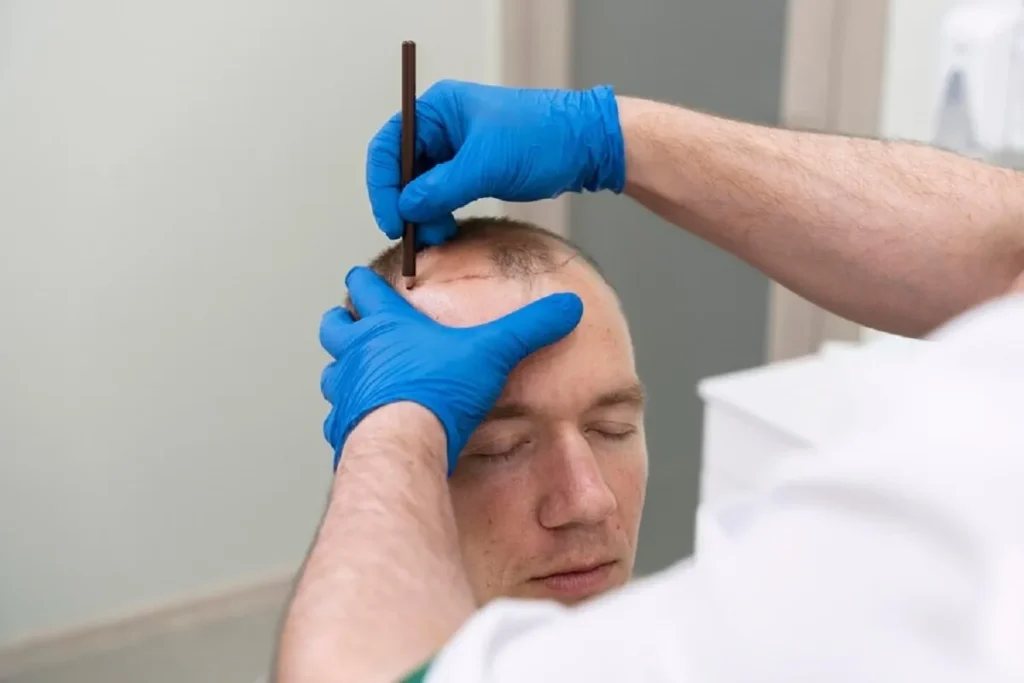
After a hair transplant surgery, your scalp starts healing. Scabs form around the new grafts in 24-48 hours. These scabs are vital for protecting your hair restoration investment.
Knowing how scabs form and when to remove them is key. This ensures your transplant’s success. With the right care, your scalp can look its best.
Good aftercare is essential for your scalp’s health during healing. Learning from medical experts helps you manage scabs well. This way, you can enjoy a luxury transformation in your hair.
Key Takeaways
Scabs form within 24-48 hours after hair transplant surgery.
Proper aftercare is key for transplant success.
Understanding scab formation is vital for effective management.
Trusted medical professionals can guide you through the process.
Effective scab management keeps your scalp healthy.
Understanding Hair Transplant Scabs

Scabs after a hair transplant are normal and show the healing has started. They form a protective layer over the grafts. This helps them during the early recovery phase.
What Are Hair Transplant Scabs and Why They Form
Hair transplant scabs are crusty formations that appear after the procedure. They are a natural part of healing, caused by the body’s response to the surgery. These scabs protect the grafts from infection and other harmful factors.
Many factors affect scab formation, like healing speed, surgery technique, and aftercare. Proper care is key to ensure scabs form right and don’t slow healing.
Normal Timeline for Scab Formation and Shedding
Scabs start forming a few days after surgery. They peak at 3-5 days and shed naturally between 7 to 14 days later. Shedding times vary among individuals.
Following the surgeon’s post-op instructions is vital for healing. Gentle washing and care help manage scabs and aid recovery.
As scabs fall off, the area may look better. But, patience is needed as healing takes weeks to months.
How to Remove Scabs After Hair Transplant Safely

Removing scabs after a hair transplant needs patience and care. It’s important to heal the grafts right. The right way to remove scabs can greatly affect the results.
When to Begin the Scab Removal Process
Start removing scabs around day 3-4 after surgery. Use a mild shampoo for gentle washing. This timing makes scabs softer and easier to remove without harming the grafts.
Proper Washing Techniques for Scab Removal
Using the right washing techniques is key. Wet your scalp with lukewarm water first. Then, use a small amount of mild shampoo and massage it gently with your fingertips.
Rinse well with lukewarm water to remove all soap. Do this as your surgeon advises.
Gentle care is vital to avoid damaging the grafts. Be patient, as scabs may not come off right away.
Gentle Massage Methods to Encourage Natural Shedding
By day 6, start gentle scalp massages during washing. Use your fingertips to massage in a circular motion. This softens scabs and helps them fall off naturally. Avoid scrubbing or picking at scabs to prevent graft damage.
By being gentle and following these steps, you can safely remove scabs after your hair transplant.
What to Avoid During the Scab Removal Process
Removing scabs after a hair transplant is important. It’s key to avoid certain actions to get the best results. Knowing what to avoid can help you have a successful hair transplant.
Dangerous Practices That Can Damage Grafts
One big risk is damaging the grafts during scab removal. Avoid picking or scratching scabs because it can harm the new grafts and lead to infection. Also, it can lower the chances of graft survival, affecting the transplant’s success.
It’s important to be gentle during this time. Don’t use harsh chemicals or exfoliating products that can irritate the scalp. Also, avoid vigorous rubbing or massaging as it can harm the grafts.
Signs of Complications to Watch For
Some discomfort and scabbing are normal after a hair transplant. But, watch for excessive redness, swelling, or pus as they might mean infection. If you feel severe itching or pain, talk to your surgeon right away.
Other issues include scabs not falling off naturally or signs of graft failure. Keeping an eye on these can help you catch problems early.
When to Contact Your Surgeon
If you see unusual symptoms or have concerns, reach out to your surgeon. Prompt communication can prevent problems and ensure the best results. Your surgeon can offer advice and treatment for any issues.
By knowing what to avoid and watching for complications, you can handle scab removal confidently. Remember, patience and gentle care are essential for a successful hair transplant.
Conclusion
Proper aftercare is key for healing and graft survival after a hair transplant. Following a recommended washing schedule and gentle care is important. It helps ensure the transplanted hair grows healthily.
Removing hair transplant scabs effectively is vital for a smooth recovery. Knowing how to remove scabs safely is important. It helps avoid complications and improves the hair transplant’s outcome.
Gentle scab removal is part of a good aftercare routine. It supports the scalp’s health and the new hair. This careful approach is essential for the best hair transplant results.
Following the right guidelines for scab removal and aftercare leads to a successful hair transplant. This careful care ensures the transplanted hair lasts long and looks natural. It results in a fuller head of hair.
FAQ
What are hair transplant scabs and why do they form?
Hair transplant scabs are a natural part of healing after surgery. They protect the grafts and help them heal. Your scalp needs this protection, and scabs are key to it.
When do scabs typically fall off after a hair transplant?
Scabs usually fall off in 7-10 days after surgery. But, everyone heals at their own pace. Be patient and let them fall off naturally for the best results.
How to remove scabs after hair transplant safely?
Start by gently washing your scalp with mild shampoo. Use gentle massage to help them fall off naturally. Avoid picking or scratching the scabs.
What are the proper washing techniques for scab removal?
Wash your scalp with mild shampoo and lukewarm water. Gently massage in a circular motion. Then, pat dry with a clean towel.
Can I rub my head after hair transplant?
Avoid rubbing your head hard after surgery. Instead, gently massage with your fingertips. This helps them fall off naturally and promotes healing.
What are the signs of complications during the scab removal process?
Look out for signs like excessive bleeding, infection, or graft loss. If you notice anything unusual, contact your surgeon right away.
When should I contact my surgeon regarding scab removal?
Contact your surgeon if you see signs of complications. This includes excessive bleeding, infection, or if scabs aren’t falling off naturally. They can guide you for the best healing.
How to soften scabs after hair transplant?
Soften scabs by gently washing with mild shampoo and lukewarm water. A gentle scalp massage can also help loosen them and promote shedding.
What happens if I pick or scratch the scabs?
Picking or scratching can damage the grafts and lead to infection. It can also affect the transplant’s success. Avoid these actions for the best healing and graft survival.
References
Nature. Evidence-Based Medical Insight. Retrieved from https://www.nature.com/articles/s41467-023-41776-6


