

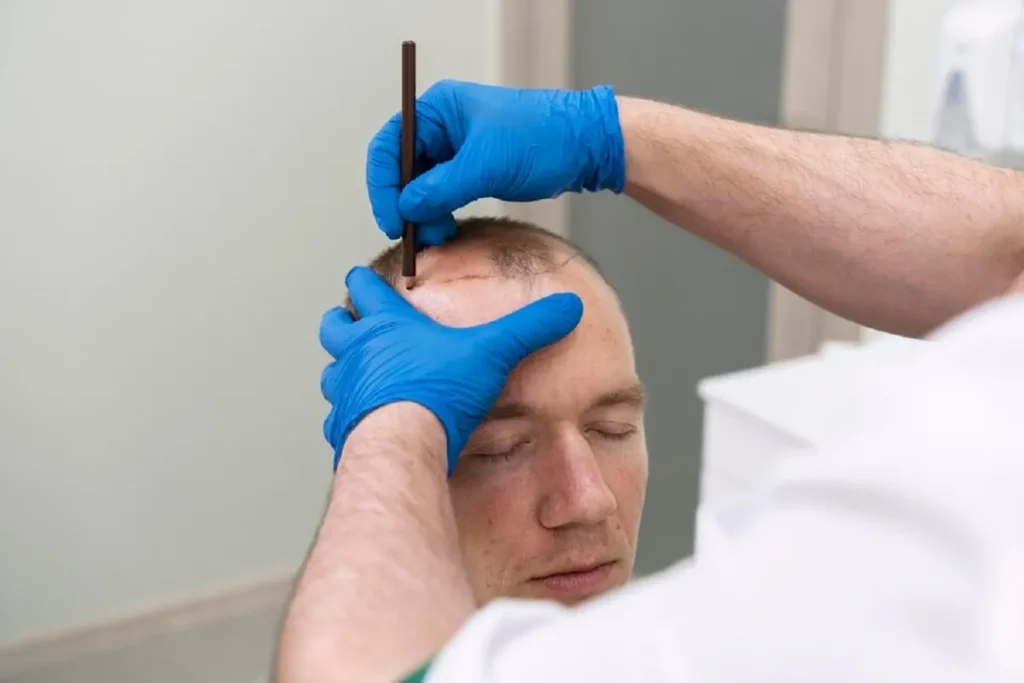
Many men worry about thinning hair, with male pattern baldness being the main reason. Studies show that 95 percent of hair loss in men comes from androgenetic alopecia.
By the time men are 35, about 65 percent have some hair loss. The bright side is that science has found many effective treatments. These treatments can stop, slow, and even reverse hair thinning. The global alopecia market is big, with options from FDA-approved drugs to advanced clinical solutions.
Key Takeaways
Understanding the science behind hair thinning is key to finding good solutions.
Male pattern baldness affects up to 50 percent of males, leading to progressive hair loss.
Clinically-proven treatments can help men get a full, healthy head of hair.
GoldCity Center offers top medical care and focuses on the patient.
Science-backed solutions offer hope for addressing hair loss.
Understanding Male Pattern Baldness

Male pattern baldness, or androgenetic alopecia, is a condition caused by genetics and hormones. It leads to hair thinning in men. The enzyme 5 alpha-reductase turns testosterone into DHT, a strong form that shrinks hair follicles over time.
The Science Behind Hair Thinning in Men
The role of testosterone in hair loss became more intriguing in the 1970s. A rare condition in the Dominican Republic showed how hormones affect male traits, including hair. Children raised as girls developed male genitalia during puberty.
The conversion of testosterone to DHT is key in male pattern baldness. DHT causes hair follicles to shrink, leading to thinner, shorter hairs and eventual hair loss. Knowing this is important for reversing hair thinning in males.
How Hair Loss Progresses: Statistics and Timelines
Hair loss can start as early as age 20. By age 50, about 85% of men experience significant hair loss. The rate of hair loss varies among individuals, but there are general statistics to follow.
Understanding hair thinning and hair loss progression can help men choose the right treatment. Whether hair thinning is reversible depends on several factors, including the extent of hair loss and the treatment’s effectiveness.
How to Stop Thinning Hair in Males: Evidence-Based Treatments

Men with thinning hair can find hope in treatments backed by science. These include FDA-approved drugs and advanced clinical solutions. They offer a wide range of options to fight hair loss.
FDA-Approved Medications
For male pattern baldness, FDA-approved treatments like minoxidil and finasteride are top choices. Minoxidil, sold as Rogaine or Theroxidil, is applied to the scalp. It helps grow hair and slow down loss. Finasteride, known as Propecia, is taken daily to block DHT, a hormone that causes hair thinning.
Studies show minoxidil and finasteride work well. They help grow hair and stop more loss. A dermatologist can help pick the right treatment for you.
Advanced Clinical Solutions
Platelet-rich plasma (PRP) therapy is a cutting-edge option for men. It involves injecting PRP into the scalp to boost hair growth. A 2024 study found a 25.09 hair increase per square centimeter, showing its promise.
Supportive Strategies for Healthier Hair
Medical treatments aren’t the only way to keep hair healthy. Eating well, managing stress, and avoiding heat styling also help. These habits support hair health.
Eat a diet full of vitamins and minerals for hair growth.
Use meditation or yoga to reduce stress.
Stay away from harsh chemicals and heat styling.
Combining these treatments with healthy habits can help men fight thinning hair. This approach aims for a fuller head of hair.
Conclusion: Taking Action Against Hair Loss
Men facing hair thinning can take charge by learning about the causes and trying proven treatments. The right steps can help fight thinning hair and even grow back some. This answers the question of whether hair can regrow after thinning.
To protect your hair, look into FDA-approved drugs, cutting-edge treatments, and healthy hair tips. A steady treatment plan and a healthy lifestyle can slow or stop hair loss. This way, men can learn how to save their hair.
Getting back a full, healthy head of hair can greatly boost confidence. By fighting hair loss, men can reveal their inner light and embrace their beauty. This journey leads to a more radiant and youthful look.
FAQ
What causes male pattern baldness?
Male pattern baldness, or androgenetic alopecia, is caused by genetics and hormones. DHT, a strong form of testosterone, plays a big role in shrinking hair follicles.
How can I regrow hair follicles?
It’s hard to regrow hair follicles, but some treatments can help. Platelet-rich plasma therapy and FDA-approved drugs like minoxidil and finasteride can slow hair loss and help new hair grow.
What are the most effective treatments for thinning hair?
The best treatments include FDA-approved drugs like minoxidil and finasteride. Platelet-rich plasma therapy and making healthy lifestyle choices also help.
Can hair loss be reversed naturally?
You can’t always reverse hair loss naturally, but some changes can help. Eating right, managing stress, and avoiding too much heat styling can make your hair healthier.
How much do hair loss treatments cost?
Treatment costs vary. FDA-approved drugs are usually cheaper. But, advanced treatments like platelet-rich plasma therapy can cost a lot, from hundreds to thousands of dollars.
Is hair thinning reversible?
Yes, hair thinning can be reversed with the right treatment. Using FDA-approved drugs, advanced treatments, and healthy habits can slow hair loss and help it grow back. Talking to a dermatologist can help find the best treatment.
How can I thicken my thinning hairline?
To thicken a thinning hairline, try FDA-approved drugs like minoxidil. Platelet-rich plasma therapy also works well. A healthy lifestyle, including a good diet and stress management, helps too.
Can stress cause hair loss?
Yes, stress can lead to hair loss. High stress levels raise cortisol, a hormone that harms hair follicles. Stress-reducing activities like meditation or yoga can help.
How can I save my thinning hair?
To save thinning hair, use FDA-approved drugs and advanced treatments. A healthy lifestyle, including a balanced diet and managing stress, also helps keep your hair healthy.
References
National Center for Biotechnology Information. Evidence-Based Medical Insight. Retrieved from https://pubmed.ncbi.nlm.nih.gov/9865198/


