

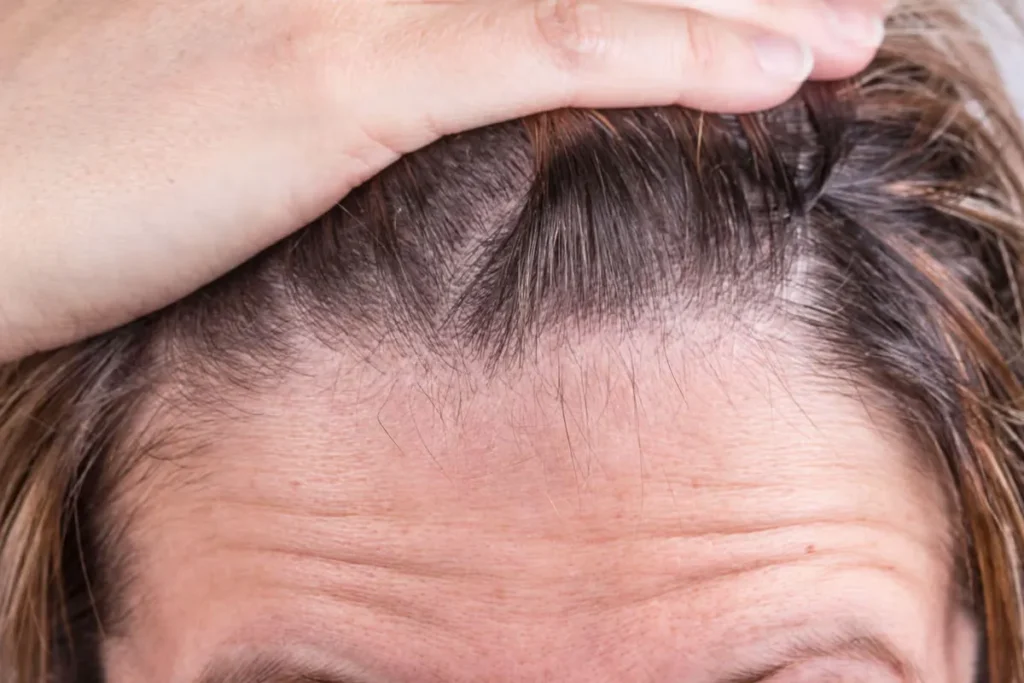
Hair thinning affects millions worldwide. Many don’t know the early signs. By age 35, about 65 percent of men start losing hair. This number jumps to 85 percent by age 50. Women also face hair thinning, with about 40 percent showing signs by age 50.
Spotting thinning hair early is key. Look for more hair falling out when you comb or wash. Also, notice if your hair looks thinner at the crown or along your part. If your scalp seems wider or you can’t get your hair as thick as before, these are signs too. Hair that’s finer or more brittle is another clue.
Knowing what does thinning hair look like and catching it early can help. With the right care and treatments, you can fight hair loss. Start your journey to a full head of hair today.
Key Takeaways
Identify the early signs of hair thinning for effective management.
Understand the differences between thinning hair and normal hair.
Recognize the key indicators of hair thinning, such as increased shedding and changes in hair texture.
Explore expert care and innovative treatments for hair thinning.
Take proactive steps towards maintaining a healthy and full head of hair.
Understanding Hair Thinning: A Common Concern

Hair thinning worries many people. It’s not just about looks; it affects self-esteem and life quality.
The Prevalence of Hair Thinning Across Age Groups
Hair loss is common, with age playing a big role. Men often start losing hair in their late teens or early twenties. Women notice it later, around menopause.
By 35, about two-thirds of American men have hair loss. By 50, this number jumps to 85%. Women start noticing hair loss later, but up to 40% do by menopause.
Early detection is key to fighting hair thinning. Spotting early signs means you can act fast. Look out for changes in hair texture, more shedding, or a wider part line.
Why Early Detection Can Help Prevent Further Loss
Finding hair thinning early lets you act quickly. This can slow down or even stop hair loss. Early detection means you can try different treatments, from creams to lifestyle changes.
Knowing why hair thins helps pick the right treatment.
Acting early can lead to better hair loss management.
Spotting hair thinning early empowers you to take action.
Being informed and proactive is the first step to fight hair thinning. It’s about empowering oneself with knowledge and controlling hair health.
How to Tell If Your Hair Is Thinning: The 7 Key Indicators

Wondering if your hair is thinning? There are seven key signs to look out for. Hair thinning can sneak up on you, but knowing these signs can help you act fast. This way, you can keep your hair looking great.
1. Excessive Shedding During Washing or Brushing
Excessive shedding, mainly when washing or brushing, is a common sign. Losing more than 100-150 strands a day is a red flag. To monitor your hair loss, count the strands you lose each day. If it’s more than usual, it’s time to investigate.
2. Noticeable Decrease in Overall Hair Volume
Seeing a drop in hair volume is another sign. If your hair feels limp or lifeless, it might be thinning. Using volumizing products can help, but if it doesn’t work, there’s a deeper issue.
3. Widening Part Line and More Visible Scalp
A wider part line and a more visible scalp are signs of thinning. As hair thins, the part line gets wider. Paying attention to changes in your part line can alert you to thinning early.
4. Difficulty Achieving Previous Hairstyles and Volume
Struggling to get the same hairstyles or volume you used to is a sign. Thinning hair can make styling harder. Consulting a professional stylist can help figure out if your hair is thinning and how to manage it.
Other signs include changes in hair texture, becoming finer or more brittle. Spotting these changes early can help you tackle the issue.
Monitor your hair shedding during daily routines.
Pay attention to changes in your hair’s volume and texture.
Notice if your part line is becoming wider.
Assess your ability to achieve your usual hairstyles.
By recognizing these signs and taking action, you can manage hair thinning. This helps keep your hair healthy and looking good.
Gender-Specific Thinning Patterns to Watch For
Men and women lose hair in different ways. Hormones and genes play big roles. Knowing these differences helps tackle hair loss better.
Male Pattern Thinning: Temples and Crown Areas
Male pattern baldness, or androgenetic alopecia, starts with a receding hairline. It also thins the crown. It’s often passed down and can be caused by a hormone change.
Common signs include:
A receding hairline, often forming an “M” shape
Thinning or balding at the crown of the head
Gradual loss of hair density over time
Female Pattern Thinning: Diffuse Loss Across the Scalp
Women usually see thinning all over the scalp, not just in spots. Hormones and genes also play a part.
Key indicators include:
A widening part line, making the scalp more visible
Overall decrease in hair volume and density
Thinning across the scalp, not just in specific areas
Conclusion
It’s important to spot the signs of hair thinning early. Look out for a lot of hair falling out when you wash or brush it. Also, notice if your hair seems less full than before.
Acting fast can really help with hair thinning. It might even stop or reverse it. By catching these signs early, you can start working towards a more beautiful you.
Knowing how hair thinning affects men and women differently is key. Men often see thinning at the temples and crown. Women experience thinning all over their scalp. Understanding these patterns helps you tackle your hair thinning better.
Being informed and taking action can change your hair care game. It’s a step towards having healthier, shinier hair. Knowing the signs of thinning hair helps you make better choices for your hair.
FAQ
What are the first signs of hair thinning?
Early signs of hair thinning include a lot of hair falling out when you wash or brush. You might also notice your hair looks thinner overall. A wider part line and trouble getting your hair to look as full as before are other signs.
How can you tell if hair is thinning?
Look for signs like a lot of hair loss, a receding hairline, or bald spots. In women, it’s about thinning hair all over the scalp.
What does thinning hair look like?
Thinning hair makes your scalp more visible, showing more around the part line or crown. It also means your hair looks less full overall.
How do I know if my hair is thinning?
Check for signs like a lot of hair falling out, a wider part line, or less hair overall. Looking at old photos can also show if your hair is thinner now.
What is the difference between thinning hair and normal hair?
Normal hair stays thick and full. Thinning hair loses density or volume, leading to more shedding and a visible scalp.
Are there different patterns of hair thinning for men and women?
Yes, men often see a receding hairline and bald spots at the crown. Women tend to have thinning hair all over their scalp.
Can hair thinning be reversed or treated?
Catching hair thinning early can help manage it. Treatments like medications, lifestyle changes, and good hair care can promote hair health and stop more loss.
How can I prevent further hair loss?
Keep a healthy lifestyle, use gentle hair products, and avoid too much heat styling. If you’re losing a lot of hair, get professional help.
What are the signs of thin hair?
Thin hair shows as a visible scalp, a lot of shedding, less hair overall, and hard styling.
How can I tell if my hair is thin or if it’s just a bad hair day?
Watch your hair over time. If you always see a lot of shedding, less volume, or a visible scalp, it’s likely thinning hair, not just a bad day.
References
National Center for Biotechnology Information. Evidence-Based Medical Insight. Retrieved from https://pubmed.ncbi.nlm.nih.gov/24566563/


