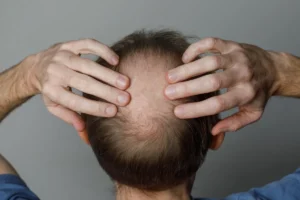
Many people worry when they start to lose hair from the front. It makes them think about why it’s happening. Studies show that genetics play a big role in male pattern baldness. About 80% of the risk comes from genes.
Male pattern baldness happens when hair follicles react to hormones. They start making thinner, shorter hairs. Eventually, these hairs stop growing. At GoldCity Center, we use the latest genetic research and skin care to help you with hair loss.
Key Takeaways
Genetics account for approximately 80% of male pattern baldness risk.
Male pattern baldness is influenced by multiple genetic and hormonal factors.
Understanding your genetic predisposition can help in addressing hair loss.
GoldCity Center offers personalized care combining genetic insights and dermatological expertise.
Early intervention can potentially slow down or mitigate hair loss.
The Genetic Basis of Hair Loss

Hair loss, like male pattern baldness, is often linked to genetics. Studies show that genes play a big part in who gets hair loss. Knowing how genetics affect baldness can help find new treatments.
The 80% Rule: How Twin Studies Reveal Genetic Influence
Twin studies have been key in showing how genes affect baldness. They found that about 80% of androgenetic alopecia risk comes from genetics. This condition happens when testosterone turns into DHT, shrinking hair follicles and causing hair loss.
Having a family history of baldness increases your risk. This doesn’t mean environment doesn’t matter. But genetics set the stage for it.
Understanding Androgenetic Alopecia as a Complex Trait
Androgenetic alopecia isn’t caused by one “baldness gene.” It’s a complex trait influenced by many genes. This makes predicting baldness tricky, as it involves many genetic factors.
Research has found several genetic signals linked to baldness risk. These signals are connected to genes that control androgen hormones and hair follicle function.
Understanding these genetic factors helps in finding targeted baldness treatments. By pinpointing specific genes, researchers can create therapies that tackle the condition’s root causes. This could lead to more effective treatments.
Is a Receding Hairline Hereditary? Hairline Genetic
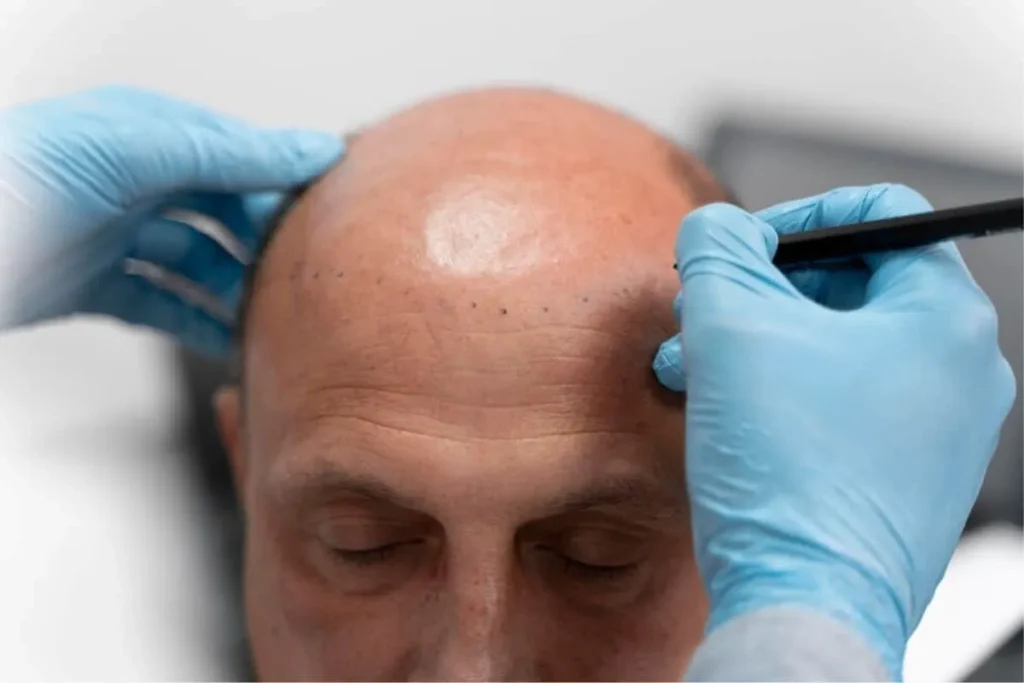
Figuring out if a receding hairline comes from your family is complex. It involves looking at the genetics of hair loss. A receding hairline is influenced by many genes, making it a trait that’s hard to pin down.
The Androgen Receptor (AR) gene is key in hair loss. It’s on the X chromosome, which women pass to their sons. This makes the mother’s side very important in passing on hair loss genes. Studies show that this gene affects how hair follicles react to DHT, a hormone that can harm hair.
The Role of the Androgen Receptor (AR) Gene
The Androgen Receptor gene controls hair growth. Changes in this gene can make hair follicles more sensitive to DHT. This sensitivity can cause hair follicles to shrink, a sign of balding.
The AR gene’s location on the X chromosome shows how important the mother’s side is in baldness. But, it’s important to remember that other genes from both parents also play a part in baldness risk.
DHT Sensitivity and Hair Follicle Miniaturization
DHT sensitivity is key in getting a receding hairline. Follicles that are too sensitive to DHT can lead to thinning hair. This is known as androgenetic alopecia.
The mix of genetics and hormones makes hair loss complex. Knowing about these factors helps understand why some people lose hair.
Looking into the genetics of hair loss helps people understand their risk. The Androgen Receptor gene and DHT sensitivity are key to this understanding.
The Maternal vs. Paternal Inheritance Debate
Studies have changed our view on whether baldness comes from mom or dad. For a long time, people thought it came from mom. But new research has made things more complicated.
Debunking the “Baldness Comes from Your Mother” Myth
The idea that baldness comes from mom is a persistent myth. It’s not the whole truth. Balding genetics are complex, involving more than just what mom gives you.
The X Chromosome Connection
New research shows that only 10% of balding risk comes from the X chromosome. This means most of the genetics come from both parents. The X chromosome is part of it, but not all.
Research Findings: 287 Genetic Signals from Both Parents
A big study with 52,000 men found 287 independent genetic signals linked to baldness. This shows baldness is complex, not just from one parent. The study’s findings are in the table below:
Knowing how genetics affect baldness helps us understand our risks. It shows we need a detailed approach to fight hair loss.
Conclusion: Understanding Your Genetic Predisposition to Hair Loss
Learning about the genetic causes of hair loss can help manage male pattern baldness. Studies show that hereditary baldness is influenced by many genes and hormones. While genetics are key, there are treatments and ways to manage hair loss.
Knowing about genetics in hair loss can lead to better hair care. People can explore treatments that fight the causes of baldness, like DHT. This hormone causes hair follicles to shrink. Understanding your genetic risk helps you make better hair care choices.
Using a complete hair care plan, including proven treatments and lifestyle changes, can fight hereditary baldness. This approach, combined with new treatments, can lead to thicker, healthier hair. It makes you feel more confident and radiant.
FAQ
Is a receding hairline hereditary?
Yes, genetics are a big part of male pattern baldness. About 80% of the risk comes from genes.
Does hair loss come from the mother’s side?
No, it’s not just from the mother. Both parents play a role in baldness. The androgen receptor gene is on the X chromosome, which comes from mom. But research shows both parents contribute to the risk of baldness.
Is male pattern baldness influenced by multiple genes?
Yes, it’s a complex trait. It’s influenced by many genetic and hormonal factors. There isn’t just one “baldness gene.”
What is the role of the androgen receptor gene in hair loss?
The androgen receptor gene affects how hair follicles react to DHT. DHT is a key factor in hair loss.
Is balding genetic?
Yes, twin studies show genetics account for about 80% of male pattern baldness risk.
Does baldness come from one parent or both?
Research shows many genetic signals linked to male pattern baldness. This means most of the genetic risk comes from both parents.
Is hair thinning genetic?
Yes, genetics are a big factor in hair thinning. Multiple genetic factors work with hormonal influences to cause hair loss.
Can understanding my genetic predisposition help with hair loss?
Yes, knowing your genetic risk can help. It lets you explore treatments and strategies for hair loss.
References
Is A Receding Hairline Hereditary? The Truth
https://pubmed.ncbi.nlm.nih.gov/11399536/