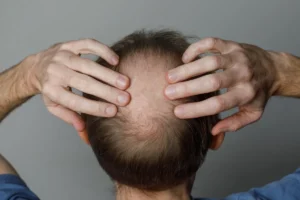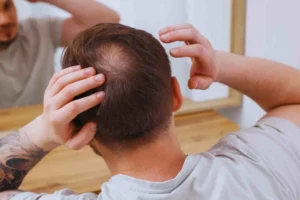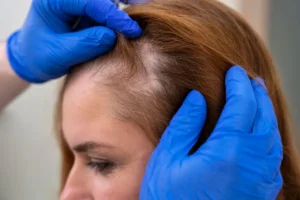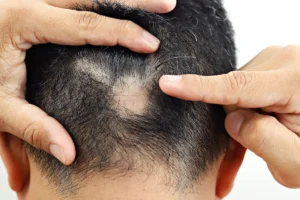
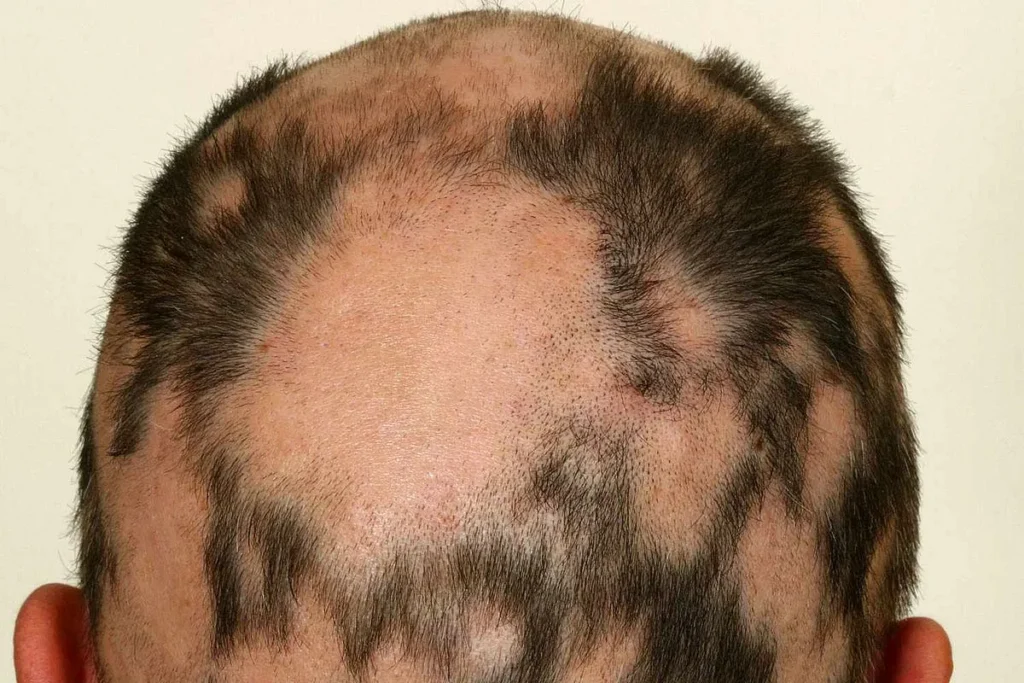
Alopecia areata causes sudden hair loss and affects about 2 percent of the global population. It’s not just about hair loss; it involves the immune system and damage to hair follicles.
Knowing if alopecia areata is an autoimmune disease is key for those with unexplained hair loss. By looking into the causes, we see the importance of treatments that help both body and mind.
Key Takeaways
Alopecia areata is a chronic autoimmune disorder affecting hair follicles.
It leads to non-scarring hair loss and affects approximately 2 percent of the global population.
Understanding the condition is key for effective treatments.
Treatments should tackle both physical and emotional sides.
Alopecia areata is more than just a cosmetic issue.
Understanding Alopecia and Its Various Forms
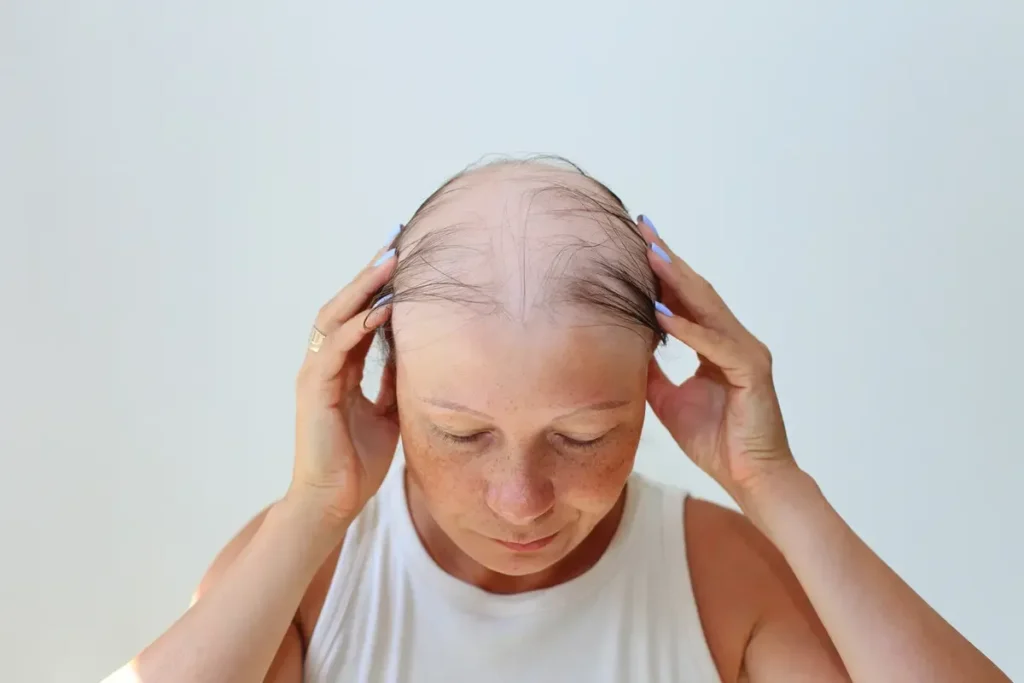
Alopecia is a complex autoimmune disorder that comes in different types. Each type has its own challenges. It can affect the scalp and other parts of the body, causing a lot of distress.
Alopecia areata often shows up as round or oval patches on the scalp and other areas. It can hit anyone, but usually starts in people in their 30s. Knowing about alopecia areata is key to finding the right treatment.
What is Alopecia Areata?
Alopecia areata is an autoimmune condition. It happens when the immune system attacks hair follicles, causing hair loss. The exact cause is not known, but genetics, environment, and the immune system all play a part.
People with alopecia areata might lose hair in patches. The loss can be unpredictable and vary in severity. In some cases, it can lead to losing all scalp hair or even all body hair.
Different Types of Alopecia
There are several types of alopecia, each with its own features:
Alopecia Areata: Characterized by patchy hair loss, often on the scalp.
Alopecia Totalis: Involves the loss of all hair on the scalp.
Alopecia Universalis: Complete loss of hair on the body, including the scalp, eyebrows, and other areas.
Alopecia Barbae: Hair loss limited to the beard area.
Diffuse Alopecia: Widespread thinning of hair across the scalp.
Knowing about these different types is important. It helps people understand their condition better and find the right treatment. Healthcare providers can give more specific advice and help when they know the type of alopecia someone has.
Is Alopecia an Autoimmune Disorder? The Science Explained
[Add image here]
Alopecia areata is a condition where the immune system mistakenly attacks hair follicles, leading to hair loss. This autoimmune response is when the body’s defense mechanism turns against its own cells. It results in hair loss on the scalp or other parts of the body.
The Immune System’s Role in Hair Loss
The immune system plays a key role in alopecia areata. In this condition, T-cells see hair follicles as foreign and attack them. This disrupts hair growth and leads to hair loss. The exact reasons behind this are being researched, but it’s clear the immune system’s imbalance is a big part of it.
Research shows that people with alopecia areata often have an immune response imbalance. This imbalance can be triggered by genetic predisposition and environmental factors.
Genetic and Environmental Triggers
Genetic and environmental factors both play a role in alopecia areata. Studies show that those with a family history of autoimmune diseases are more likely to get alopecia areata. Environmental triggers like viral infections or stress can also start the autoimmune response.
Understanding these triggers is key to finding effective treatments. By knowing the specific genetic and environmental factors, doctors can better manage the condition. They can also try to prevent it in people who are likely to get it.
Common Questions About Alopecia Areata
People often have many questions after finding out they have alopecia areata. This condition worries not just those who have it but also their families. It’s important to know what alopecia areata is to help answer these questions.
Is Alopecia Contagious or Communicable?
Many worry if alopecia areata can spread. Fortunately, it’s not contagious or communicable. This means you can’t catch it from someone else by touching or being near them.
“Alopecia areata is an autoimmune condition, not an infectious disease,” says experts. Knowing this helps clear up false beliefs and eases worries for those affected and their friends.
Can Alopecia Come and Go?
People also wonder if alopecia areata can change. Yes, it can. For some, it means losing hair and then growing it back again.
Experts say, “The course of alopecia areata can be unpredictable. Some might only have one episode, while others may have many.” This shows why ongoing support and management are key for those dealing with it.
In short, alopecia areata is tough, but knowing it’s not contagious and can change helps. By answering common questions, we hope to give those affected the confidence to face their condition.
Prevalence and Demographics of Alopecia
Alopecia areata is a common condition worldwide. It affects many people globally. Let’s look at who it impacts most.
Global Prevalence of Alopecia Areata
About 160 million people worldwide have alopecia areata. This autoimmune disorder can really affect someone’s self-image.
Prevalence Statistics
Age, Gender, and Ethnic Distribution
Alopecia areata can happen to anyone, at any age. But some groups are more likely to get it.
Gender Distribution: Women get alopecia areata more often than men. But it can happen to anyone.
Ethnic Distribution: Alopecia areata is more common in Asian, Black, and Hispanic people. This might be due to genetics.
Knowing who alopecia areata affects helps us help them. We can work on finding better treatments.
Conclusion
Understanding alopecia areata is key to managing it and improving lives. By diving into this autoimmune disorder, we learn about its forms and triggers. Research shows how genetics and environment play a role.
Preventing alopecia areata involves treatments like corticosteroids and immunotherapy. These help manage the condition, boosting confidence. By grasping alopecia areata’s complexities, people can shine despite its challenges.
As we learn more about alopecia areata, we get closer to universal beauty. By growing our knowledge, we empower those with alopecia areata. They can take charge of their condition and start a journey of evolving beauty.
FAQ
Is alopecia areata an autoimmune disease?
Yes, alopecia areata is an autoimmune disorder. The immune system attacks hair follicles, causing hair loss.
Is alopecia contagious or communicable?
No, alopecia areata is not contagious. It can’t be spread through touch or being near someone with it.
Can alopecia come and go?
Yes, alopecia areata’s effects can change. Hair loss may stop and start. Some see hair grow back, while others lose it more.
What causes alopecia areata in women?
The exact causes are not known. But it’s thought to be a mix of genetics, hormones, and environment that trigger an immune response.
How many people have alopecia worldwide?
About 147 million people worldwide have alopecia areata. It’s a common condition.
Is alopecia areata a rare condition?
Alopecia areata is not rare but not super common either. It affects many people globally, with varying prevalence.
What is the relationship between autoimmune disorders and alopecia areata?
Alopecia areata often goes with other autoimmune diseases. This suggests a common issue with the immune system.
Can alopecia areata be prevented?
There’s no known way to prevent it yet. But research is looking for triggers and prevention methods.
References
National Center for Biotechnology Information. Evidence-Based Medical Insight. Retrieved from https://pmc.ncbi.nlm.nih.gov/articles/PMC5761968/