

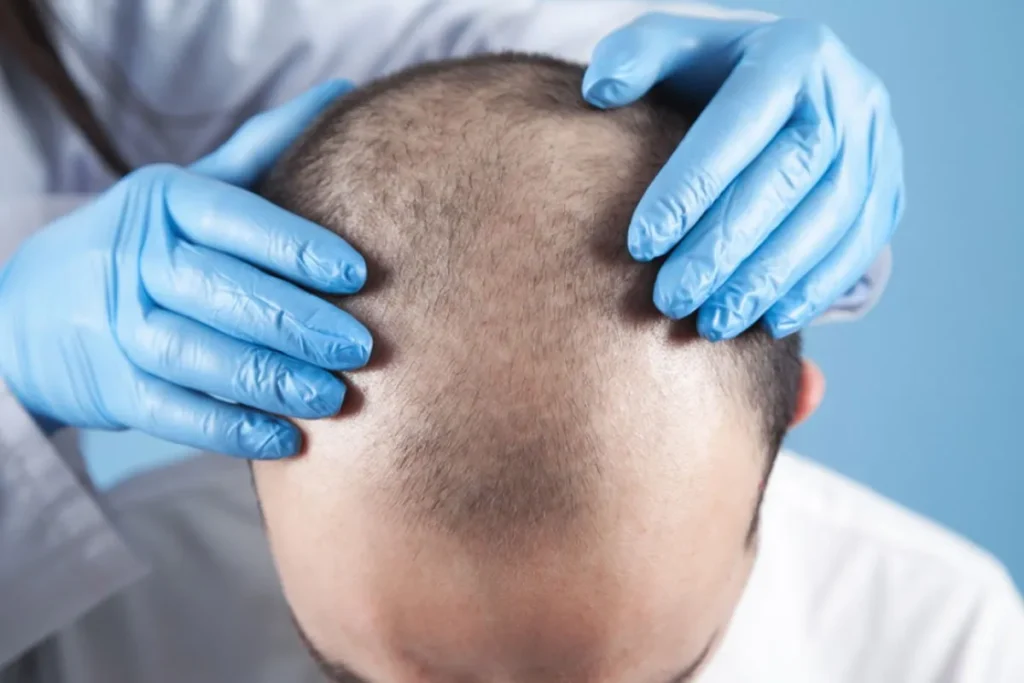
Many people think baldness is just a matter of family history. But, the truth about bald genetics is more complicated. Studies show that about 80 percent of male pattern baldness comes from genetic components.
The main cause of genetic hair loss is androgenetic alopecia. It’s triggered by hormones, like dihydrotestosterone (DHT). Knowing how genetics in baldness works can help you start fighting hair loss.
Key Takeaways
Genetic factors significantly influence baldness and hair thinning.
Androgenetic alopecia is the most common form of genetic hair loss.
Hormone sensitivity, specially to DHT, triggers androgenetic alopecia.
Understanding genetic predisposition can help in exploring treatment options.
GoldCity Center offers complete evaluation and tailored treatment plans.
The Science Behind Genetic Hair Loss

To understand genetic hair loss, we must explore androgenetic alopecia. It’s the most common hair loss condition. It’s caused by genetics, hormone levels, and aging.
What is Androgenetic Alopecia?
Androgenetic alopecia, or male/female pattern baldness, is caused by DHT sensitivity. DHT is a strong form of testosterone. This sensitivity makes hair follicles shrink, leading to thinner, shorter hairs and eventually, no hair growth. Genetics play a big role in how sensitive you are to DHT.
Hormones, like androgens, also matter a lot in androgenetic alopecia. Research shows the androgen receptor gene is key in male hair loss. This shows how genetics and hormones work together.
The 80% Heritability Factor
Studies say androgenetic alopecia has a 80% heritability rate. This means family history plays a big part in hair loss. It’s a complex inheritance with many genetic factors. Both mom and dad’s genes can influence it.
Genetic predisposition is a major risk factor for androgenetic alopecia.
Hormonal influences, like DHT sensitivity, are key.
Aging also helps the condition get worse.
Knowing the genetic and hormonal reasons for androgenetic alopecia helps in finding treatments. By understanding genetics in hair loss, people can make better choices to manage it.
Is Hair Thinning Genetic? The Research Evidence

Many studies show genetics play a big role in hair thinning. They found over 250 genetic spots linked to baldness.
Research has found key genes involved in hair loss. The androgen receptor gene on the X chromosome is most linked to baldness.
The Androgen Receptor Gene on the X Chromosome
The androgen receptor (AR) gene is on the X chromosome and is strongly linked to male pattern baldness. It affects how hair follicles react to androgens, which are hormones that can cause hair loss.
A study in a top scientific journal said, “The androgen receptor gene is a key regulator of hair growth and is implicated in the development of androgenetic alopecia.”
The 250+ Genetic Markers Associated with Hair Loss
Research also found over 250 genetic spots linked to hair loss. These markers help us understand the complex genetics of baldness.
Knowing these genetic factors helps people understand their risk of hair thinning and baldness. This knowledge empowers them to take better care of their hair.
Inheritance Patterns: Mother, Father, or Both?
Baldness isn’t just from mom; dad’s genes matter too. It’s a mix of genes from both sides of the family that affects hair loss.
The X Chromosome Connection
The X chromosome, from mom, is key in androgenetic alopecia. It has the androgen receptor gene, important for male baldness.
The Role of the X Chromosome: Men get their X chromosome from mom. This means genes for baldness come from her. But, dad’s genes also play a part.
Paternal Contribution to Baldness
The X chromosome isn’t the only factor in baldness. Dad’s genes also matter, with many linked to hair loss.
Understanding Paternal Influence: The Y chromosome from dad affects male traits, including hair loss. Other genes not on sex chromosomes also play a role. This shows how both parents’ genes work together.
In conclusion, baldness comes from both mom and dad’s genes. Knowing this helps us understand our risk and treatment options for hair loss.
Conclusion: Understanding Your Genetic Predisposition
Figuring out if male baldness is genetic is key to fighting hair loss. Research shows that hereditary baldness plays a big role. Both parents can pass on the risk of balding.
Many worry about inheriting baldness from their father or mother. Certain genetic markers can raise your risk of losing hair. Knowing your genetic risk is very important.
Even though balding can run in families, there are ways to fight it. Treatments like medical therapies and hair transplants are available. Understanding your genetic risk helps you take action early.
With this knowledge, you can find ways to bring back your hair’s natural beauty. You can regain your confidence. It’s possible to look radiant and timeless, even with genetic hair loss.
FAQ
Is balding inherited from my mother or father?
Balding isn’t just from one parent. Both mom and dad’s genes play a part. The androgen receptor gene, from mom, is key. But, other genes from both parents also affect hair loss risk.
Does hair loss come from the mother’s side?
No, hair loss isn’t just from mom. The X chromosome, from mom, has the androgen receptor gene. But, other genes from both parents also matter. So, it’s not just mom’s side.
Is male pattern baldness genetic?
Yes, male pattern baldness is genetic. It’s caused by many genes and hormones, like DHT.
Is hair thinning genetic?
Hair thinning can be genetic. It’s linked to androgenetic alopecia. Genes, like the androgen receptor gene, play a role. Knowing your genes can help with thinning hair.
Can I predict my likelihood of going bald based on my family history?
Predicting baldness isn’t exact. But, family history can give clues. If your family has baldness, you might too.
Are there any treatments available for genetic hair loss?
Yes, many treatments exist for genetic hair loss. Options include meds, laser therapy, and hair transplants. A doctor can help find the best treatment for you.
Can I stop or slow down genetic hair loss?
Stopping hair loss is hard, but you can slow it. A healthy lifestyle and treatments can help. Stress reduction and proven treatments also aid in hair health.
References
National Center for Biotechnology Information. Evidence-Based Medical Insight. Retrieved from https://www.ncbi.nlm.nih.gov/pmc/articles/PMC11305502/


