

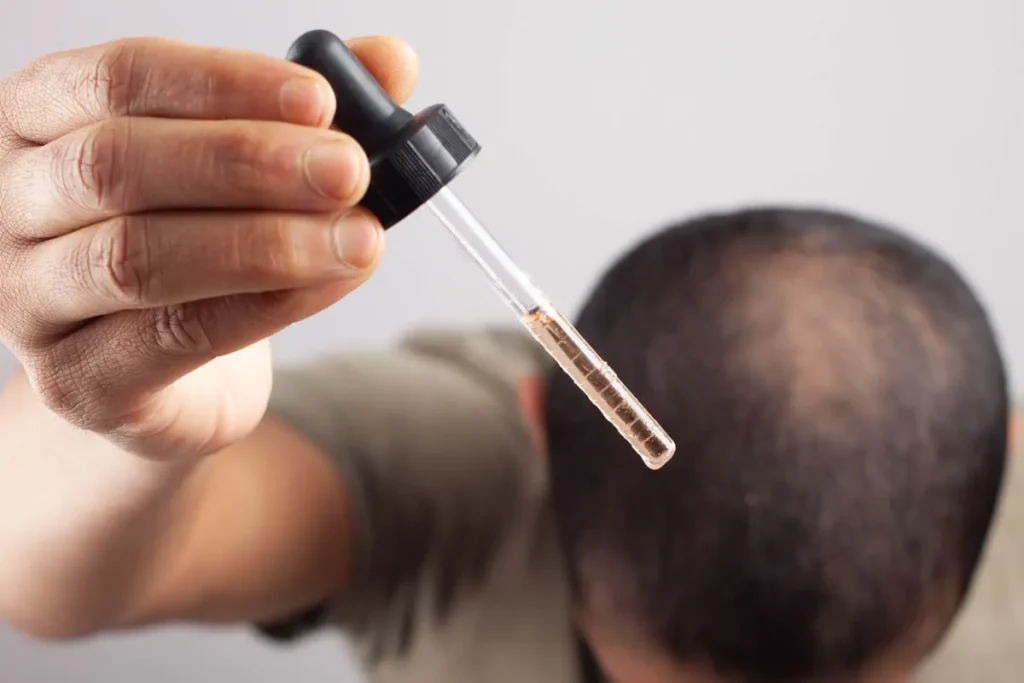
Unlock your inner glow and own your beauty with confidence. Minoxidil, a topical medication developed in 1987, is widely used for androgenic alopecia. This includes male and female pattern baldness.
The U.S. Food and Drug Administration (FDA) has approved minoxidil safety. It’s a topic of interest for those wanting to restore their hair’s natural vitality. While it’s generally safe, knowing its side effects is key for making informed choices.
When thinking about rogaine safety and effectiveness, weighing benefits against risks is important. This guide will look into minoxidil’s safety, helping you choose the best hair loss treatment.
Key Takeaways
Minoxidil is an FDA-approved topical medication for treating androgenic alopecia.
Understanding its side effects is vital for making informed decisions.
The safety of minoxidil varies with different formulations.
Knowing how to use it and being aware of risks is essential.
It’s wise to talk to a healthcare professional before starting treatment.
What is Minoxidil and Its Effectiveness

Exploring minoxidil’s role in fighting hair loss starts with its history. Minoxidil, known for its hair growth benefits, has an interesting story. This story shows its effectiveness.
History and Development
Minoxidil was first made to treat high blood pressure. But, it caused hair growth as a side effect. This led to it being used as a topical treatment for hair loss.
This change shows the drug’s versatility. It can help with different health issues. The shift from treating blood pressure to hair growth shows the pharmaceutical industry’s creativity.
How Minoxidil Works
Minoxidil boosts blood flow to hair follicles. This stimulates hair growth. Understanding this is key to seeing its hair loss treatment success.
Studies show both oral and topical minoxidil work well. Users can choose based on their needs. It’s a favorite for those dealing with balding.
Effectiveness for Hair Regrowth
Minoxidil is known for its hair regrowth benefits. Research shows it improves hair density and thickness. Below is a table with key findings on minoxidil’s effectiveness.
The data shows minoxidil is very effective for hair growth. Both topical and oral forms have good results. Knowing the side effects is important for safe use.
Is Minoxidil Safe? Understanding the Risk Profile

[Add image here]
Minoxidil is a common treatment for hair loss. People want to know if it’s safe. It’s important to know the risks and benefits.
Topical Minoxidil Safety
Topical minoxidil is usually safe for most people. Studies show only mild side effects. These include redness, itching, or scalp flaking.
These side effects are usually short-lived. They can be managed by using it correctly.
Key Safety Aspects of Topical Minoxidil:
Mild side effects
No systemic effects in most users
Redness, itching, or flaking
Oral Minoxidil Safety Considerations
Oral minoxidil has a different safety profile. It can cause fluid retention, dizziness, and blood pressure changes. This makes it important to use it under medical supervision.
In conclusion, minoxidil is generally safe, but it’s important to know the risks. Whether you choose topical or oral minoxidil, being informed helps you make the best choice for your hair.
Common Side Effects and Management
When thinking about using minoxidil for hair growth, knowing the side effects is key. Minoxidil is known to help with hair loss but can cause some common issues. It’s important to understand these side effects and how to handle them.
Frequent Adverse Reactions
Topical minoxidil can lead to hypertrichosis, itchy scalp, contact dermatitis, and erythema. These side effects might worry you, but knowing why they happen can help manage them.
Hypertrichosis, or too much hair, often happens where you apply minoxidil. Itchy scalp and contact dermatitis are reactions to the product. You can lessen these by changing how you apply it or talking to a doctor.
Managing Side Effects
To deal with minoxidil side effects, try adjusting the dose, changing how you apply it, or using other treatments. For example, using less or a weaker version can help with irritation.
Also, using mild shampoos and conditioners can help with scalp irritation. Sometimes, a doctor might suggest extra treatments to help with side effects.
When to Discontinue Use
While most side effects can be managed, some need you to stop using minoxidil. Severe reactions like intense itching, burning, or a lot of hair loss mean you should stop right away and see a doctor.
It’s important to think about the good and bad of minoxidil. For many, the benefits of growing hair are worth the side effects. But knowing what to expect is key for a good experience.
Understanding minoxidil’s side effects and how to manage them helps you make smart choices about treating hair loss. This way, you can have a safer and more effective treatment.
Conclusion
Minoxidil is a top hair loss treatment worldwide, known for its success in growing hair. It’s safe to use, making it a reliable option for those wanting thicker hair.
Knowing about rogaine safety and minoxidil safety is key for a good treatment outcome. Being informed about possible side effects helps you get the most from this hair loss treatment.
Your journey to a fuller head of hair begins now. Adding minoxidil to your daily care is more than fighting hair loss. It’s about starting a path to self-confidence and self-assurance. With minoxidil, you’re choosing a proven hair loss treatment that’s safe and works well.
FAQ
Is topical minoxidil safe for long-term use?
Topical minoxidil is usually safe for long-term use. But, it’s key to follow the dosage and application guidelines to avoid side effects.
What are the common side effects of using Rogaine (minoxidil) for hair loss?
Rogaine can cause itching, redness, and dry scalp. It can also lead to unwanted hair growth on the face and hands.
Can minoxidil 5% solution cause more side effects than the 2% solution?
Yes, the 5% solution might cause more itching and redness. But, it’s also more effective for some users.
Does topical minoxidil have any serious health risks?
Rarely, topical minoxidil can lead to serious issues like allergic reactions, chest pain, and rapid heartbeat. Always watch your body’s reaction and talk to a doctor if you notice any concerning symptoms.
How can I manage side effects while using minoxidil for hair regrowth?
Start with a lower concentration and apply as directed. Using a scalp serum or cream can help soothe irritation. If side effects don’t go away, seek advice from a healthcare professional.
Can I use minoxidil if I have sensitive skin?
If your skin is sensitive, start with the 2% solution. Gradually increase as your skin gets used to it. Always follow the application guidelines and watch your skin’s reaction.
Are there any interactions between minoxidil and other hair loss treatments?
Minoxidil can be used with other hair loss treatments. But, it’s important to talk to a healthcare professional to ensure safe and effective combinations.
How long does it take to see results from minoxidil treatment?
It usually takes 3-6 months to see results from minoxidil treatment. Consistent use is necessary to keep hair growing.
Can I stop using minoxidil once I’ve achieved desired hair regrowth?
Stopping minoxidil can cause hair regrowth to reverse. It’s best to keep using it as directed to maintain results.
Is minoxidil suitable for everyone, regardless of age or skin type?
Minoxidil is generally good for most adults. But, it’s not for children, pregnant or breastfeeding women, or people with certain medical conditions. Always check with a healthcare professional to see if it’s right for you.
References
National Center for Biotechnology Information. Evidence-Based Medical Insight. Retrieved from https://pmc.ncbi.nlm.nih.gov/articles/PMC10626207/


