

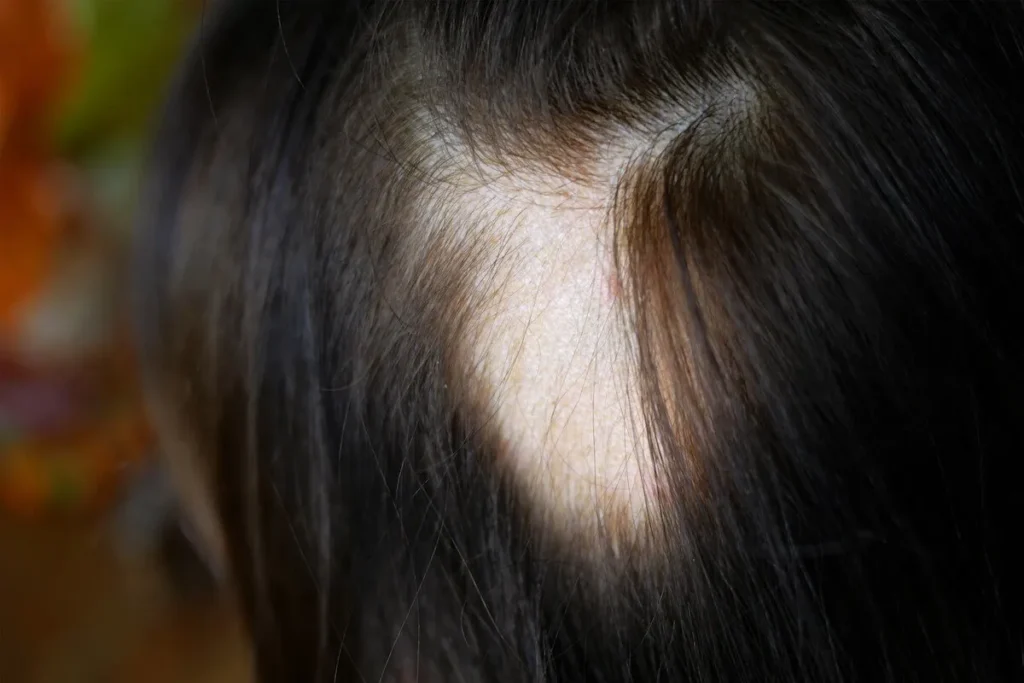
Alopecia affects millions worldwide, causing various forms of hair loss. This can be very distressing and affect one’s quality of life.
It’s important to know the different types of alopecia for effective treatment. This condition includes hereditary pattern baldness and autoimmune-driven patchy loss.
There are 7 major types of alopecia identified. Modern dermatology has many diagnostic and treatment options. These are tailored to each person’s needs.
Key Takeaways
Understanding the different types of alopecia is key for effective treatment.
Alopecia includes various hair loss forms, like hereditary and autoimmune types.
Modern dermatology offers tailored diagnostic and treatment options.
Effective management of alopecia requires a complete approach.
Several distinct forms of alopecia have been identified, each with its own characteristics.
Understanding Alopecia and Its Impact

Alopecia is more than just hair loss; it’s a complex medical issue. It has many causes and affects people differently. This can lead to various types of hair loss, some of which may not grow back.
What Is Alopecia?
Alopecia refers to hair loss on parts of the body where hair usually grows. It includes conditions like alopecia areata, which causes patches of hair loss. Other forms, such as alopecia totalis and universalis, result in complete hair loss on the scalp or entire body.
Common Causes and Risk Factors
Alopecia can be caused by genetics, aging, certain medications, and environmental factors. Smoking, other health conditions, and hormonal changes also play a role. Knowing these risk factors helps in finding the right treatment.
Genetics are a big factor in conditions like androgenetic alopecia. This is the most common type, where hair thins due to hormones.
Hormonal changes can also cause alopecia. For example, pregnancy or thyroid disorders can lead to hair loss. Stress and some medical treatments can also contribute to it.
Understanding the different types of alopecia and their causes is key. This knowledge helps in choosing the right treatment. Whether it’s medical treatment, lifestyle changes, or other options, knowing about alopecia is the first step to managing hair loss.
The Most Common Kinds of Alopecia

It’s important to know the different types of alopecia to fight hair loss well. Alopecia is not just one thing but many, each with its own reasons and signs.
Androgenetic Alopecia (Male and Female Pattern Baldness)
Androgenetic alopecia, or male/female pattern baldness, is a genetic hair loss. It happens to both men and women, but in different ways. It’s the most common kind of alopecia and is linked to hormones, like DHT, which harms hair follicles.
Alopecia Areata and Its Variations
Alopecia areata is when your immune system attacks hair follicles, causing patches of hair loss. It can happen at any age and affects both men and women the same. The condition can show up in different ways, like alopecia totalis (all hair loss on the scalp) and alopecia universalis (all hair loss on the body).
Telogen Effluvium
Telogen effluvium is a type of hair loss where you shed a lot of hair after stress, like a big illness or surgery. It’s temporary, and hair usually grows back once the stress is gone.
Traction Alopecia
Traction alopecia happens when hair follicles are pulled too tight, often from tight hairstyles like braids or ponytails. It’s a preventable hair loss by picking gentler hairstyles and reducing hair tension.
Conclusion: Understanding and Addressing Hair Loss
It’s key to know the different types of alopecia to find the right treatment. Each form of hair loss, like alopecia in women, needs a unique approach. This helps tackle the root cause effectively.
Groups like the National Alopecia Areata Foundation and Alopecia UK provide great help. They offer guidance and support for those with alopecia. By understanding alopecia, people can start to regain their confidence and find healing.
Knowing the type of hair loss you have is vital. Whether it’s androgenetic alopecia or alopecia areata, knowing the specifics is important. Looking at pictures of different hair loss types can also help identify your condition.
With the right knowledge and support, facing hair loss becomes easier. Start your journey to understanding and addressing hair loss today.
FAQ
What are the different types of alopecia?
Alopecia includes androgenetic alopecia, alopecia areata, and telogen effluvium. Traction alopecia is another type. Each has its own causes and symptoms.
What is alopecia areata?
Alopecia areata is an autoimmune disease. It causes hair loss on the scalp or body. The immune system attacks hair follicles, leading to hair loss.
What are the common causes of hair loss?
Hair loss can come from genetics, hormonal imbalances, stress, and medical conditions. Knowing the cause helps find the right treatment.
How many types of alopecia are there?
There are 7 main types of alopecia. These include androgenetic alopecia, alopecia areata, and telogen effluvium. Traction alopecia is another type.
What is traction alopecia?
Traction alopecia happens when hair follicles are under constant tension. This is often from tight hairstyles like braids or ponytails. It leads to hair loss, mainly around the hairline.
Can alopecia be treated?
Yes, there are treatments for alopecia. They depend on the type and cause. Treatments include medications, lifestyle changes, and alternative therapies.
What are the symptoms of telogen effluvium?
Telogen effluvium causes excessive hair shedding. This happens after stress or hormonal changes. Symptoms include thinning hair, mainly on the scalp.
How does androgenetic alopecia affect men and women?
Androgenetic alopecia, or male/female pattern baldness, causes hair thinning and loss. It affects both men and women. The pattern and severity differ.
Are there different forms of alopecia areata?
Yes, alopecia areata has different forms. These include alopecia totalis (total scalp hair loss) and alopecia universalis (total body hair loss).
References
National Center for Biotechnology Information. Evidence-Based Medical Insight. Retrieved from https://pubmed.ncbi.nlm.nih.gov/15186200/


