

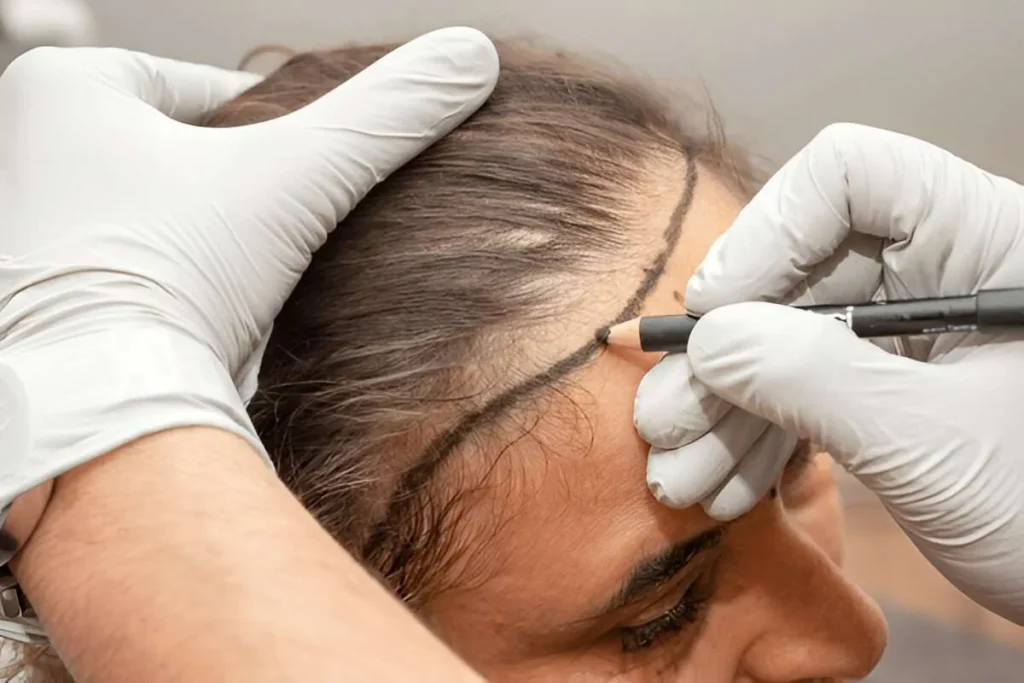
For women, hair loss can be a distressing experience. It can really affect their confidence and how they feel about themselves. Hair restoration surgery is now a popular choice for women. Between 2021 and 2024, the number of female patients for this surgery went up by 16.5%.
Now, thanks to new techniques and a focus on the patient, women have more options. They can get back their timeless beauty and confidence. With more women wanting hairline transplant procedures, they can now fight hair loss and shine from within.
Key Takeaways
Hair loss affects millions of women worldwide, impacting their confidence and overall quality of life.
The number of women undergoing hair restoration surgery has seen a significant surge in recent years.
Modern hair transplant techniques offer a safe and effective solution for women experiencing hair loss.
Women can now benefit from patient-centered approaches and cutting-edge technology in hair restoration.
A hair transplant can be a transformative journey towards regaining one’s natural beauty and confidence.
Understanding Female Hair Loss and Transplant Candidacy

Female hair loss affects millions of women worldwide, causing distress and impacting self-esteem. Women often experience diffuse thinning, mainly along the part line and crown. This is different from men’s hair loss, which often shows a clear recession at the frontal hairline.
This type of hair loss can be due to hormonal changes, genetic predisposition, and certain medical conditions. Understanding these factors is key to finding the right treatment.
Common Causes and Patterns of Hair Loss in Women
Hormonal changes play a big role in female hair loss. Conditions like polycystic ovary syndrome (PCOS), thyroid disorders, and menopause can affect hair growth. Genetic factors also play a part, similar to male pattern baldness.
Female pattern hair loss (FPHL) is characterized by thinning hair on the top and crown. It’s often caused by hormonal and genetic factors. Other medical conditions, such as autoimmune disorders and skin conditions, can also lead to hair loss in women.
Determining If You’re a Good Candidate for Hair Restoration

To see if you’re a good candidate for hair restoration, a thorough evaluation is needed. This includes checking the extent and pattern of your hair loss and your overall health. Your age, the availability of donor hair, and any medical conditions will also be considered.
Meeting with a qualified hair restoration specialist is key. They will examine your scalp, discuss your medical history, and explain the treatment options that fit your needs.
Benefits and Limitations of Surgical Hair Restoration for Women
Surgical hair restoration is a promising solution for women with significant hair loss. It involves transplanting healthy hair follicles from the donor area to the thinning areas. One of the main benefits is that it can provide natural-looking, permanent results.
But, it’s important to know the limitations. The success of the procedure depends on several factors, including the quality of the donor hair and the surgeon’s skill. Women may need more precise planning and graft placement to achieve the desired results.
By understanding hair loss causes, determining candidacy, and knowing the benefits and limitations of surgical hair restoration, women can make informed decisions. This knowledge helps women take control of their hair loss and regain their confidence.
The Ladies Hair Transplant Process Explained
Starting your journey to a fuller head of hair means understanding the transplant process. For women, this involves several key steps and considerations to achieve the best results.
FUE vs. FUT: Choosing the Right Technique
Women have two main techniques for hair transplantation: Follicular Unit Extraction (FUE) and Follicular Unit Transplantation (FUT). FUE is a method where hair follicles are taken one by one from the donor area without removing skin. It’s chosen for its less invasive nature and quicker recovery.
FUT involves removing a thin strip of skin with hair follicles. These are then dissected and transplanted.
FUE is used in about 66.2% of all procedures worldwide. It’s often preferred by women because it’s less invasive. Women usually need fewer grafts, between 1,000 to 1,500, making FUE a better option for many.
What to Expect During Your Consultation
Your first consultation will assess if you’re a good candidate for a hair transplant. You’ll discuss your hair loss, donor hair quality, and what you hope to achieve.
Your surgeon will decide the best technique for you, whether it’s FUE or FUT. They’ll also give you a personalized treatment plan. This is your chance to ask questions and understand the process, recovery, and expected results.
The Procedure Day: Step-by-Step Breakdown
On the day of the procedure, several steps will be taken to restore your hair. Here’s what happens:
Preparation: The donor and recipient areas are cleaned and prepared.
Anesthesia: Local anesthesia is given to ensure you’re comfortable during the procedure.
Extraction/Removal: Hair follicles are extracted (FUE) or a strip is removed (FUT).
Dissection: Follicles are dissected into individual grafts.
Recipient Site Creation: Tiny incisions are made in the recipient area.
Transplantation: Grafts are placed into the recipient sites.
Knowing these steps and techniques helps you make a well-informed decision. By choosing the right method and working with an experienced surgeon, you can get a natural-looking, fuller head of hair.
Conclusion: Recovery, Results and Making Your Decision
Getting natural-looking results from female hair transplants needs careful planning. Women often want to fill in their hair, not just get a new hairline. So, picking the right method, like FUE hair transplant for women, is key.
After a transplant, you might see swelling, bruising, and tenderness. The transplanted hairs may fall out before growing back. Knowing what to expect during recovery helps you decide if hair restoration surgery is right for you.
Thinking about hair grafting for women or other options? It’s important to understand the pros and cons. This way, women can reveal their natural beauty and gain confidence. They can achieve a radiant glow and timeless beauty through luxury transformation.
FAQ
What is a hair transplant for women?
A hair transplant for women moves hair follicles from one part of the body to the thinning scalp. This makes the hairline look fuller and more natural.
Can women have hair transplants?
Yes, women can get hair transplants. This surgery is not just for men. It’s also for women who lose hair for different reasons.
What are the common causes of hair loss in women?
Hair loss in women comes from many sources. Genetics, hormonal changes, stress, medical issues, and styling damage are common causes.
How is candidacy for hair restoration determined for women?
To see if a woman is a good candidate for hair restoration, a detailed consultation is needed. This checks the hair loss, the quality of donor hair, and the person’s health.
What is the difference between FUE and FUT hair transplant techniques?
FUE takes single follicles from the donor area. FUT removes a strip of scalp, then cuts it into follicles.
What should I expect during a hair transplant consultation?
In a consultation, your scalp will be examined. You’ll talk about your hair loss history. The doctor will explain the best technique, what to expect, and possible risks.
How long does a hair transplant procedure take?
The time for a hair transplant varies. It depends on the method, the number of grafts, and the case’s complexity. It usually takes a few hours to a whole day.
What is the recovery process like after a hair transplant?
After a transplant, your scalp might be sore and swollen. The new hair will fall out in a few weeks. New growth starts a few months later.
Are the results of a hair transplant for women permanent?
Yes, hair transplant results are usually permanent. The hair comes from areas that don’t usually go bald.
Can I undergo a frontal female hair transplant?
Yes, frontal hair transplants are common for women. They aim to restore the hairline and improve overall hair appearance.
How do I choose the right surgeon for my hair transplant?
Choosing the right surgeon means looking at their experience with women’s hair transplants. Check their before-and-after photos. Also, have a detailed consultation to see if their approach fits your needs.
References
National Center for Biotechnology Information. Evidence-Based Medical Insight. Retrieved from https://www.ncbi.nlm.nih.gov/pmc/articles/PMC4458936/


