

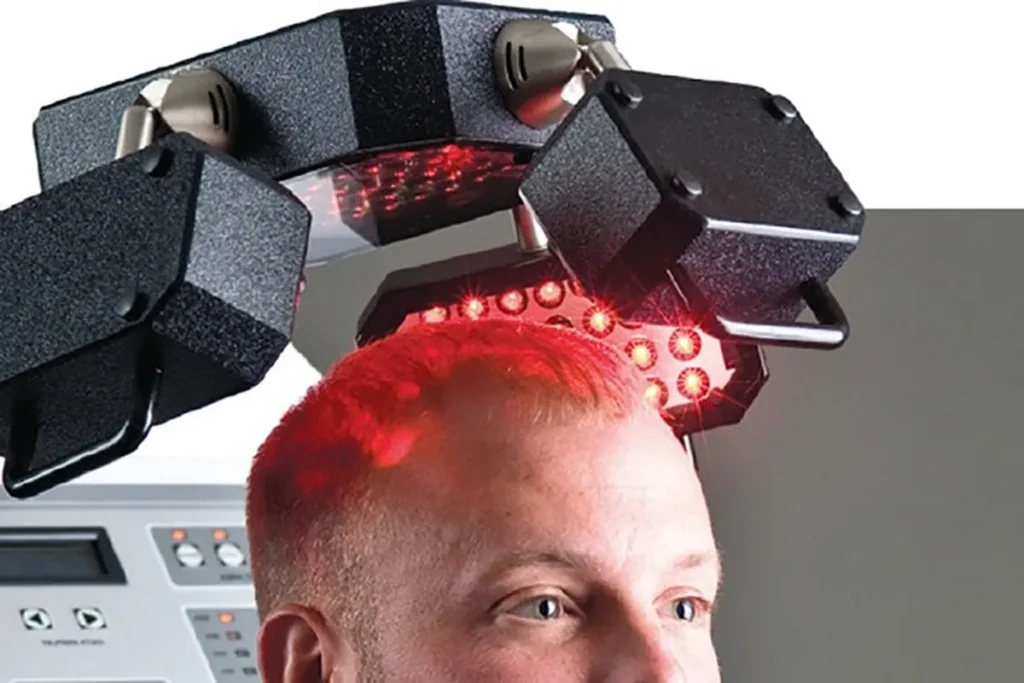
Discover a luxury transformation with the latest hair regrowth technology. Recent studies show that low-level laser therapy boosts natural hair growth. It’s a proven, evidence-based way to manage hair loss.
Many FDA-approved devices have shown great results. They improve hair density and thickness. This non-invasive method is gaining popularity for those with thinning or early hair loss.
Key Takeaways
Laser therapy stimulates natural hair regrowth.
FDA-approved devices demonstrate significant improvements.
Clinically recognized treatment for hair loss management.
Non-invasive and effective for progressive hair thinning.
Improves hair density and thickness.
Understanding Laser for Hair Growth: Science and Evidence

LLLT, or Low-Level Laser Therapy, is key in laser phototherapy for hair loss. It uses specific wavelengths to help hair grow back. This treatment is non-invasive and has shown promise in making hair thicker and fuller.
What is Low-Level Laser Therapy (LLLT)?
Low-Level Laser Therapy (LLLT) is a non-invasive, pain-free way to help hair grow. It’s believed to make hair thicker and promote growth by boosting activity in hair follicles. LLLT devices send out red to near-infrared light, which is thought to be best for hair growth.
The Photobiomodulation Process (630-950 nm Wavelengths)
The photobiomodulation process is key to LLLT’s success. It uses red to near-infrared light to wake up mitochondria in hair follicle cells. This boosts energy production, helping hair grow by moving it from a resting to a growth phase. The 630-950 nm wavelengths are chosen for their ability to reach the scalp and hair follicles.
Clinical Research and Effectiveness Data
Many studies have looked into LLLT’s effectiveness in hair growth. Clinical trials have shown it can increase hair density and promote growth in both men and women with hair loss. A systematic review found LLLT significantly improves hair growth with few side effects.
Your hair can get a glow-up with laser phototherapy for hair loss. Knowing the science behind LLLT helps you decide if it’s right for your hair care routine.
Step-by-Step Guide to Using LLLT Devices Effectively

To get the most out of LLLT for hair loss, you need to know about the different devices, how to use them, and safety tips. By owning your beauty, you can start a journey to grow your hair back. It’s important to make smart choices about your treatment.
Choosing the Right Device Type
LLLT devices come in many forms, like helmets, combs, caps, and laser hair growth devices. Each type has its own benefits and fits different needs and preferences.
Laser Caps and Helmets: These devices let you treat your scalp without using your hands. They cover a big area and are great for treating many spots at once.
Laser Combs: These are easy to carry and let you target specific spots. They’re perfect for those who need to focus on certain areas of hair loss.
When picking a device, think about the size of the area it covers, how easy it is to use, and how many laser diodes it has. A device with more diodes can treat more area and might work better.
Proper Treatment Protocol and Frequency
Using LLLT correctly is key to growing your hair. Most devices say to use them several times a week. Each session should last 15 to 30 minutes.
Follow the treatment plan given by the maker.
Stick to your treatment schedule to get the best results.
Think about using LLLT with other hair growth treatments to get even better results.
Remember, it can take months to see results from LLLT.
Safety Considerations and Best Practices
LLLT is usually safe when used right. But, there are some safety tips and best practices to keep in mind:
Always follow the maker’s instructions for use and care.
Avoid shining the laser light in your eyes.
Don’t use LLLT devices on skin with active infections or cancerous spots.
By following these guidelines, you can avoid risks and get the most from your LLLT treatment.
Tracking Progress and Managing Expectations
It’s important to track your progress to see if LLLT is working. Take photos and measurements regularly to see changes in hair density and growth.
It’s also key to manage your expectations. LLLT is a long-term effort, not a quick fix. Stay committed to your treatment plan, and you’ll get the hair you’ve always wanted.
Conclusion: Optimizing Your Laser Therapy Hair Regrowth Results
Laser therapy is now recognized as a treatment for hair loss. Low-Level Laser Therapy (LLLT) devices are showing great promise in helping hair grow. By understanding how LLLT works, you can see big improvements in your hair.
LLLT devices, like cold laser for hair loss, send specific light to hair follicles. This light helps hair grow. Studies show LLLT can make hair thicker and reduce shedding.
Choosing the right LLLT device and following a treatment plan is key. Being consistent and patient is important. Laser therapy for hair growth takes time. But with the right approach, you can get a full head of healthy hair.
Adding LLLT to your hair care routine is a great first step. It has proven results and more evidence is coming. Laser treatment for hair loss is a good choice for those wanting to bring back their hair’s natural beauty.
FAQ
What is Low-Level Laser Therapy (LLLT) and how does it work for hair growth?
LLLT, also known as laser phototherapy or cold laser therapy, is a non-invasive treatment. It uses low-level laser or light-emitting diodes to stimulate hair growth. The photobiomodulation process involves the absorption of light by hair follicles.
This increases blood flow, promotes cellular activity, and stimulates hair growth.
Is laser therapy for hair loss effective?
Yes, laser therapy for hair loss is clinically proven to be effective. Studies have shown that LLLT can increase hair density and promote hair growth. It also reduces shedding.
Meta-analyses have confirmed the efficacy of LLLT in treating androgenetic alopecia.
How often should I use an LLLT device for hair growth?
The frequency of LLLT treatment varies. It depends on the device and individual needs. Typically, treatments are recommended 2-3 times a week.
Sessions last 15-30 minutes. Consistency is key to achieving optimal results.
What are the benefits of using laser therapy for hair regrowth?
Laser therapy for hair regrowth offers several benefits. It increases hair density and improves hair texture. It also reduces shedding.
It is a non-invasive, pain-free, and relatively low-cost treatment option.
Can I use LLLT devices at home?
Yes, there are many LLLT devices available for at-home use. These include caps, helmets, and combs. When choosing a device, look for one that is FDA-cleared.
It should have a proven track record of effectiveness.
How long does it take to see results from laser therapy for hair growth?
Results from laser therapy for hair growth can vary. But most people start to see improvements within 3-6 months. Consistency and patience are essential.
LLLT is a gradual process that requires ongoing treatment.
Is laser therapy for hair loss safe?
Yes, laser therapy for hair loss is generally considered safe. It is safe when used as directed. It’s essential to follow the manufacturer’s guidelines.
Consult with a healthcare professional if you have any underlying medical conditions.
Can laser therapy be used in conjunction with other hair loss treatments?
Yes, laser therapy can be used in combination with other hair loss treatments. These include medications, supplements, or platelet-rich plasma (PRP) therapy. Consult with a healthcare professional to determine the best treatment plan for your individual needs.
Does laser light therapy work for hair growth in both men and women?
Yes, laser light therapy can be effective for both men and women experiencing hair loss. Studies have shown that LLLT can promote hair growth and increase hair density in both male and female patients.
References
Laser For Hair Growth: Powerful New Results
https://pmc.ncbi.nlm.nih.gov/articles/PMC3944668/


