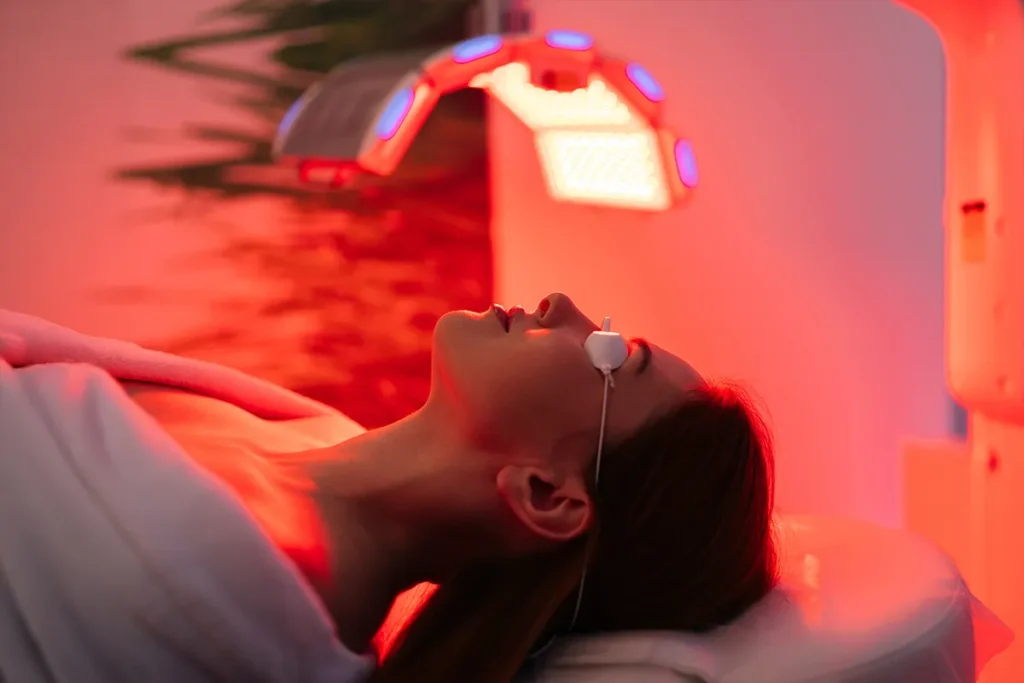
Millions face hair loss every day. But, a real solution has been found: red light therapy. It’s backed by science and has shown to grow hair by 35-51 percent in clinical trials.
Using low-level light therapy (LLLT), people can get healthier, shinier hair. It works by using light energy to wake up hair follicles. This makes hair grow by boosting ATP production and starting hair growth.
Key Takeaways
Red light therapy is a scientifically supported treatment for androgenetic alopecia.
LLLT stimulates hair follicles through photobiomodulation.
Clinical research demonstrates 35-51 percent hair regrowth with red light therapy.
Red light therapy is a non-invasive, evidence-based alternative to conventional treatments.
FDA clearance has been earned for low-level laser therapy (LLLT).
The Science Behind Light Therapy for Hair Loss

Discover how low-level light therapy (LLLT) can help with hair growth. LLLT, also known as red light therapy, uses red or near-infrared light to boost cell activity. It’s a non-invasive treatment for hair loss, using devices that emit red light in the 630–670 nanometer range.
What is Low-Level Light Therapy (LLLT)?
LLLT is a treatment that’s getting a lot of attention for hair growth. It uses low-level laser or LED lights to stimulate the scalp. This helps hair follicles grow longer and stay active longer. It’s a non-invasive, pain-free option for those losing hair.
How Photobiomodulation Stimulates Hair Follicles
Photobiomodulation is the science behind LLLT. It works by using light to boost energy in cells. This boosts hair follicles, leading to thicker, fuller hair.
Optimal Wavelengths for Maximum Effectiveness
Research shows certain light wavelengths are better for hair growth. The 650-nanometer red light is key for stimulating hair follicles. Studies confirm it helps hair grow longer and stay active longer, increasing hair count.
A major study found a 39% increase in hair count after 16 weeks of LLLT. No side effects were reported. This proves LLLT is a good option for hair loss.
Clinical Evidence and Treatment Comparison

Red light therapy for hair loss has strong clinical backing. It’s a non-invasive method that has been studied a lot. This gives us a clear picture of how well it works.
Research Results: 39% Increase in Hair Count
Studies show red light therapy can really help hair grow. A key study in Lasers in Surgery and Medicine found a 39% increase in hair count for those treated with it. This shows LLLT could be a good choice for those with androgenetic alopecia.
LLLT works by waking up hair follicles. This makes hair grow thicker and healthier over time.
FDA-Cleared Devices: Helmets, Combs, and Caps
The FDA has approved several LLLT devices for hair loss. These include helmets, combs, and caps. They make it easy to get red light therapy at home.
Helmets: Cover the whole scalp for full treatment.
Combs: Portable and great for specific areas.
Caps: Fit snugly and are easy to use.
When picking an FDA-approved device, think about treatment time, intensity, and light wavelength.
LLLT vs. Minoxidil and Finasteride
Minoxidil and finasteride are well-known hair loss treatments. Minoxidil is applied to the scalp, and finasteride is taken orally. Both can slow hair loss and help hair grow.
Red light therapy can be used with these treatments. Research shows using LLLT with minoxidil or finasteride can work better than using them alone.
Knowing the science behind hair loss treatments helps make better choices. Red light therapy is a promising option. It’s proven to work and is easy to use.
Conclusion: Is Red Light Therapy Right for Your Hair Loss?
Red light therapy is a luxurious way to improve your hair care. It’s also known as low-level light therapy (LLLT) or photobiomodulation (PBM). Studies show it can make your hair grow and get thicker.
Before trying red light therapy, talk to a dermatologist. They can help figure out if it’s right for you. It’s a safe, non-invasive way to make your hair look better.
Red light therapy is safe when done by experts. The light is gentle and won’t hurt your skin. It’s also been shown not to cause cancer. So, it’s a great way to get healthier, shinier hair.
FAQ
Does red light therapy actually stimulate hair growth?
Yes, red light therapy is proven to boost hair growth. It increases blood flow and energizes cells. This leads to healthier, more radiant hair.
What is low-level light therapy (LLLT) and how does it work?
LLLT is a non-invasive treatment using red light to wake up hair follicles. It promotes healthy hair growth through photobiomodulation. It’s a game-changer for those wanting to restore their hair’s natural beauty.
Is red light therapy effective for hair loss treatment?
Clinical trials show a 39% increase in hair count with LLLT. It’s a results-driven solution for those looking to restore their hair’s natural beauty.
How does LLLT compare to established treatments like minoxidil and finasteride?
LLLT is compared to established treatments to help individuals make informed choices. As a friendly expert, I guide you through the complex world of hair loss treatments.
Can red light therapy cause cancer cells to grow?
There’s no conclusive evidence that red light therapy causes cancer cells to grow. It’s generally considered safe and non-invasive.
What are the optimal wavelengths for maximum effectiveness in LLLT?
The best wavelengths for LLLT are in the red light spectrum. Using devices with these wavelengths can maximize effectiveness.
Are there FDA-cleared devices available for LLLT?
Yes, there are FDA-cleared devices for LLLT. These include helmets, combs, and caps for treatment.
Is red light therapy a long-term solution for hair loss?
Red light therapy can be a long-term solution for hair loss. Ongoing treatment can maintain results and promote continued hair growth.
References
National Center for Biotechnology Information. Evidence-Based Medical Insight. Retrieved from https://pubmed.ncbi.nlm.nih.gov/24078483/


