

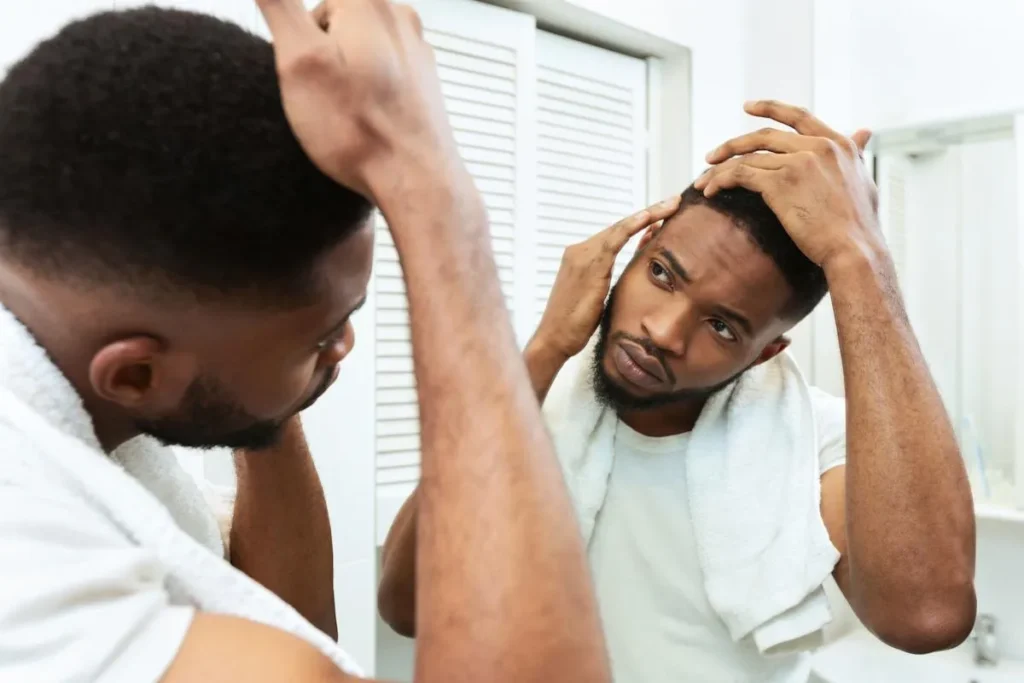
More than half of women notice hair thinning or loss during menopause. Yet, many don’t know it’s a normal part of the hormonal shift.
Menopausal hair thinning is different from random hair loss. It’s caused by changes in estrogen and androgen levels. Modern science has proven remedies to help regain your hair’s vitality and confidence.
GoldCity Center offers top-notch dermatological care for this issue. They focus on luxury transformation and timeless beauty. Women can find their inner glow and embrace their beauty.
Key Takeaways
Up to 52.2% of postmenopausal women experience female pattern hair loss.
Hormonal changes during menopause affect hair growth.
Modern medical science offers proven remedies to address hair thinning.
GoldCity Center provides top dermatological care.
Restoring hair vitality can boost confidence and overall well-being.
Understanding Menopausal Hair Loss

Menopausal hair loss is common and caused by hormonal changes. These changes affect hair growth and density as women enter menopause.
The Hormonal Connection
The transition before menopause can last up to 10 years. It involves more androgens and less estrogen. The drop in estrogen affects hair follicles, leading to thinner hair and changes in texture. Androgens, or male hormones, can also cause hair loss in women, when estrogen levels drop.
The balance between estrogen and androgens is key for healthy hair. When estrogen levels fall, androgens can cause hair follicles to shrink. This results in finer, shorter hairs.
Common Types and Statistics
Female pattern hair loss, or androgenic alopecia, is common during menopause. It causes thinning hair on the top and crown. About 40% of women notice hair loss by menopause.
Knowing about hair loss during menopause is key. By understanding hormonal changes and their effects, women can find ways to stop hair loss.
7 Proven Menopausal Hair Loss Remedies

Women often see hair thinning during menopause. But, there are treatments that can help. Knowing the right remedies can make a big difference.
1. Topical Minoxidil Solutions
Topical minoxidil is a key treatment for menopausal hair thinning. Clinically proven to boost hair growth, it’s available without a prescription. It’s important to use it as directed for best results.
Many women choose topical minoxidil for thinning hair from menopause. Regular use can improve hair density and scalp health.
2. Low-Dose Oral Minoxidil
Some women may prefer or need low-dose oral minoxidil instead. It’s effective for those with more severe hair loss.
Oral minoxidil stimulates hair follicles and promotes a healthier scalp. Always talk to a doctor about the right dose and watch for side effects.
3. Hormone Replacement Therapy (HRT)
Hormone Replacement Therapy (HRT) is another good option for menopausal hair loss. HRT replaces hormones that drop during menopause. It helps with hair loss and other symptoms too.
HRT can reduce hair thinning and improve overall health. But, it’s important to discuss the pros and cons with a doctor.
4. Anti-Androgen Medications
For hair loss due to hormonal imbalances, anti-androgen medications can help. These drugs block androgens, which can cause hair thinning.
Anti-androgen treatments are used when other options don’t work. It’s key to work with a doctor to see how well it works and make changes as needed.
Supporting Strategies for Healthier Hair
During menopause, hair health can become a concern. But, by adding specific dietary and stress management techniques, women can support their hair’s natural vitality.
Hair-Friendly Diet Choices
A well-balanced diet rich in essential nutrients is key for healthy hair. Nutritional deficiencies can make hair thinning and loss worse. Foods high in omega-3 fatty acids, zinc, and biotin are great for hair.
Nutritional Tips:
Eat foods high in antioxidants like berries and leafy greens.
Choose nuts and seeds for healthy fats and proteins.
Go for lean proteins like poultry and fish.
Stress Management and Hair Care Practices
Stress can lead to hair loss, making stress management key. Yoga, meditation, and deep breathing exercises can help lower stress.
Hair Care Tips:
Use gentle, sulfate-free shampoos.
Avoid too much heat styling.
Get regular hair trims to prevent split ends.
By combining a hair-friendly diet with stress management and gentle hair care, women can keep their hair healthy during menopause.
Conclusion
Understanding why hair loss happens during menopause is key. By looking into treatments like minoxidil and hormone therapy, women can fight hair loss. This is the first step to getting your hair back.
Talking to a doctor or dermatologist can help. They can give advice that fits your hair needs. This way, you can find a solution to thinning hair and shine brighter.
Eating right, managing stress, and being gentle with your hair also helps. By doing these things, you can stop hair loss and have thicker, shinier hair. So, let your beauty shine – your hair is waiting.
Take care of your skin and hair by making smart choices. With the right attitude and support, you can get the beautiful, healthy hair you want.
FAQ
Is hair loss a common symptom of menopause?
Yes, many women experience hair loss during menopause. This is mainly due to the big changes in hormones during this time.
How do hormonal changes during menopause affect hair growth?
The drop in estrogen and rise in androgens can cause hair to thin and fall out. Estrogen is key for hair growth.
Can menopause cause female hair loss?
Yes, the hormonal shifts in menopause can lead to hair loss. This results in thinner, shorter hair, mainly on the scalp.
What are the most effective treatments for thinning hair after menopause?
Topical minoxidil solutions, low-dose oral minoxidil, hormone replacement therapy, and anti-androgen medications are effective. They help with hair loss after menopause.
How can I stop hair loss during menopause?
Understanding hair loss causes and using proven remedies can help. Eating right and managing stress also play a big role in stopping hair loss during menopause.
Are there any natural remedies for thinning hair due to menopause?
While medical treatments are often the most effective, natural practices can help too. Eating well, reducing stress, and gentle hair care support hair health.
Can hormone replacement therapy (HRT) help with hair loss during menopause?
Yes, HRT can help by adding estrogen. This can promote hair growth and lower the risk of more hair loss.
How long does it take to see results from hair loss treatments during menopause?
Results can vary based on the treatment and individual factors. But, many women see improvements in a few months of consistent treatment.
References
National Center for Biotechnology Information. Evidence-Based Medical Insight. Retrieved from https://pmc.ncbi.nlm.nih.gov/articles/PMC7060023/


